Category: Leadership

  • How Strategic is Your Strategic Plan?

    How Strategic is Your Strategic Plan?

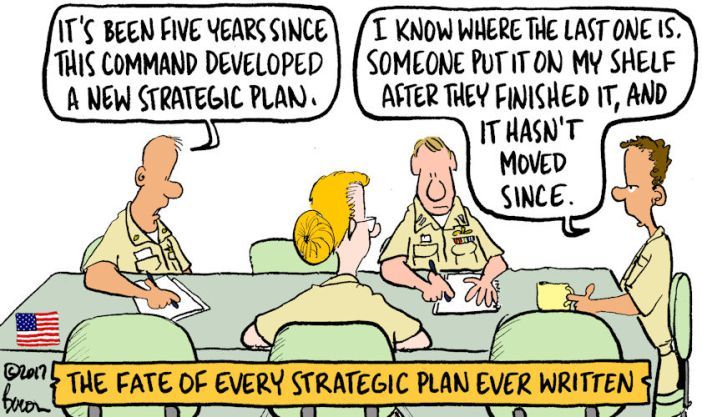
    I’ve been wondering about strategic plans lately… during the course of my career I have been part of many strategic planning teams, both writing and executing.

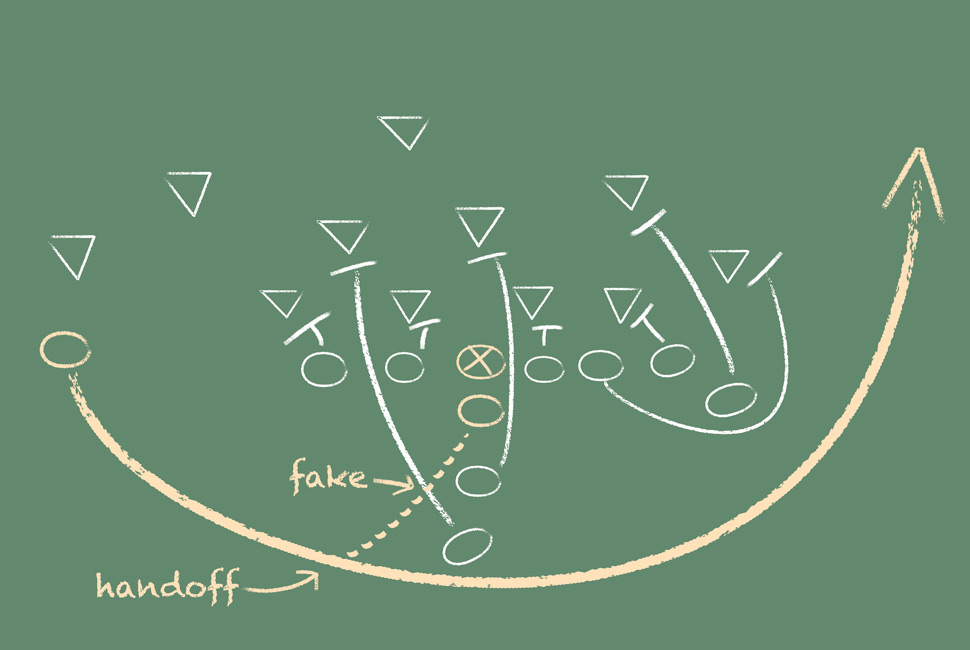
    Some plans looked like a football play, with lots of arrows and lines designating who was doing what and when and for how long.

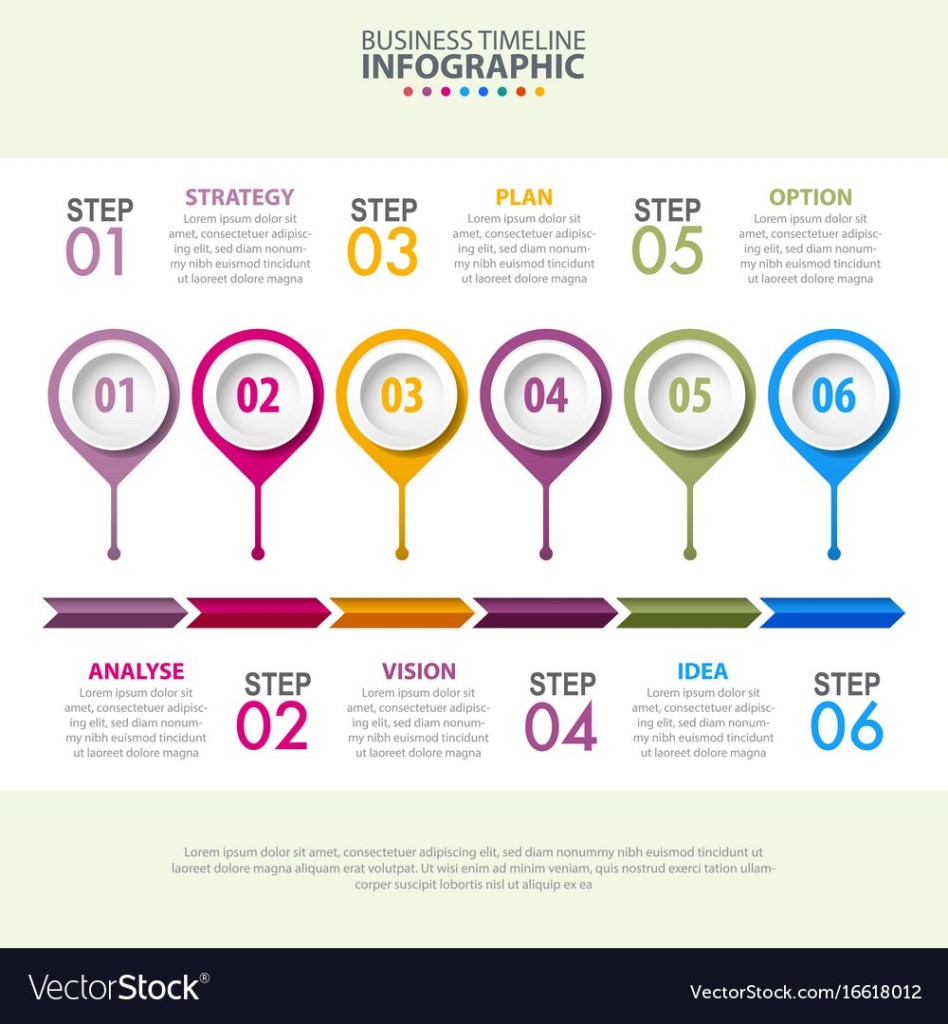
    Some strategic plans were gorgeous infographics, with colors and icons and benchmarks to outline what actions are being taken to reach an end goal.

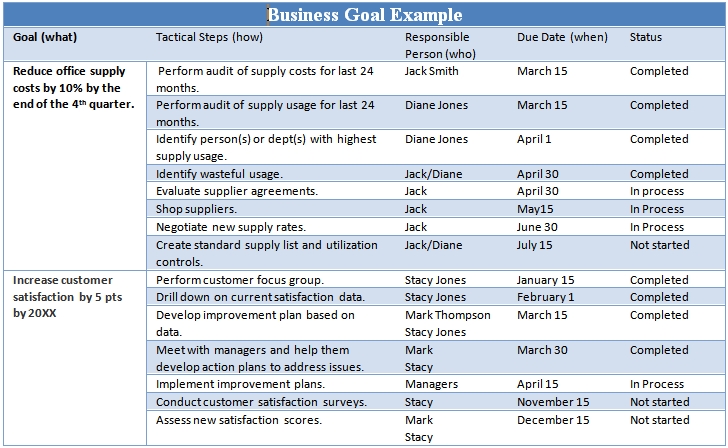
    And others were a text document with charts and tables that outlined the steps, the due dates, and the expected outcomes.

    Truth be told, it doesn’t matter how it looks.

    What matter is how it’s lived, how it embodies the culture of the organization, and the alignment of the goals to the organization values and purpose.

    Does the plan reflect the learning and evolving that happens within a people organization or is it a testament to a static moment in time that gets filed on a bookshelf?

    Is it a PDF owned by one or a Google Doc shared by many?

    Would love to hear how strategic plans function within your organization, and how they impact the work you do every day.

  • Empathy Can Sneak Up On You!

    “If we want people to fully show up, to bring their whole selves including their unarmored, whole hearts—so that we can innovate, solve problems, and serve people—we have to be vigilant about creating a culture in which people feel safe, seen, heard, and respected.”

    ― Brené Brown, Dare to Lead: Brave Work. Tough Conversations. Whole Hearts.

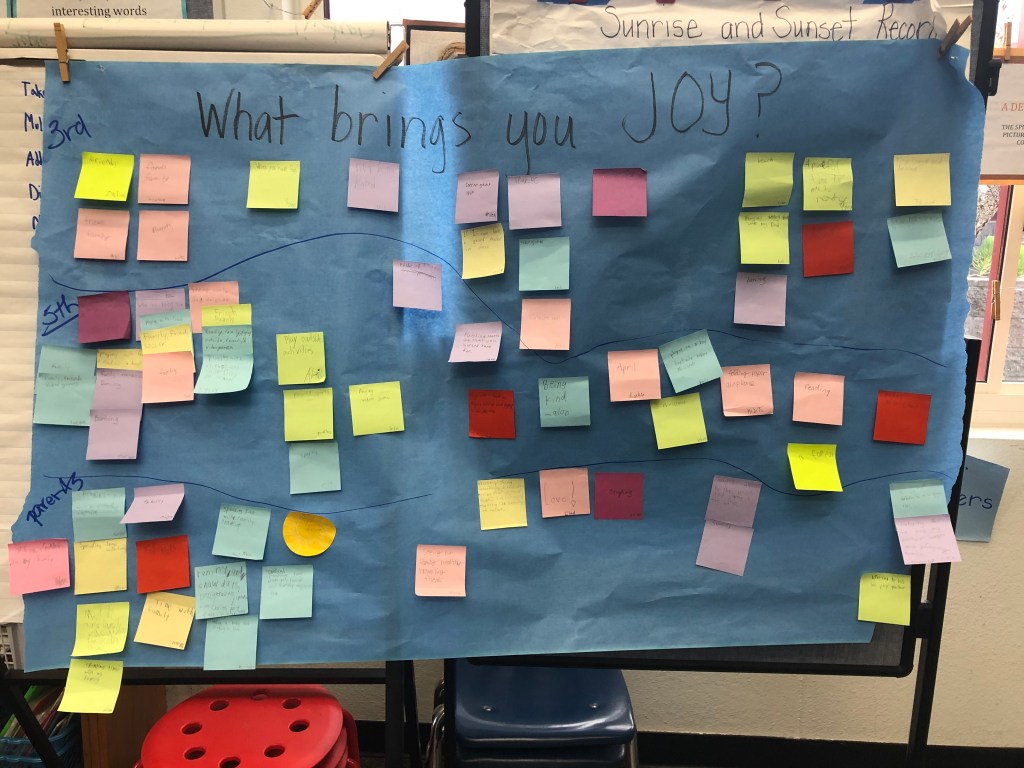
    A while back I received an email from a 3rd grade teacher asking me to help her and the music teacher develop an integrated design thinking challenge for the class that would meet both ELA standards and music class objectives. During our meeting, we decided to focus on the topic of JOY.

    How might we provide joy to our 5th grade buddies
    through an original music composition?

    We outlined a plan, and I left the teachers to work their magic.

    Today I met with the two teachers because they wanted to discuss how to help 3rd graders empathy map. As the classroom teacher recapped about the experiences thus far, I realized that something far more powerful than just design thinking had already taken place.

    As part of the empathy and define process of this challenge, students developed a definition of joy, through their own experiences as well as by interviewing 5th grade students and their parents. The 3rd graders quickly noticed some trends arising in the responses received – many noted happiness; an absence of sadness; and feelings of peace.

    When asked what brings people joy, parents shared moments like seeing family after a business trip, or hearing the laughter of their children.

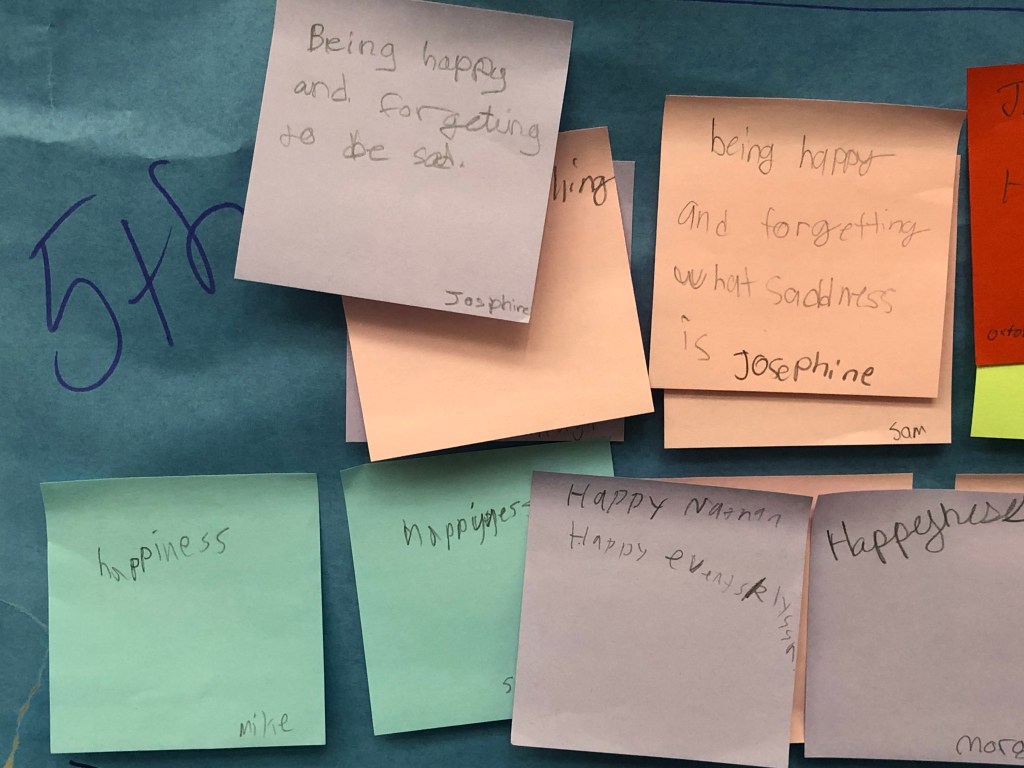
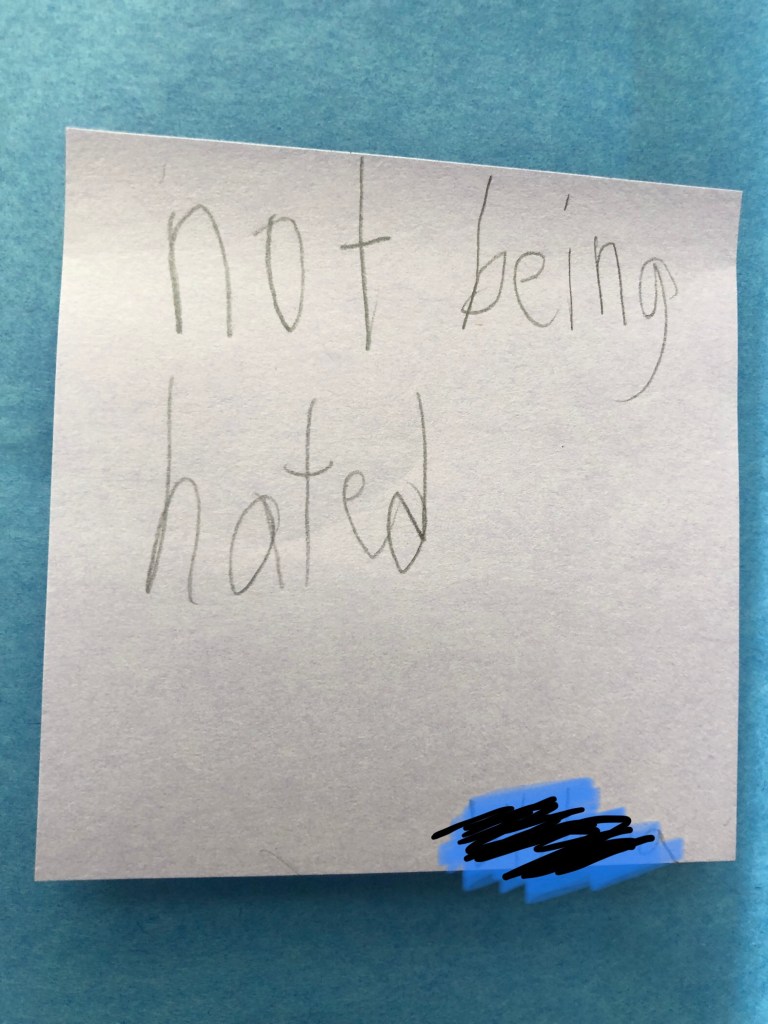
    But for one third grader, the answer was very different: not being hated.

    Post-It that says "not being hated"

    Whoa…

    What do you do with an answer like that? For this teacher, she tackled it head on. She asked the class, “Have you ever felt hated in this classroom?” Because she had created a safe place for them to share, a few did share moments when a peer situation made them feel less than loved…hated, even.

    Reflecting on the situation, the teacher shared that, even if their musical projects don’t turn out as well as she wants them to, this project is a success because it opened her eyes to the depth of feelings these kiddos have, the complexities of their lives at such a young age, and her need to continue with social-emotional lessons.

    That’s the thing about empathy… it can catch you when you least expect it. It doesn’t require an empathy map template or a Post-It. It requires an open heart and a receptive ear, and the capacity to be vulnerable so that you are open to the experiences of others.

    I’m always grateful to the teachers that take these risks for our students, and even more grateful when they share their learning with me. It reminds me of how valuable our role is, and how important these authentic moments are to both students and adults.

    Humble thanks.

  • Innovators Unite: Closing Day at #SXSWEDU

    Innovators Unite: Closing Day at #SXSWEDU

    When we go to conferences like this one, we load up on ideas that are going to get us to progress. We have our little tote bag – we’re going to fill it up with ideas. We hear about a new strategy…a new tech tool…we hear about all these great programs other people are doing… by the time we’re done, we are FIRED UP, we are PUMPED, we are ready to go to progress.
    And then we get back to our schools…”

    – Jennifer Gonzalez in her closing keynote

    I’m writing this post from San Diego. Although I am glad to be home with my family and sleeping in my comfy bed, I am sad to have left #SXSWEDU.

    Innovation is hard work, especially within an established institution like K-12 schooling. It can be isolating to realize that not everyone sees or believes in your vision for change.

    That’s why I love SXSWEDU so much. It’s like finding the holy grail of like-minded educators. Thousands of them! It feeds my soul, refills my bucket, and gives me hope and inspiration moving forward.

    So it was perfect that the final day’s keynote, by Cult of Pedagogy founder Jennifer Gonzalez, focused on the Aerodynamics of Exceptional Schools. Jennifer reminded the audience that our excitement and ideas and leaving a conference like SXSWEDU isn’t always met with open arms from eager colleagues. In fact, often it can be met with resistance or hostility. Therefore, how change is introduced is just as, if not more, important than the change itself.

    Her tips were on point, and I’d encourage you to watch the entire presentation on your own. But in the meantime, here’s the Reader’s Digest version of her tips:

    1. Take a breath – ask yourself – what problems does this solve? What are obstacles? Do I have proof? Can I find a guide? What is my long-term vision?
    2. Find allies – (as illustrated with the infamous Dancing Guy video) – When you have a group, it helps you to clarify your vision, it helps you to deal with negativity, and it also makes your crazy ideas seem a little less crazy to other people
    3. Set precise goals – different from dreams. “DO” Genius Hour is a dream. Goal is dates, specifics, etc. Backwards map the plan to reach the goal.
    4. Expect bumps – build in buffer time. Ask “what can we learn?” Celebrate small successes. Come at me, bro – attitude
    5. Invite – too much telling, and not enough asking. Why not a learning menu for adults like we provide to students?
    6. Validate – not same as agreeing. Recognize, affirm the feelings or perspective of another person. Ignoring pushback doesn’t make it go away. 
    7. Be transparent – especially about failures. Makes you more approachable, more accountable, easier to follow – blog, staff meetings, newsletter, bulletin board, video, podcast
    8. Praise – Seek out the positive in those around you, praise them for it, and include their skills in your process

    The final tip was to dig deep. She related the story of a Crossfit participant who always pushes himself further. He isn’t afraid to grunt, to sweat, to go all in when he’s tackling a tough challenge. She encouraged us all to be that guy.

    This talk really resonated with me. I’ll be honest, I feel like the “set precise goals” is a weakness of mine. I like to dream big and build big. Details aren’t always my thing. I want to create the vision and set it loose on others to carry forward.

    But dreams are weird things… think back to the last time you had a really vivid dream. You can picture it like it is still happening. And yet, when you try to explain the dream to a friend, they look at you like you’re crazy. You realize that you forgot part of the narrative, or you can ‘t quite explain the right shade of blue on the 3-headed monster chasing you through the candy store because you stole his favorite Hello Kitty band-aid box.

    When goals stay in dream mode, people have a hard time being part of the narrative. They need to see it all laid out so they can find their part, read their lines, rehearse their scenes. Therefore, I need to (and will) be better at laying out all the components.

    Thank you Jennifer for a fabulous end to the conference, and thank you SXSWEDU for filling my tote bag with ideas. Can’t wait for 2020!

    You can read my #SXSWEDU musings by catching up on Day 1, Day 2, and Day 3 or learn a ton by following the hashtag on Twitter.
  • Change Isn’t Glittery

    Glitter GIF

    When working on cultural shifts, it can be easy to get frustrated when change doesn’t come fast enough, bold enough, or loud enough. We want glitter and ticker tape parades to reassure us that we’re doing the right work. That we’re on the right path.

    But that’s not how change works – especially not when it’s asking people to shift beliefs and practices they’ve held for years. It’s happening, but it’s happening at varying paces, in varying methods, and with varying results.

    I was reminded of that today when I met with a few different teacher groups. Each conversation was built upon the understanding that students needed more opportunities to engage in meaningful learning that encourages agency and creative expression. Each conversation built upon teacher reflection and willingness to embrace ambiguity while trying something new.

    Each conversation was evidence that cultural shifts are happening in classrooms. That change is happening.

    And yet, none of these conversations included glitter. Or ticker tape parades. Go figure…

  • Embrace Your Inefficiency

    Embrace Your Inefficiency

    Total efficiency constrains us. We become super invested in maintaining the status quo because that is where we excel. Innovation is a threat. Change is terrifying. Being perfect at something is dangerous if it’s the only thing you can do.

    “Getting Ahead by Being Inefficient”

    I stumbled across this interesting article today called “Getting Ahead by Being Inefficient.” At first glance, I thought it was going to be the article I’ve been waiting my whole life for… the one that would say my scattered mind, my messy desk, my caffeine-fueled late night procrastinations, were going to propel me far in life.

    And while it didn’t quite get me there, it did have an interesting point that probably touches home for a lot of my educator friends. Basically, getting really really good at something can hurt you in the long haul. Let me summarize the author’s example.

    A bird evolves over time to become adept at eating a certain berry. The beak fits the berry perfectly. The talons grip the branch just right. The bird has it made. It’s perfect for the berry, and the berry is perfect for the bird. Efficiency is key!

    A mammal comes along and says, “Hmm, that berry looks good. I want some.” But he doesn’t have a perfect beak or talons, so he has to adapt.. maybe he scoops up the ones that dropped to the ground, or sneaks around at night and steals some from the lower branches. Not the most efficient, but it gets the job done.

    So what happens during the polar vortex when the berries are frozen or the tree is killed? The bird starves, and the mammal goes to his other food source and munches away. Efficiency kills the bird. Inefficiency saves the mammal.

    Efficiency is great in an unchanging environment, but to expect an environment to remain static is unrealistic. Environments change all the time.

    “Getting Ahead By Being Inefficient”

    Are you seeing the teaching connection? A lot of us felt pretty confident in our teaching in the NCLB era. We had a scope and sequence laid out, an assessment that aligned pretty well with the high stakes accountability system, and a traditional report card. Teaching was, in many aspects, reminiscent of how we had been taught. The berries were luscious and we could reach them all.

    But the world was changing… and changing fast… and it shook the core of our berry tree. It demanded change. It screamed for personalization. It hollered for relevance and engagement.

    Our beaks weren’t enough. Our talons couldn’t stay gripped to the tree. We had to change. To adapt to the new world. And the scariest part is that this new world is ever changing. We can’t simply find a new tree. We have to be flexible and adaptable. We have to be open to new opportunities when our environment changes.

    We have to be the mammal…

  • It’s All About the Soft Skills

    Read an article today called, “Teens Rate Soft Skills More Vital Than Hard Skills.” The author, Dian Schaffhauser, opened by discussing how teens incorrectly rate the soft skills of self-confidence, communication, leadership and teamwork as more critical than hard skills:

    Could we be over-promoting the importance of soft skills to young people at the expense of helping them understand the relevance of other, “harder” skills? According to a recent survey, just over half of teens (52 percent) said they believe have a good understanding of the skills they need to be successful after high school. Yet, what they ranked at the top of the list were all soft skills: self-confidence, communication, leadership and teamwork. The skills that ranked least important were computer expertise, writing, typing and math. 

    By Dian Schaffhauser . 01/07/19

    I find it interesting the author assumes the teens are wrong in weighing ‘soft’ skills over ‘hard’ skills.

    Soft Skills Matter

    One of the soft skills at the top of the teen list is communication. By its nature, communication requires solid understanding of rhetoric, language, etc. which is much more robust than the five paragraph essay we teach in schools. Likewise, without self-confidence, leadership, or teamwork, what use are your math skills unless someone hires you to sit in a closet and solve equations all day?

    Quite honestly, I’m baffled that typing is called out as a hard skill at all, given the influx of touch screens, Siri/Alexa, and mobile devices which require dexterous thumbs over home key placement. Likewise, I’m sure many teens don’t see computer expertise as something “else” for them because technology is ubiquitous in their lives. And let’s be real, when they are in classrooms that relegate technology to internet searches, or a PowerPoint presentation, why would we expect them to see “computer expertise” as a needed hard skill?

    LinkedIn CEO Jeff Weiner isn’t looking for computer expertise, but he is looking for digital fluency, which requires proficiency in designing presentations, manipulating spreadsheets and navigating social media. At a conference in April, he urged schools to focus on four core skills: critical reasoning, creative problem solving, collaboration and basic digital fluency (Article: “Forget coding. It’s the soft skills, stupid. And that’s what schools should be teaching.”)

    Schaffhauser’s article goes on to share other data points from the survey about access to STEM learning, but it’s non-congruent with both the article title and its opening declaration so I’m not sure what purpose those data points provide. 64% of students said they didn’t believe they were involved in any STEM programs. So are we to be surprised when only 33% of students express interest in STEM fields? And honestly, how are they supposed to know what career options are out there, and what hard and soft skills are required, if less than half of the teens are getting any instruction in career path opportunities?

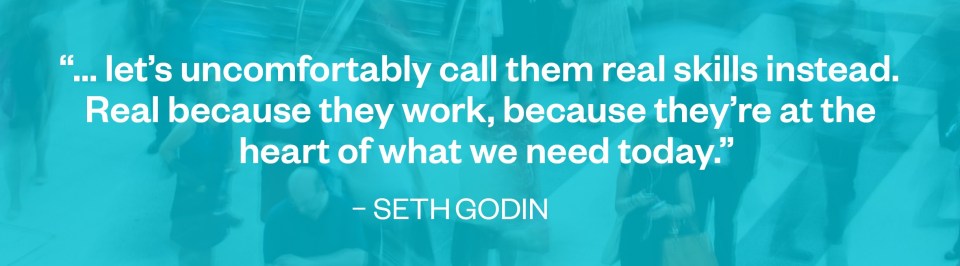
    Seth Godin quote on soft skills being real skills.

    The Real Skills

    Is the author implying that hard skills are the path to STEM, and that teens valuing soft skills are going to prevent them from success in those fields? Seth Godin, American author and former dot com business executive would argue, against that. He believes that soft skills, which he’d rather call real skills, are what matters most. In fact, he calls them real because even if you’ve got the hard skills, “you’re no help to us without these human skills, the things that we can’t write down, or program a computer to do.” Seth knows that real skills can’t replace the hard skills, but what they do is amplify it, give it meaning and value, and add to the success of an organization.

    In Gallup’s 21st Century Skills and the Workplace Survey (2013), a majority of respondents agreed that most of the skills they’ve used in their current job were developed outside of school. So maybe instead of dismissing these teens as being incorrect in their assumptions that soft skills matter more than hard skills, we should take some notes.