Category: Leadership

  • Embracing the Air: Lessons from a Bumpy Ride

    Embracing the Air: Lessons from a Bumpy Ride

    I’ve always believed that some of life’s most valuable lessons are learned not in moments of triumph but in those where we stumble, falter, or in this case, quite literally, catch some air. This photo captures one such moment, a split second where my Land Rover Discovery decided to defy gravity (and perhaps common sense) during a recent off-roading adventure.

    The climb was challenging, the terrain unforgiving. I’d misjudged a line, and suddenly, I found myself staring at the sky through my windshield. There was a brief, heart-stopping moment of weightlessness, followed by a landing that left me wondering if I’d bitten off more than I could chew.

    Now, you might be thinking, “Isn’t this a blog about education? Why are we talking about off-roading?” Well, for me, the two are inextricably linked. Off-roading, like life, is a journey filled with unexpected twists, turns, and the occasional airborne surprise. It’s about pushing boundaries, testing limits, and yes, making the odd mistake along the way.

    But here’s the thing: mistakes aren’t failures. They’re opportunities. Opportunities to learn, to grow, and to become better, more capable versions of ourselves. That airborne moment taught me a valuable lesson about humility, about the importance of careful planning, and about how important it is to listen to the people who are there to help.

    So, next time you find yourself facing a challenge, remember this image. Remember that even when things go a bit sideways (or upwards), there’s always a chance to learn, to adapt, and to keep moving forward. Sometimes the best navigation comes from heeding the advice of those around us. Life’s journey isn’t about avoiding bumps in the road; it’s about embracing them, learning from them, and using those lessons to fuel our growth. And if you happen to catch a little air along the way, well, that’s just part of the adventure, a reminder that even the most experienced among us can benefit from a little humility and a helping hand.

  • Balancing Act: Fun Words from Around the World Celebrating Work-Life Harmony

    Balancing Act: Fun Words from Around the World Celebrating Work-Life Harmony

    Hey there, it’s been a while, right? Well, let’s get real – I’ve been MIA for a good reason: exhaustion. Not the “I need a power nap” kind, but the “I seriously need to set some boundaries” kind. So, for the past couple of years, I’ve been on a quest to master this balancing act. It’s been a rollercoaster with ups and downs, but I’m making progress. Yep, still tired, but also way more in tune with my passions and interests.

    Recently, I jetted off to Europe for two weeks, and it hit me like a double espresso: Americans stand out like sore thumbs when traveling. We’re the ones sprinting from spot to spot, inhaling our meals, selfie-stick in hand. It’s like we’re on a mission to stress ourselves out! 🏃💨

    But wait, there’s a twist. Other travelers? They’re the cool cats leisurely lounging at lunch for hours or sipping cappuccinos in Piazza del Duomo, savoring the moment instead of Snapchatting it. 🍝☕ What’s their secret sauce?

    So, I embarked on a Google quest and even asked Chat GPT for some wisdom. Lo and behold, I discovered that other cultures have words that capture this balance like we’re chasing Pokemon. Work-life harmony? They’ve got it figured out.

    So, buckle up, folks! In our warp-speed world, where work and play often collide, let’s journey through some snazzy words from around the globe that celebrate the magic of a well-balanced life.

    1. Hygge (Danish): Denmark is often ranked among the happiest countries in the world, and part of the reason may be the Danish concept of “hygge.” Pronounced as “hoo-guh,” it embodies the coziness and contentment found in life’s simple pleasures, like sipping hot cocoa by the fireplace or spending quality time with loved ones.
    2. Ikigai (Japanese): In Japan, “ikigai” represents the reason for being or the source of one’s happiness. It’s the sweet spot where your passions, talents, and what the world needs intersect. Finding your ikigai is a journey toward a fulfilling work-life balance.
    3. Meraki (Greek): When you do something with “meraki,” you do it with soul, creativity, or love. It’s about putting your heart and soul into your work, which can make a significant difference in your job satisfaction and overall well-being.
    4. Gemütlichkeit (German): Germans are known for their efficiency, but they also highly value “gemütlichkeit,” which means a sense of coziness and well-being. It’s about creating a welcoming, friendly atmosphere both at work and in your personal life.
    5. Pura Vida (Spanish – Costa Rican): In Costa Rica, “pura vida” is more than just a saying; it’s a way of life. It translates to “pure life” and signifies living life to the fullest, embracing the moment, and not sweating the small stuff. It’s a great reminder that work is only one part of the equation.
    6. Sisu (Finnish): The Finnish concept of “sisu” embodies resilience, determination, and guts. It’s about facing challenges head-on and not giving up, which is essential for achieving balance in the face of adversity.
    7. Wabi-sabi (Japanese): Another gem from Japan, “wabi-sabi” celebrates the beauty of imperfection and transience. It encourages us to appreciate the beauty in the natural cycles of growth and decay, helping us find peace in our chaotic lives.
    8. Fika (Swedish): In Sweden, taking a “fika” means taking a break for coffee and a chat with colleagues or friends. This simple practice promotes social interaction and relaxation, emphasizing the need to pause and recharge throughout the day.

    In our fast-paced world, where the boundaries between work and personal life often blur, it’s essential to remember the importance of staying connected to your joys and passions. Whether it’s the Danish “hygge,” the Japanese “ikigai,” or the Spanish “pura vida,” each of these concepts reminds us that life is a multifaceted journey, and work should complement rather than consume it.

    So, as you navigate the daily hustle and bustle, take a moment to embrace the wisdom of these words and strive for your own equilibrium. Remember, life is meant to be savored, not rushed through, and finding that perfect balance is the key to living a more fulfilling, joyful, and harmonious life. Cheers to a life well-balanced!

  • A Friendly Reminder For You

    A Friendly Reminder For You

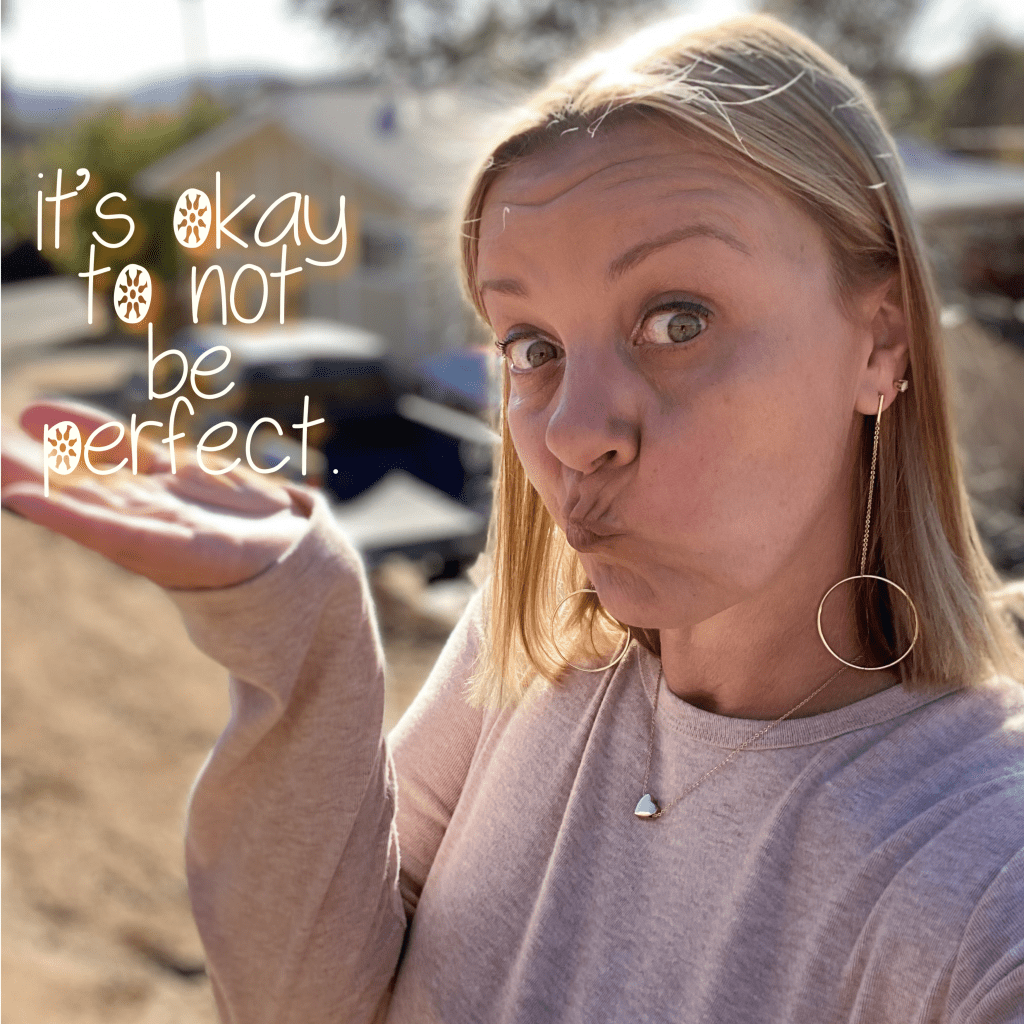
    Many of us are heading back to work today – whether that’s in an office, a classroom, a laptop screen in the kitchen, or a fabrication building, I have one friendly reminder for you:

    Hey, I said it was friendly, not easy. Truth is, we are our own hardest critic. And now, with all the extra pressures from the pandemic, the economy, the lack of social interaction, and a million other stressors, I see a lot of people beating themselves up over perceived imperfections.

    So next time you’re upset that you didn’t catch the typo before hitting send on the email, or frustrated because your lesson flopped, or angry because you set your new air fryer on fire (hey, it was an accident), please take a moment to remember that it’s okay to not be perfect. In fact, I like you better because of your imperfections.

    You got this!

  • You’re Not Communicating Enough

    You’re Not Communicating Enough

    With COVID-19, and schools going online, offline, partly online, maybe closed, maybe open, maybe only partly open (whew!), people are getting bombarded with messages and emails and notifications flying at them from all angles.

    And yet, no one feels informed… why is that?

    I thought I’d share some food for thought that I learned years ago when studying organizational leadership.

    Seven Times!

    If you think you’re communicating with your team (or parents, students, etc) enough, you’re not. 
    Patrick Lencioni, author of The Advantage, says employees don’t believe a leader’s message until they hear it 7 times. Seven times for crying out loud!! No wonder my students didn’t believe me when I told them everyone indents their paragraphs, not just students in my class…
    So how do we get to the magic number seven? To get there, Lencioni says we need to Create Clarity, Overcommunicate Clarity, and Reinforce Clarity. (He actually says a LOT of things, but if you want the full scoop, read the book…)

    Two Words

    How do we do that?
    Well, Lencioni has some ideas about that, too, but for right now I just have two words for you:
    Strategic Messaging
    If we want people to be clear on our message (and to believe it), then there is no such thing as too much communication. We can’t be afraid to repeatedly reinforce ideas or information that is vital to the organization (or school).

    Many Questions

    Some questions to ask yourself, and maybe those around you:

    • Is everyone on the same page in terms of what should be communicated and why?
    • If messages are flowing down from the top, or after limited attendance meetings, how are they being disseminated? Does everyone know that? Is everyone on board with that?
    • If someone missed the message the first five times, how can they get connected to the messages? 
    • Where are these messages? Are they on motivational posters in hallways? Archived on a google group board? Or is it a fend for yourself approach to getting information?
    • How are we helping people get, understand, and implement the message if they’re struggling? 

    And ultimately, who is owning the message? 

    Again, according to Lencioni:

    Leaders must not abdicate or delegate responsibility for community and reinforcement of clarity. Instead, they have to play the tireless role of ensuring that employees throughout the organization are continually and repeatedly reminded about what is important.

    Patrick Lencioni, The Advantage

    More Readings
    You’re Not Communicating Often Enough With Your TeamThe Untapped Advantage of Organizational Health

  • You’re Doing The Best You Can…And That’s Enough

    You’re Doing The Best You Can…And That’s Enough

    My first year teaching middle school was …well, let’s just say it wasn’t pretty. I had spent my teacher prep program determined I was going to be a high school English teacher. Students would love discussing literature as much as I did, and would turn in glorious essays filled with thematic connections, thoughtful historical references, and eloquent rhetoric.

    And then I started teaching 7th graders.

    7th graders cared for none of those things. They cared about social pressure, and puberty, and where to sit at lunch. Everything I thought I knew about teaching and learning had to be left at the door. These students, the ones in front of me, wanted, maybe even needed, to learn about navigating life. Literature would have to wait.

    I made a lot of mistakes that year. Mistakes in classroom management. Mistakes in what I assigned and how. Mistakes in assuming that all students should be able to complete homework every night. Mistakes in thinking that sending a kid to the office would solve behavior issues.

    But I learned. And got better. And grew to love middle school so much more than I ever thought I’d love teaching high school. But it took time. And patience. And reflection. And a lot of self-forgiveness. And forgiveness from the students, too, at times!

    And that’s where you come in…

    If you’re like most educators in our country, you’re at home right now. Trying to figure out how to teach in this new frontier. It’s like the first day of the first year of teaching all over again. And it probably feels that way every day that you wake up. A bizarre Groundhog’s Day movie in which you star.

    Bill Murray in Groundhog’s Day

    But unlike the first day of the first year of teaching, you may also have your own children with you, needing attention, help with schoolwork, or just reassurance that the world is okay.

    You’re probably concerned about your elderly family members, or neighbors, and wishing you could visit them.

    Or worried about just how many squares of toilet paper should be used per visit to maximize the rolls you have tucked away in the closet.

    Perhaps you’re stressed because your significant other is also working from home now. Or has to still go to work and be amongst the virus. Or worse, can no longer work at all.

    Regardless of where you are, you’re carrying a huge load on your shoulders. There’s pressure to be successful in this new environment.

    But success takes time. Time we don’t have right now.

    So please, give yourself grace and know that you’re doing your best.

    If that means you are making paper packets, awesome.

    If that means you’re hosting a Zoom call for 100 students in your jammie pants, sweet!

    If that means you’re learning Google Classroom 10 minutes ahead of your students, amazing!

    If that means you’re creating lists of resources for other teachers and parents to use, cool beans!

    If that means you’re creating a color-coordinated hourly schedule for your family, or you’re hating the people who have made the color-coordinated schedule, carry on my friend!

    And if that means you need time away from everyone to scream into a pillow, or take a quiet walk, or just step away from the insanity, please do it!

    You got this!

    And we got each other!!

    Photo by Tim Goedhart on Unsplash
  • Boxes Aren’t For Thinking

    Boxes Aren’t For Thinking

    How do you innovate from inside the box?

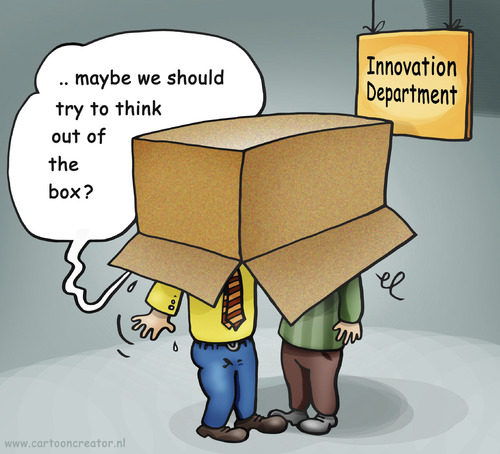
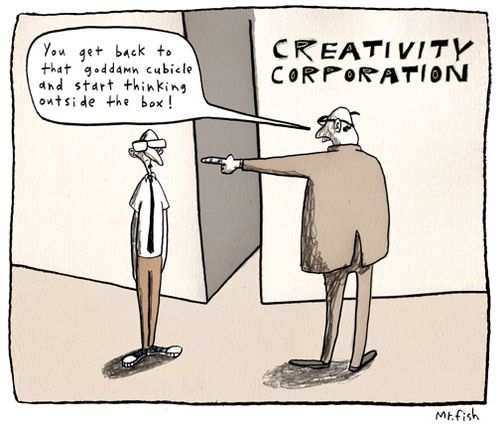
    “Think outside the box” is probably one of the most overused statements. No matter what the situation, or problem, inevitably someone will say, “We need to think outside the box.”

    The problem with thinking outside the box is that leadership often wants to create a box to contain the thinking outside the box. In other words, think outside the box, but only insofar as the thinking stays within the organization’s predetermined box.

    Today I had a meeting scheduled with a director at the San Diego Zoo to discuss an upcoming zoo-sponsored hackathon, and potential connections with K-12 education. In lieu of the traditional phone call introduction and conversation, we decided to meet at the zoo. And since it was a beautiful day, our meeting was a walk and talk around the zoo instead of inside the administration building.

    Without the confines of the box, we found our conversation expanding beyond the original topic of discussion. Discussions of elephant emotions and giraffe spot patterns sparked conversations about augmented reality and wildlife conservation. We were able to dream big about ways to build student advocacy in to zoo fieldtrips while talking UX design and hackathons.

    I walked away from the meeting with ideas and energy to pursue those ideas.

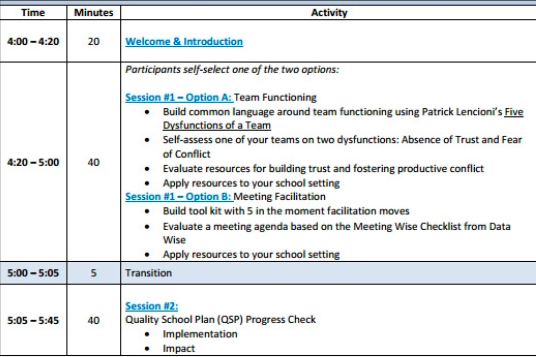
    This freedom of time and space to connect with others, to engage in meaningful dialogue, and to reflect on possibilities is not often provided for educators. The box confines, and the box dictates, what should be thought about and when. Look at any PLC or meeting agenda and you’ll probably see something like this:

    We want teachers to be innovative. We want schools to be transformative. But we don’t provide opportunities for that because we control the interactions. Topics are outlined, times are allotted, and thinking stays inside the box.

    It used to be that teachers could go to conferences as a way to think outside the box (although in reality, they were just thinking inside a different box… but it was still outside their own box, so that was cool).

    But now I’m seeing more and more districts and schools self-hosting their own professional development “mini-conferences” which are, effectively, keeping people in the box.

    One of my favorite design thinking exercises is a premortem experience, in which you write about what could go wrong with a proposed solution.

    Looking from a premortem lens, ask yourself, what would happen if we took the box away? What’s the worst that could happen if we asked teachers to go for a walk in the park with a colleague and talk? Or to visit a local business (or zoo) and walk and talk with someone there? If we removed the box, even for an hour, what might come of it?

    Honestly, I can’t picture the world ending. But what I can picture are people being exposed to new ideas and information, and considering the implications for their teaching and learning.

    If we want classroom learning to be relevant, and we want teachers to provide real-world connections, it can’t be done inside the box.

    We need to build opportunities for educators to think freely, to wander open spaces, to connect with people they don’t get to connect with, and to think without agendized topics and time constraints, so that we can truly start to think outside the box about education.