Category: Leadership

  • Who’s Playing?

    Who’s Playing?

    A big reason why good athletes do well is because they don’t care what the sports blogs say, or what you said about them on Twitter.


    They’re playing, you’re in the “seats” – And they understand that.


    That’s the same mindset I have about other people’s opinions: I’m playing.


    What, you’re going to say that I had a bad idea or make fun of me that something I tried didn’t work? ? I’m the one who’s playing.

    Gary Vaynerchuk on LinkedIn

    If site and district administrators (and educational consultants) truly want to make an impact on teaching and learning in the classroom, they need to get out of the “seats” and play.

    A formal observation is not play.

    A 5-10 minute instructional walk thru is not play.

    A strategy shared in a staff meeting is not play.

    How are you getting on the field and playing the game with the teachers you’re leading? If you’re a teacher, how would you like to see your instructional leaders play the game with you?

  • From No to What If

    From No to What If

    Being part of the Top Tech Exec winner’s circle has introduced me to so many innovative executives. I’m always inspired after our times together.

    Last night, a group of us were invited to watch the Padres battle the Dodgers from within the Cox suite. Fun time, good food, great convos.

    No painted on the ground next to a set of shoes.
    Photo by Jon Tyson on Unsplash

    Every time I see this group, I learn something new. Last night’s takeaway came from Casey Cotton, Chief Technology Officer for Madison Avenue Securities and Asset Marketing Systems, who shared the importance of IT leadership moving away from no and developing a “what if” approach. 

    It’s not just IT that could benefit from this approach. So could education. IT is often known as the Department of “No”​ but I think education says no just as much, if not more than, IT. If educational leaders stopped saying, “it can’t be done” and instead entertained the “what if we could…” approach, imagine what we could become 😏.

  • Excel at Everything! Do it RIGHT NOW!

    Excel at Everything! Do it RIGHT NOW!

    Last week, I asked a teacher I admire if she wanted to share some of her passions with my blog readers. Her answer made me sad. She said she didn’t feel like she had done anything worth sharing this year – new grade level, new school, etc. had all left her feeling like she was less than best.

    I wasn’t sure how best to respond. I mean, she’s amazing. Why doesn’t she see that? Then, a principal forwarded me an eloquent article about the virtues of being average in school. And this passage struck a nerve:

    School is the only place in the world where you’re expected to excel at everything, and all at the same time. In real life, you’ll excel at what you do best and let others excel at what they do best. 

    Let’s Hear It For the Average Child by Margaret Renkl

    How fortunate that many of our students, once graduated, will become part of this “real life” in which they can feel valued for that in which they excel, and feel like they don’t have to excel in everything else.
    (I could start a side rant about how students should feel that way every single day, but that’s a different post for a different day…)

    But what happens to the teachers who live the majority of their life, from age four or five to retirement, devoid of this “real life” experience?

    What happens to people who feel the pressure every single day to excel at everything?

    How can teachers feel valued for what they are doing?

    How can site and district leaders support teachers, not only in their professional growth, but also for the skills and passion they possess and share with students already?

    How can we build an inclusive culture of camaraderie and joy (and LOVE!) so that teachers aren’t burned out with the constant demand to learn more, do more, excel more?

    Because the truth of the situation is that the teacher I asked to blog IS amazing, and she excels at inspiring students to learn and question and grow every day. But if her measurement of worthiness is this unreasonable expectation of excellence in everything, then the system surely has failed her as much as it has failed the ‘average’ student.

  • Students Are Changing the World NOW

    Students Are Changing the World NOW

    Last night, my district received the Innovate Award for its District Design 2022 initiative. This initiative is focused on providing an extraordinary school experience for all students. Using the Design Thinking mindset, curiosity is promoted as students seek out real world problems and formulate innovative solutions. Students connect with contemporary and historical issues, and with industry experts in their local community and around the globe to develop empathy and a greater understanding of the world.

     Students develop a sense of purpose when they have opportunities to engage in relevant and meaningful learning experiences. By creating a learning culture of innovation, curiosity, imagination, and creativity, students are empowered to ask questions, explore ideas, and take action.

    These students are changing the world today. So much of schooling is focused on preparing students for this big, scary, unknown future. But the fact of the matter is, we need to be equipping students for the world that surrounds them today so that they can make an even greater impact on the future.

    It’s been an honor to work alongside teachers who are willing to embrace ambiguity and join me on a journey of learning transformation. And it’s an honor for Classroom of the Future Foundation to recognize their dedication. I can’t wait to see what comes next!

  • The Future of Work is Emotionally Intelligent … Are We Preparing Students?

    The Future of Work is Emotionally Intelligent … Are We Preparing Students?

    I recently participated in a webinar by Singularity University titled, “The Future of Work is Emotionally Intelligent.” Below are some key takeaways I discovered from the discussion.

    Participants:
    Melissa Extein, PsyD, Principal Consultant & Part-time Faculty @Extein Consulting & Milano School of Policy, Management and Environment, The New School
    Nichol Bradford, Exec Director and Co-Founder, Transformative Tech Lab, Lecturer at Stanford University, CEO of Willow Group
    Simone Harris, Certified Emotional Intelligence Coach, Trauma Sensitive Mindfulness Practitioner @Courageous Leadership, LLC and Search Inside Yourself Leadership Institute
    Rob Nail, Singularity University CEO

    What is Emotional Intelligence?

    What is emotional intelligence? Although everyone on the panel had a different definition, I think the baseline is the ability to both recognize/understand our own emotions and to recognize/understand/influence others’ emotions. It’s also important to recognize that this is a learned skill, and not some innate trait that you either have or don’t have. There’s a big difference between having emotions and being emotionally intelligent. Many of us learn from people who also aren’t that skilled in this area, so we can all use some help growing this skillset.

    If you can’t bring the IQ, bring the EQ, says Nail. Leadership’s role is to understand the culture and emotional space of the business. With this understanding, the leader, knowing who’s in the room and how they operate, can connect the people who know the skills required by the team.

    Unbossing an Organization

    Bradford describes one of the benefits of having EQ in the workplace is the ability to unboss an organization. Unbossed organizations “focus on collaborative leadership and developing talent through a mutual learning process.” It’s no longer about a Human Resources Department, but Human Capital Department. These types of shifts require a high level of EQ so that employees can both give and take feedback; reduce fear of not having someone who tells them what to do; and self-regulate behaviors, biases, and feelings for the good of the community.

    Extein expands on this by pointing out the critical role of empathy. “Empathy requires not only the ability to put yourself in other’s shoes but to understand the shoes they are in and to be interested in understanding.” However, diverse workplaces bring diverse levels of emotional intelligence. Nail remarks that a critical component for the organization is a clear, aligned purpose and intention as well as opportunities to facilitate and develop EQ for those in need.

    Millenials and EQ

    Millennials demanding a higher level of authenticity – they don’t want to split their identities between who they are in personal and professional life. and they will be the bulk of the work force, and the managers, in the next five to ten years. Companies that are most successful have a strong sense of meaning and purpose for middle management, and not just upper executives. To know your purpose and have a sense of meaning ties in to how much noise is in your head on a daily basis that prevents people from having empathy, from slowing down and getting into the moment to better understand the emotions present.

    Research says that employee motivation is based on three areas:
    Feelings of autonomy.
    Feelings of competency.
    Build relationships.
    All of these are impacted by emotional intelligence. It reinforces that need for EQ over IQ for those in leadership roles. The smartest engineer, for example, may not be the best CEO for an engineering firm if she lacks the EQ required to provide those feelings of autonomy, competency, and relationships in employees.

    Emotional Intelligence is a learned skill, so here are some ways to increase your EQ, as well as that of the organization:
    – Slow down enough to look under the surface and not just the surface emotions – meditation, quiet sitting
    – Journaling
    – Mindful Listening
    – Find Ways to “Be in Flow”
    – Assess your EQ with Available Tools
    – Executive/Peer Coaching for Leaders
    – Time to Practice the Skill
    – Create an environment where it’s okay to make mistakes and learn
    – Use emoticons to share your emotions with others to increase understanding in written communication

    How are you building your own emotional intelligence? What about the emotional intelligence of students? staff? community?

  • Powering Personalization

    Powering Personalization

    For the next two months, I get the honor to spend time, like serious, dedicated, reflective time, with three groups of teachers as we dive deep into the concepts of personalization and agency. Our goal is to define how these terms are demonstrated in an elementary classroom: What teacher moves are present? What are our learners doing? How does personalization and agency impact their learning? Their sense of self?

    One of the teacher hubs is a group of 1st grade teachers that would like to spend more time getting to know learners’ interests and concerns.

    • How can getting to know our learners help with social and behavior interactions?
    • How do we get to know each child’s culture and traditions?
    • How do we apply personal interests into core curriculum?
    • How can knowing our learner’s interests help with connecting with other students, like big buddies on campus?
    • How can we learn more about a student’s outside learning, and bring that passion into the classroom?

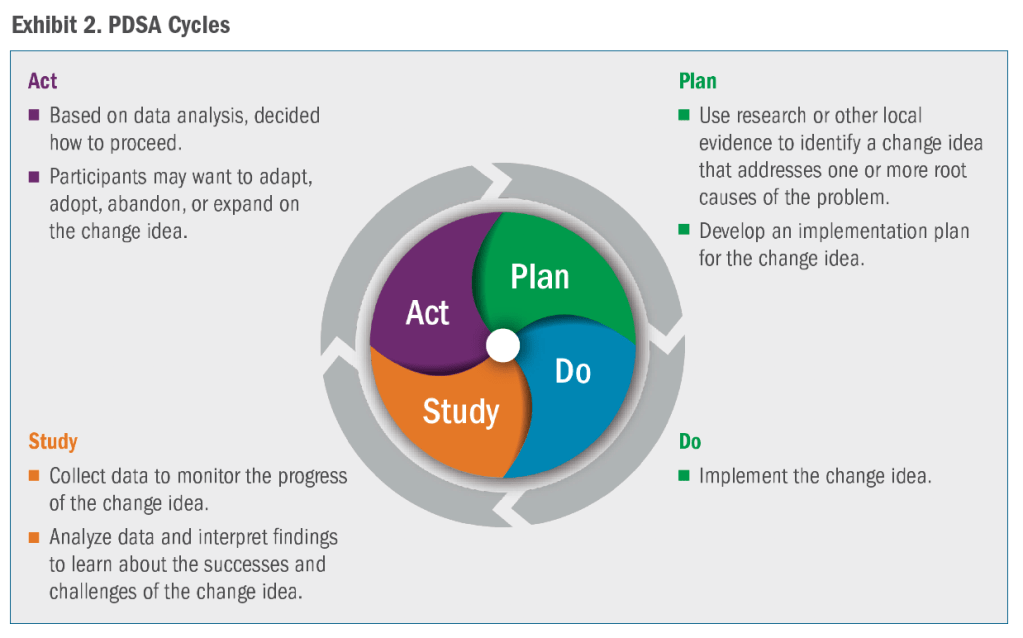
    Plan-Do-Study-Act

    What I love about my role is that I am simply the facilitator of their discovery. I find resources to help them explore their ideas, and I guide them through the PDSA cycle of Plan-Do-Study-Act. I’m like the fairy godmother in Cinderella, except that the pumpkin coach I provide is ways to grow in understanding, and discover new approaches/strategies that can be applied in the classroom as part of the pursuit towards the extraordinary school experience.

    Below are a few articles I am sharing with the teachers to help provide context around the topic of personalization. I’d love it if you’d share your resources as well, or even . better, ways in which you are providing personalized opportunities for all students to ignite their genius.

    Articles

    This article shows how personalization uses what you know about students (relationships + academics) to build experiences that meet their unique strengths and needs.

    https://www.edelements.com/blog/six-examples-of-what-personalized-learning-looks-like

    This article talks more about the partnership between teacher and parent to create a shared understanding of students, which helps to deeply understand the learner, leading to personalization that is meaningful.

    https://medium.com/@carolynwilson/curiosity-f5e4cedd5af1

    And this article helps build context around personalization, differentiation, and individualization… and the process teachers tend to go through as they head towards a personalized learning environment. It may be helpful to self-identify where you see yourself in the process, and then identify an area for growth/development through the hub plan-do-study-act cycle.

    https://www.advanc-ed.org/source/building-personalized-learning-environments