Category: Leadership

  • Concierge Culture of Change

    Concierge Culture of Change

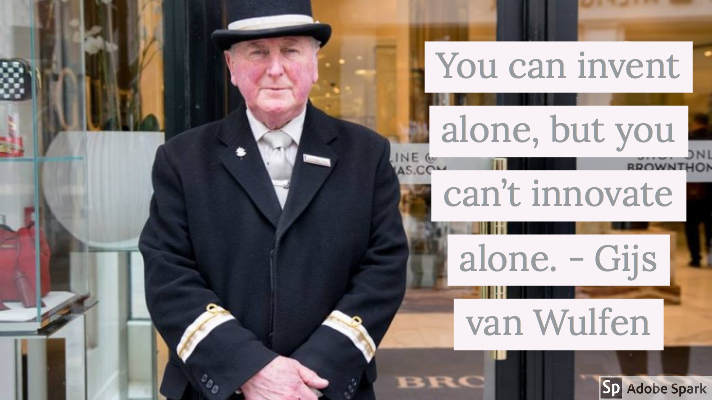
    Sometimes, we have to acknowledge that people have baggage before we can offer to take it off their hands. In shifting our educational culture, we need to see ourselves as the hotel concierge. When someone asks for help, they may not know what exactly they are seeking. It’s the job of the concierge to figure that out so that the guest has an extraordinary experience. Asking questions, discerning what the person likes and doesn’t like, and then brainstorming and providing different ideas to work towards a solution…. we can’t just assume everyone that comes to the desk needs a taxi cab or an extra towel.

    Likewise, we cant assume all our staff have the same understanding of the WHY or need the same professional learning when we’re making cultural shifts in our educational system. It takes time to dig in and figure out those latent needs, and then it takes a commitment to the person and the process to work towards the needed cultural shift.

    As we move forward, it will be important to keep those needs clear, and use them to set a path forward. Communication is going to keep everyone aware of all the pieces in motion and why those pieces are moving. Think of the concierge… when he recommends a restaurant for dinner, he doesn’t just give you the name. He writes it down, hands you a map and circles the location. Often, he’ll show you the best route to get there, and offer to make a reservation. This is how culture is shifted.

    If this post made you nod your head, or smile and think of a colleague… then share it! And subscribe to keep the posts coming!

  • Death by Syllabus

    It’s that time of year … back to school! Teachers are excited to meet students, and students are excited to meet their teachers.

    Back to school also means a lot of discussion about how best to establish relationships and culture when students walk in the door. I’ve seen tweets suggesting teachers hold off on “doing school” at first so as to focus on getting to know the students, and establishing the positive culture of the classroom.

    Part of “doing school” is, for many teachers, passing out the course syllabus, or class introductory letter. This document, often read and treated like a terms and conditions contract, outlines objectives, grading procedures, behavior and academic expectations, consequences for violating those expectations, and rewards for following them, which is often the grading scale.

    It outlines what students will learn, how they should learn it, and in what timeline it is expected to be learned. It requires multiple signatures to signify understanding, and is filed away in case any of the signatory parties disagree with the terms and conditions at a later date.

    So yes, I can see why this would be quite a downer on day one for teachers trying to establish a culture of joy, of lifelong learning, and of collaborative discovery with their students.

    “Hey students. This year is going to be AWESOME. But first, you all must agree to the terms and conditions… potential side effects include dizziness, heart palpitations, anxiety, and death…” Screen Shot 2018-08-20 at 10.16.21

    Umm, yea, about that… Total downer!

    That makes me wonder… if the syllabus is so disconnected from the culture being established in the classroom, what message does it send to parents who are asked to read and sign it? For many parents, this is the first impression. The first handshake. The first “Nice to meet you.” If it doesn’t represent the culture you want to establish with students, then I have to ask what culture it establishes with the parents who are being handed this paper to sign without any other context.

    And what contradictory message does it send to students? “Hey, I know I told you that I value you as an individual and we had all  fun week one getting to know each other, but the reality is, if your work is late, I will dock you a half letter grade. And if you use the bathroom pass three times, you owe me detention.”

    If the syllabus doesn’t reflect the culture of your classroom: a culture of thinking, of learning, of student agency, and of growth mindset, then the only place that syllabus should go is in the trash.

    If it’s in the trash, how might we develop a new, student-centric syllabus that reflects our values? What questions should it answer? How about these for a start:

    • What does the teacher value about teaching and learning?
      • What does the teacher believe about how students learn?
      • What does the teacher believe about the conditions that need to be in place for students to thrive in a learning environment?
      • What does the teacher believe about the whole child, and his/her role in supporting individual development?
    • What do students value about learning?
      • What conditions do the students in the room right now need to thrive?
      • What passions do the students in the room right now possess?
    • What do parents value about learning?
      • What does it mean for parents to be partners in their child’s education?
      • What do parents need to feel like a valued partner?

    In addition, we should consider how language sets a tone. Is it a “we” document or a “me” document? Does the font and spacing encourage reading? Hey, maybe add some graphics and resource links.

    By creating a document that exudes relationships, culture, learning, and voice, we are breaking down one of the traditional structures that serves as barriers to our values.

    … Have you already transformed your syllabus? Would love to see a copy! Post a link in the comments, or send me a message. Let’s get the word out and encourage a movement!


  • The Power of the Master Schedule

    A learning organization is a place “where people continually expand their capacity to create the results they truly desire, where new and expansive patterns of thinking are nurtured, where collective aspiration is set free, and where people are continually learning how to learn together.”

    The Fifth Discipline: The Art and Practice of the Learning Organization, by scientist and organizational-theory expert Peter Senge

    My daughter just started her Junior year of high school. As with most high schools across the nation, she had to wait to get her schedule until the day before school started. It’s a highly anticipated moment – which teachers did I get? Will my friends be in classes with me? What’s usually not questioned is what classes are assigned. That’s because, by this stage of the high school career, classes are chosen in the Spring, signed off by student, parent, and counselor, and therefore expected to be a reality in August.

    So I’m sure you can imagine her surprise when two of her selected AP classes were not on her schedule. And as luck would have it, these are the courses which had assigned summer homework. So not only is she without the courses she expected, but she invested hours of summer vacation doing the work needed for these missing classes.

    Instead of excitement, she walked into school day one with anxiety and disappointment. But more importantly, she was invested in coming up with a solution. Can you imagine how her level of investment would be markedly more than the guidance counselor? Or the Principal? Or me? This need, this problem, is personal to her, and therefore, she is motivated to figure it out.

    The New Power

    The question I have is, why don’t we provide ways for students to become part of the process of building the day to day of school? In New Power: How Power Works in Our Hyperconnected World–and How to Make It Work for You by Henry Timms and Jeremy Heimans, Timms and Heimans share ways in which organizations can embrace new power. Unlike old power, which is guarded and owned by a few, new power embraces the wisdom of the collective by distributing power in a participatory fashion. 

    How could this apply to high school schedules? Think about how massive the master schedule is at a traditional, urban school. So many students, so many classes, and so many possible pain points. How might we provide a participatory experience so that students could facilitate the creation of their schedule? How might the inclusion of this missing voice work towards shifting the culture of a campus from adult to student centered? How much more invested would students be in the school experience if they helped to shape it?

    R1412B_B1

    Senge believes that, “When young people develop basic leadership and collaborative learning skills, they can be a formidable force for change.” So how about we give them that chance? A little transparency and some extra voices can’t hurt!

    Update: No luck on fixing her schedule. She went from three to one AP class, which will drop her class ranking because of the weighted GPA structure. We’re looking at college courses so she can get the subject knowledge she wanted.

  • I am a Recovering Super Chicken.


    “Hi, my name is Laura and I’m a recovering Super Chicken…”

    “Hi Laura…” the room of ordinary chickens respond acceptingly…

    (Trust me, it all makes sense within a minute or so of watching the video!)

    Huffernan suggests, “For years, we’ve thought that leaders were heroic soloists who were expected, all by themselves, to solve complex problems. Now, we need to redefine leadership as an activity in which conditions are created in which everyone can do their most courageous thinking together.”

    I’d even go so far as to say that this isn’t just about leadership, but about teaching and learning as well, with both staff and students. We are better when we learn with each other, from each other, supported by each other.

  • Sharing the Power of Vulnerability

    Something to reflect on as we welcome students and their families into our classrooms, our schools, our lives.

    “Our job is to look and say, ‘You know what? You’re imperfect, and you’re wired for struggle, but you are worthy of love and belonging.’ That’s our job. Show me a generation of kids raised like that, and we’ll end the problems, I think, that we see today…

    Because when we work from a place, I believe, that says, ‘I’m enough’ … then we stop screaming and start listening, we’re kinder and gentler to the people around us, and we’re kinder and gentler to ourselves.”

  • Pickle Hives and Design Thinking

    “Babe, I was eating a pickle and it made my feet break out in hives!”

    Not quite the greeting I was looking for after an exhausting 14 hour day of work, evening teaching, and traffic, but that’s what welcomed me at home. And sure enough there were giant welts all over his feet.

    “Pickles did not give you hives. That’s crazy. You sure you didn’t get bit by an army of baby spiders or something?”

    And so it began… the back and forth over the cause, and solution, for the sudden hives.

    But I’ll get back to that story in a minute. Because this post is actually about problems. And HMW (How Might We) questions. And goals.

    Our leadership team has been digging into culture, and the purpose of school, for a couple years now. Last year was the official first year of our five year plan to transform from a 20th century model of knowledge delivery and compliance to an extraordinary school experience that values the student and his/her inner genius. It was a year filled with first attempts, discoveries, and questions. All of those brought learnings and wonders and even more questions. And through those experiences, we developed a common vision and understanding of the WHY of our five year plan.

    While setting the stage for this school year with the superintendent and assistant superintendent, we realized that, in order for the leadership team to dig deeper into the WHAT and the HOW of the plan, the 20th century model of setting goals and yearlong action plans in August wasn’t going to work. That model is based on the premise that the person setting the goals knows the path that needs to be taken, has an understanding of how to reach the destination, and can do so by an arbitrary deadline. Instead, our goal setting process needed to support our learning journey.

    After reflecting on the vision of our plan, the purpose of setting goals, and the monumental work that lay ahead of us, we realized this year’s goals needed to center around identifying, understanding, and addressing a problem that was impeding the district vision.

    So together, our leadership team identified problems. Some were instructional in nature, while others identified outdated or cumbersome systems and structures that stifled innovative actions.

    Once everyone articulated a problem connected to their site and/or department, time was spent developing a HMW statement to begin understanding the problem more deeply. We shared our articulations with each other for feedback, pushback, and refinement.

    And then some of us started identifying a problem with our problems.

    Turns out, our HMWs had personal hunches embedded within them which was inadvertently skewing them into solution questions instead of problem probing questions. Here’s an example*:

    Problem: Lack of student engagement during writing instruction.

    HMW: How might teachers provide students with personalized topic choices so as to increase student engagement during writing instruction?

    See the hunch?  How do we know personalization is the key to increase the engagement of these identified students? We don’t. It’s a hunch. And that hunch can take us down a road of creating solutions to the wrong problem. Because in reality, personalized topic choices are a potential solution. They could show up on a post-it while ideating. But they shouldn’t have a home in our question.

    Once we realized our preconceived solutions sneaking into the problem statement, we pushed more on the problem and the HMW and a second version emerged:

    Problem: The Principal has observed a lack of student engagement during writing instruction for a group of 4th grade students.

    HMW:How might 4th grade teachers create engaging learning opportunities within the teaching of writing so as to increase students’ active involvement in the writing process?

    Now we’re getting somewhere. This question requires empathy-building with the end-user, aka 4th grade students, so as to figure out what may be causing their disengagement. Boredom? Too hard? Too easy? Language barriers? Personal issues? Something else? This version is not based on a hunch, but on a desire to understand and respond accordingly.

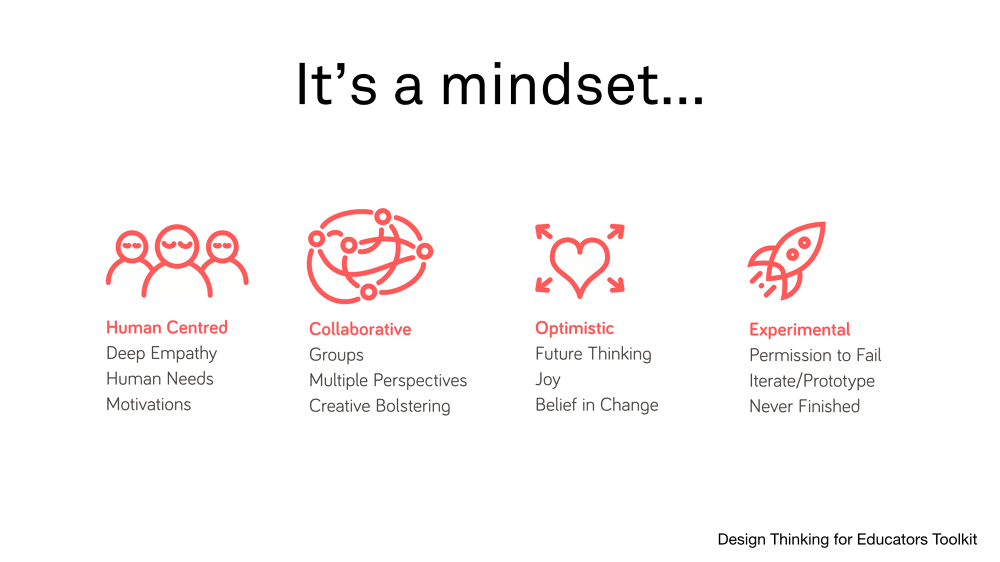
    This goal-setting approach models a learning-centered culture. One not built on hunches. But on a design thinking mindset, which is pretty darn exciting!
    mindset

    As for John, we learned, after doing some good ol’ Google research, there actually IS such a thing as pickle hives, although it’s technically an allergy to a preservative used in some pickling methods. So maybe his hunch was correct after all. And maybe I should have stayed in the problem space with him a bit instead of jumping to my own conclusion.

    (Although I have to say, I think an army of baby spiders is a much cooler end to his story than 2 Benadryls and some calamine lotion…)

    *Not a real problem shared during our collaboration, but used here to illustrate what I was trying to say.

    You know what’d make me happy? If you shared the link to this post with two friends. I’d be super happy if one of those two subscribed to my posts. Learning together is way more fun than learning on my own.