
The overwhelming majority of students today want learning to be active, not passive. They want to be challenged to think and to solve problems that do not have easy solutions. They want to know why they are being asked to learn something. They want learning to be an end in itself – rather than a means to the end of boosting test scores or a stepping stone to the next stage of life. They want more opportunities for creativity and self-expression. Finally, they want adults to relate to them on a more equal level.
The Global Achievement Gap by Tony Wagner
Year: 2019
-

The Overachievers and the Unengaged
-
Change Isn’t Glittery

Glitter GIF When working on cultural shifts, it can be easy to get frustrated when change doesn’t come fast enough, bold enough, or loud enough. We want glitter and ticker tape parades to reassure us that we’re doing the right work. That we’re on the right path.
But that’s not how change works – especially not when it’s asking people to shift beliefs and practices they’ve held for years. It’s happening, but it’s happening at varying paces, in varying methods, and with varying results.
I was reminded of that today when I met with a few different teacher groups. Each conversation was built upon the understanding that students needed more opportunities to engage in meaningful learning that encourages agency and creative expression. Each conversation built upon teacher reflection and willingness to embrace ambiguity while trying something new.
Each conversation was evidence that cultural shifts are happening in classrooms. That change is happening.
And yet, none of these conversations included glitter. Or ticker tape parades. Go figure…
-

Embrace Your Inefficiency
Total efficiency constrains us. We become super invested in maintaining the status quo because that is where we excel. Innovation is a threat. Change is terrifying. Being perfect at something is dangerous if it’s the only thing you can do.
“Getting Ahead by Being Inefficient”I stumbled across this interesting article today called “Getting Ahead by Being Inefficient.” At first glance, I thought it was going to be the article I’ve been waiting my whole life for… the one that would say my scattered mind, my messy desk, my caffeine-fueled late night procrastinations, were going to propel me far in life.
And while it didn’t quite get me there, it did have an interesting point that probably touches home for a lot of my educator friends. Basically, getting really really good at something can hurt you in the long haul. Let me summarize the author’s example.
A bird evolves over time to become adept at eating a certain berry. The beak fits the berry perfectly. The talons grip the branch just right. The bird has it made. It’s perfect for the berry, and the berry is perfect for the bird. Efficiency is key!
A mammal comes along and says, “Hmm, that berry looks good. I want some.” But he doesn’t have a perfect beak or talons, so he has to adapt.. maybe he scoops up the ones that dropped to the ground, or sneaks around at night and steals some from the lower branches. Not the most efficient, but it gets the job done.
So what happens during the polar vortex when the berries are frozen or the tree is killed? The bird starves, and the mammal goes to his other food source and munches away. Efficiency kills the bird. Inefficiency saves the mammal.
Efficiency is great in an unchanging environment, but to expect an environment to remain static is unrealistic. Environments change all the time.
“Getting Ahead By Being Inefficient”Are you seeing the teaching connection? A lot of us felt pretty confident in our teaching in the NCLB era. We had a scope and sequence laid out, an assessment that aligned pretty well with the high stakes accountability system, and a traditional report card. Teaching was, in many aspects, reminiscent of how we had been taught. The berries were luscious and we could reach them all.
But the world was changing… and changing fast… and it shook the core of our berry tree. It demanded change. It screamed for personalization. It hollered for relevance and engagement.
Our beaks weren’t enough. Our talons couldn’t stay gripped to the tree. We had to change. To adapt to the new world. And the scariest part is that this new world is ever changing. We can’t simply find a new tree. We have to be flexible and adaptable. We have to be open to new opportunities when our environment changes.
We have to be the mammal…
-
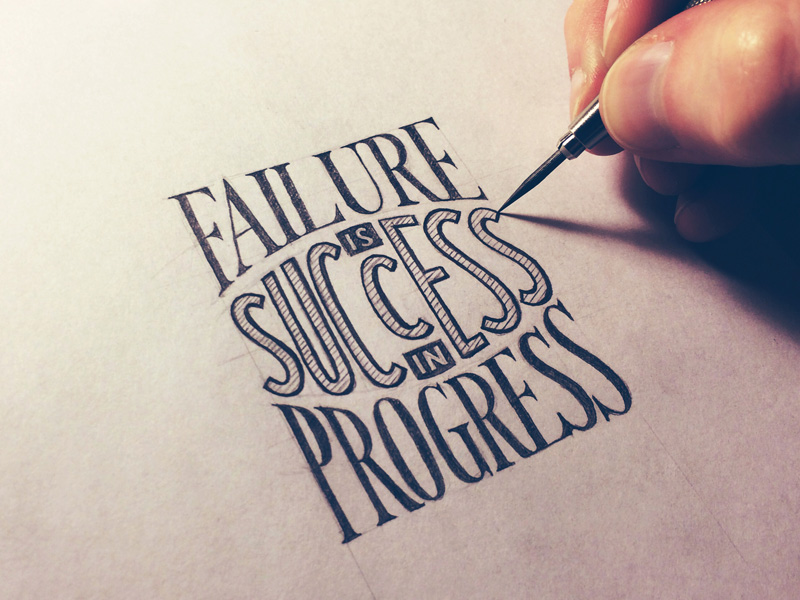
Learn from Failure
One of the books I received from the Next Big Idea Book Club was Never Stop Learning: Stay Relevant, Reinvent Yourself, and Thrive by Bradley R Staats.
Reading it was more of an affirmation than a “ooh, I didn’t know that.” What I appreciated about Staats book was the reasoning he gave for the ideas I had already come to believe. Staats background is in behavior science, so much of his book focuses on why we are so bad at being lifelong learners, even though there are constant messages about the importance of continual learning to stay relevant in our careers and in our lives.
Staats shares a few steps in his book for becoming better at learning. They include:
- Valuing failure
- Focusing on process, not outcome, and on questions, not answers
- Making time for reflection
- Learning to be true to yourself by playing to your strengths
- Pairing specialization with variety
- Treating others as learning partners
For me, the bang for the buck was in the valuing failure section. I’ll be honest, I’m one of those people who cringes when I hear phrases like, “Failure is just a first attempt at learning” or “If you aren’t failing, you aren’t trying something new.” It’s not because I have a fear of failure. It’s because I see failure as the end. Mistakes are part of process, but failure is larger. It’s the point of giving up… as long as trying is part of the process, than to me there is no failure. Just learning opportunities and trials. Therefore, I found the following quotes from Staats book enlightened me, and helped me expand my definition of failure.
***
“Failure can change how we act. The discovery that a belief we had was wrong can alter how we look for new information. We become more likely to expand both the breadth and depth of our investigation: we might talk to someone different, and we might spend more time considering what has occurred. Since failure is to some degree a surprise, it makes us change our assumptions. We reflect on what happened and how to address it going forward.”
“The reason we need failure to learn is straightforward: learning requires trying new things, and sometimes new things don’t work as expected. Failure creates a powerful learning cocktail, mixing new ideas with novel information and a motivation to experiment.”
“A focus on success leads both to a fear of failure and to an inability to see the failure that occurs around us.”
Fundamental attribution error…. in considering our own failure, we often “overweight things such as luck or the difficulty of the task and underweight our ability or effort… when you assign responsibility for a failure to outside events, you negatively impact your motivation to try to learn.”
***
To destigmatize failure we need to bring our struggles out into the open. Brene Brown would call this being vulnerable. And Daniel Coyle would add that vulnerability builds trust, which is what is needed to keep that learning-from-failure cycle positive. We also need to shift how we think about acting versus not acting. Staats explains, “We are averse to loss, and failure always brings the possibility of loss. Instead of considering the safety of the status quo and the risk of doing things differently, consider the risk in the status quo and the safety that comes from learning new things.”
After all, “mistakes aren’t a necessary evil. They aren’t evil at all” says Ed Catmull, co-founder of Pixar. He explains that “they are an inevitable consequence of doing something new (and as such, should be seen as valuable; without them, we’d have no originality).”
-

There’s a Fly in My Soup!
How many times have you found yourself trying over and over again to explain a problem, only to have the other person jump to solutions without quite hearing you? Reminds me of this Sesame Street routine.
What I love about Design Thinking is that the focus on empathy requires the designer to truly listen, observe, and immerse oneself into the problem through the lens of the user, and not the lens of the designer. It requires us to hear about the issue with the fly in the soup.
This hit home for me Saturday at #DesignCamp. I attended Ellen Deutscher’s (@Lndeutsch) “Nurturing Design Thinking Mindsets through Play and Improv” session. I told her I was attending because improv gives me anxiety and I needed to step outside my comfort zone.
Ellen is a wizard at leading people through collaborative experiences that build active listening and risk taking so I knew I was in good hands. At one point, after an activity, she asked if anyone wanted to share how that experience made them feel. She said, “Be mindful of your process. If you don’t like it, why force your students?”
https://tenor.com/embed.js
How can a concept so seemingly simple not actually be so? Why do we, as educators, keep forcing processes on students that would make us cringe? Timed tests, novel selection by Lexile level, five-paragraph essays…
Perhaps it has to do with the fact that education tends to search for the middle ground, the average, and solve accordingly. Instead of being mindful of what makes us unique, it’s easier to solve for the middle.
The Air Force learned the flaw in this approach when they discovered that their cockpit, designed based on average measurements of hundreds of pilots, actually fit none of their pilots, resulting in many crashes … on one particularly rough day, 17 plane crashes!
Average doesn’t work in cockpits, and it doesn’t work in education. Randy Scherer (@RandellScherer) reiterated this in his “Design for Extreme Users” session. Randy explains how extreme users (or “radical people!”) lead us to “deep insights about why our designs sort-of, kind-of work.” When we set aside the concept of average, we can make a huge difference in the lives of students.
When we set aside the concept of average, we can be mindful of our processes. We can design education not for the average, but for every user. And when we do that, then we can truly take care of the fly in the soup.
-
It’s All About the Soft Skills
Read an article today called, “Teens Rate Soft Skills More Vital Than Hard Skills.” The author, Dian Schaffhauser, opened by discussing how teens incorrectly rate the soft skills of self-confidence, communication, leadership and teamwork as more critical than hard skills:
Could we be over-promoting the importance of soft skills to young people at the expense of helping them understand the relevance of other, “harder” skills? According to a recent survey, just over half of teens (52 percent) said they believe have a good understanding of the skills they need to be successful after high school. Yet, what they ranked at the top of the list were all soft skills: self-confidence, communication, leadership and teamwork. The skills that ranked least important were computer expertise, writing, typing and math.
By Dian Schaffhauser . 01/07/19I find it interesting the author assumes the teens are wrong in weighing ‘soft’ skills over ‘hard’ skills.
Soft Skills Matter
One of the soft skills at the top of the teen list is communication. By its nature, communication requires solid understanding of rhetoric, language, etc. which is much more robust than the five paragraph essay we teach in schools. Likewise, without self-confidence, leadership, or teamwork, what use are your math skills unless someone hires you to sit in a closet and solve equations all day?
Quite honestly, I’m baffled that typing is called out as a hard skill at all, given the influx of touch screens, Siri/Alexa, and mobile devices which require dexterous thumbs over home key placement. Likewise, I’m sure many teens don’t see computer expertise as something “else” for them because technology is ubiquitous in their lives. And let’s be real, when they are in classrooms that relegate technology to internet searches, or a PowerPoint presentation, why would we expect them to see “computer expertise” as a needed hard skill?
LinkedIn CEO Jeff Weiner isn’t looking for computer expertise, but he is looking for digital fluency, which requires proficiency in designing presentations, manipulating spreadsheets and navigating social media. At a conference in April, he urged schools to focus on four core skills: critical reasoning, creative problem solving, collaboration and basic digital fluency (Article: “Forget coding. It’s the soft skills, stupid. And that’s what schools should be teaching.”)
Schaffhauser’s article goes on to share other data points from the survey about access to STEM learning, but it’s non-congruent with both the article title and its opening declaration so I’m not sure what purpose those data points provide. 64% of students said they didn’t believe they were involved in any STEM programs. So are we to be surprised when only 33% of students express interest in STEM fields? And honestly, how are they supposed to know what career options are out there, and what hard and soft skills are required, if less than half of the teens are getting any instruction in career path opportunities?

The Real Skills
Is the author implying that hard skills are the path to STEM, and that teens valuing soft skills are going to prevent them from success in those fields? Seth Godin, American author and former dot com business executive would argue, against that. He believes that soft skills, which he’d rather call real skills, are what matters most. In fact, he calls them real because even if you’ve got the hard skills, “you’re no help to us without these human skills, the things that we can’t write down, or program a computer to do.” Seth knows that real skills can’t replace the hard skills, but what they do is amplify it, give it meaning and value, and add to the success of an organization.
In Gallup’s 21st Century Skills and the Workplace Survey (2013), a majority of respondents agreed that most of the skills they’ve used in their current job were developed outside of school. So maybe instead of dismissing these teens as being incorrect in their assumptions that soft skills matter more than hard skills, we should take some notes.