A couple weeks ago I wrote a blog post about the Good Habits book I had just finished reading. This week, I’d like to share a fun video I watched on the Backwards Brain Bicycle. We’ve heard the phrase, “It’s just like riding a bike” but what happens when the rules of riding the bike change? In the video, Destin, an engineer, tries riding a bike in which the handlebar moves in the opposite direction of the tire. Move the handlebar to the left and the tire goes right. Sounds easy, right? Not even a little bit! Take a few minutes right now to watch the video.
The Backwards Brain Bicycle
Why share this with you? Destin says that knowledge does not equal understanding. We all have knowledge in our brains. Knowledge is everything we learn through experience or education. We then convert that knowledge into habits, such as pressing the gas pedal when we see a green light, letting the dog outside to pee when we get home, and performing a division algorithm when we see the ÷ symbol.
However, knowledge isn’t always correct. Destin had knowledge of how to ride a bike and had developed riding habits that utilized that knowledge, but that knowledge was not the right information needed when given the backwards brain bike. He explains, “Once you have a rigid way of thinking in your head, sometimes you cannot change it, even if you want to.”
Part of the educational process, for both students and staff, is unlearning and relearning. When we get new information that conflicts with knowledge we have already established, we have to unlearn what we thought we knew, and then relearn with this new information added. When it’s a major shift, like riding the backwards brain bicycle, it can create friction and disrupt habits, which in turn can cause gaps in learning because the previous knowledge is rigidly in place. Therefore, when introducing new procedures or technology tools, we need to stay mindful of the friction it may cause and provide support because it’s not always as easy as riding a bike!
When I was little, my dad was on the road a lot for work. So when he was home, we’d often go out to dinner so my mom could take a break from cooking. The best restaurants were the ones with plain, paper placemats because those were the ones in which creativity could flourish.
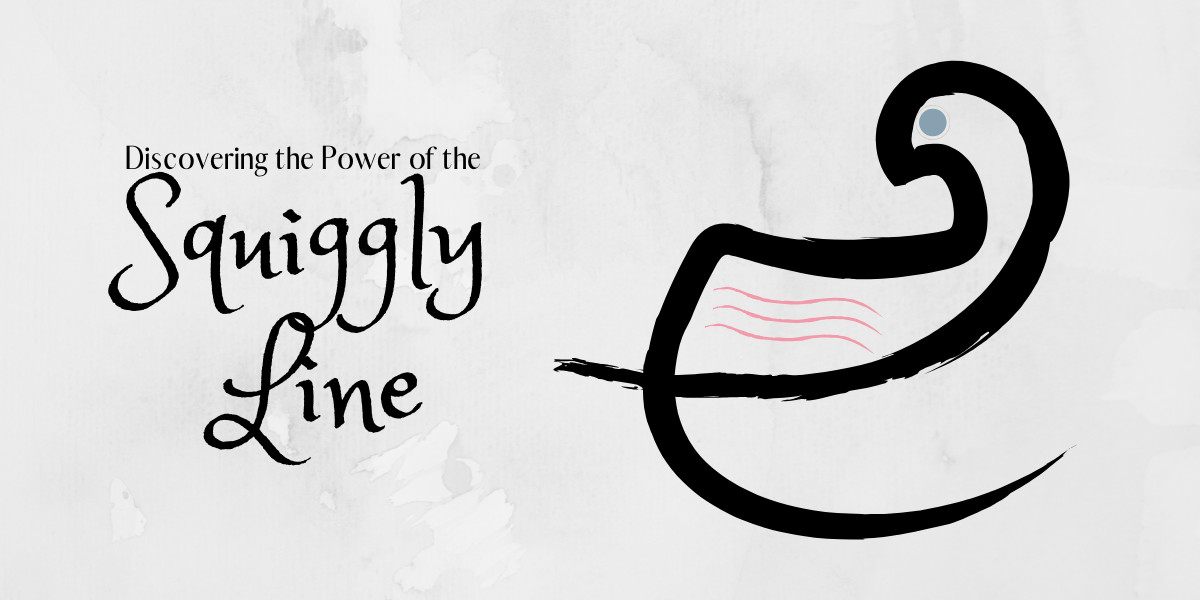
My dad would grab a pen from my mom, and draw a squiggly line on the placemat. My job, then, was to create something from the perceived nothing. Like looking for cloud animals, somewhere in that squiggly line was an animal, or an airplane, or something else just waiting to be discovered, and drawn, with the pen. When I finished my creation, we’d swap roles, and I’d create the squiggly line with which he would create.
A not-yet-invented motorbike I can ride to pick up the mail.*
This back and forth continued until the waiter inevitably ruined our creative masterpiece with my dinner plate. Back then, it seemed like a simple way to pass the time with a child anxious for her food. But now, I can look back and see a much greater result of those encounters.
It was in those moments that I learned the power of “ish.”
In Ish, by Peter Reynolds, the main character learns that drawing “ish-ly” provides more creative freedom than getting it just right.
For me, a young girl who struggled with perfection, this was an important learning. My mom was artistic, as were my uncle and my grandpa, so my self-judgment would often result in a desire to skip the creative aspects of any school project. “Ish” thinking helped me to set aside my negative self-talk and see the value in my creations.
In Creative Confidence: Unleashing the Creative Potential Within Us All, Tom and David Kelley explain that “striving for perfection can get in the way during the early stages of the creative process.” Unfortunately, schools don’t always provide the time, the space, the freedom to engage in the early stages of the creative process. The “ish” loses to the strive for perfection when learning is connected to an assignment with a deadline and an assessment.
Students need to learn “ish,” to value “ish,” and to believe in the power of a squiggly line. Squiggly lines aren’t about being perfect, or the best. And that’s what makes them perfectly ‘ish.”
*P.S. I created the above drawing to illustrate the squiggly line concept, and it was very hard for me to let go and just draw something… guess I need to start going out to eat with my dad more again!
I signed up for the Next Big Idea Club because I wanted to be introduced to books and ideas that may not have normally come my way. This latest shipment included a book that I definitely would not have purchased in the store.
Why wouldn’t I have purchased it in the store? Well, I am horrible at establishing good habits. I can’t seem to keep up with most of what I start – running is a good example. I had actually gotten to the point of finishing 6 or 7 miles without dying and then, BAM, just quit. I don’t know why. So the idea of picking up a book on habits just wouldn’t have been on my radar.
But luckily it was on NBIC’s radar!
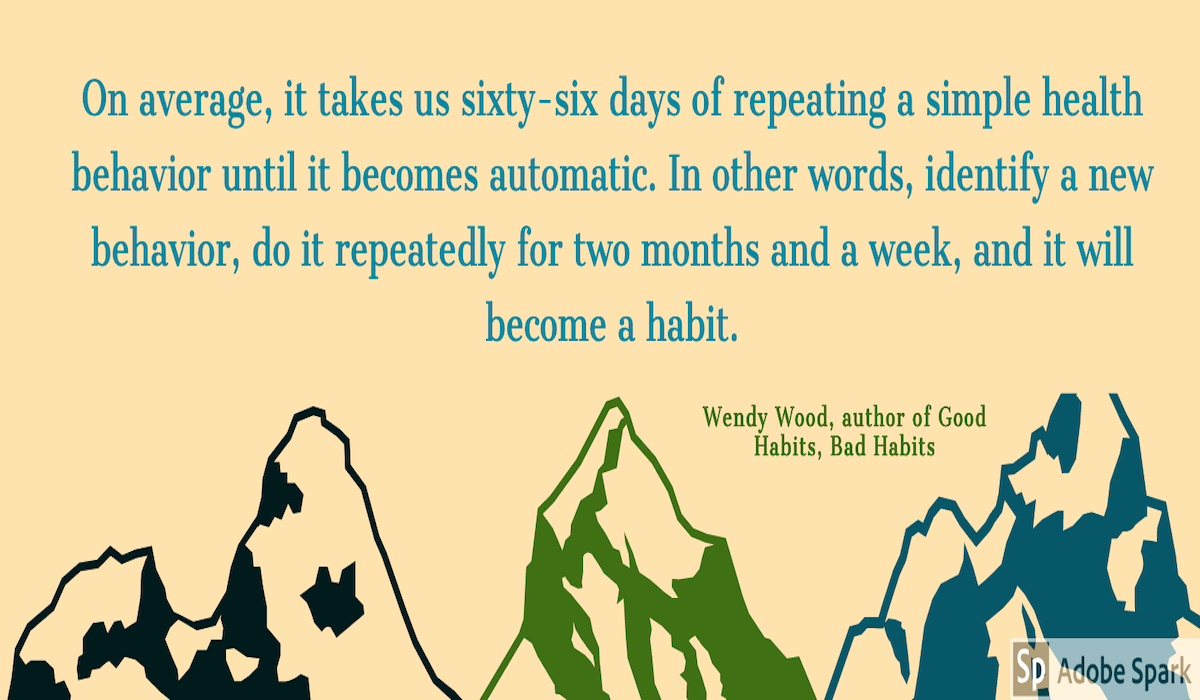
This book has taught me so much about how habits are formed, and how to influence those habits (and how to get my fit lifestyle back on track!). As Wood describes it, “Habits make the wildly challenging and difficult seem easy and safe.” Because habits are a kind of action that is “relatively insensitive to rewards,” it is able to run in the background while the conscious mind is still deciding to do something else.
As I read her book, I was thinking… teachers need to know this stuff!! How much better can I be as a teacher by understanding why some routines are successful and others are not when it comes to teaching and learning. And to life!
Cue and Response
Habits are all about cue and response. This is a crucially important piece of information. We talk about goal setting a lot, and self-control (aka grit) to meet those goals, but as it turns out, self-control really has no part in habits. Woods explains:
Goals can orient you to build a habit, but your desires don’t make habits work. Actually, your habit self would benefit if “you” just got out of the way.
Wendy Wood
Wood gives a lot of examples to support this claim. She talks about all the public service campaigns to get people to eat more fruits and veggies; to stop smoking; or to start exercising. Let’s be real – they don’t change our behavior, even though we know that they are important. Even when we swear that this is the year the gym will actually be part of our routine, most of us fail to carry it out. Why?
Cues and responses. The biggest cue of which is our surroundings. Without realizing it, our surroundings drastically influence our behavior. US soldiers in Vietnam had a drug problem. The drug was heroin, and the problem was big. Not only was it readily available in Vietnam, but it served an immediate need of taking the edge off a stressful situation. The government was concerned. How would these drug-addicted soldiers re-acclimate to civilized society?
After being sent to a week detox in Vietnam, soldiers were sent home and monitored. Only 5% started using again. Contrast that with the average drug relapse rate of 40-60% and it’s quite startling. Even unbelievable. So why didn’t they start using again? Change of scenery. The visual cues were no longer present, so the habit was disrupted. It’s why people who need to lose weight are told to rid their pantry of the sweet delicacies that they crave, or a prisoner can seem completely reformed, but quickly fall back into a life of crime when returned home.
Cue and response is important for students. If students always learn math in room 5, and then are moved to room 2 for a test, the disruption will impact habits.The habit to check over the work twice, or to always reduce fractions, could be impacted. Likewise, if a student gets used to giving all green flyers to his parents for a signature, and one week the green paper is out and pink paper is used, there may be less signatures turned in the next day because the visual cue was disrupted.
Repetition
Visual cues aren’t the only thing to impact habit. Repetition is a big one, too, and probably the one we are most familiar with. If we can just get to the gym every day, the repetition should create a habit… and yet, with my running, I was running multiple times a week and it still didn’t become a habit. Why?
Because repetition isn’t enough. Repetition needs to be coupled with situational control. In other words, the trips to the gym, or to start running, need to be set regularly. People who are gym addicts usually go at the same time every day. Runners hit the streets right after they wake up, or when they get home. They don’t wake up each day and have to figure out when to go, which then requires the conscious mind to step in and make decisions. When we remove the conscious mind from the equation, it actually changes our experience of the activity by making it seem easier.
If there is a repetitive behavior that needs to be ended, Wood recommends creating friction. For smokers, it was easy to buy a pack when vending machines were everywhere. Now that they can only be purchased by asking a clerk to get the pack from behind the counter, and most places don’t allow public smoking, there has been a huge reduction in smokers in the United States. Barriers work a lot more than willpower!
If we want students to be responsible for turning in their assignments every day, then repetition is a great structure. Every day at 8am, assignments are collected. Make it even easier and add cues and responses. Every day at 8am, the red basket will be set on the table in which to place the assignments. If students know that lunch is at 11:00 every day, they will probably get restless a few minutes prior… have an assembly and lunch gets changed to 11:30am? Don’t be surprised if they’re still acting squirrelly at 10:58am. Want to disrupt that behavior? Hide the clock. Habits are like that!
Rewards
A habit is actually established when it is insensitive to reward. Maybe we initially ran for the medals at events, but now we just run because it’s how each day has started for five years and why stop now? Or we were rewarded with a cash prize for losing weight, but the cash prize was a one time event and the weight quickly returns. Dopamine is a fickle beast!
“To our conscious minds, larger rewards and more certain rewards – ones that we now are coming – are motivating. But habits thrive on uncertainty.” Don’t believe me? How often do you check your phone every day? 25, 50, 100 times? It’s a habit… some people call it an addiction. And yet how often are you rewarded with an interesting tweet or email or funny Reddit post? It’s the uncertainty of the reward that keeps us checking.
This is why grades aren’t motivational for many students, or token reward systems in classrooms. It may appeal to the conscious mind in the beginning, but it doesn’t help students develop a habit of reading before bed every night. Neither does collecting gold star stickers for signed reading logs. The uncertain reward of reaching a juicy part in the story could do it, though, if it was a book that meets the student’s interest.
Variety
Variety is the spice of life… but habits are bland and don’t like variety. Consistency is key to habit formation. Running at 6am every day is likely to become a habit. Running at 6am one day, noon the next, and then skipping two days is not going to make it stick.
And when trying to establish a new habit, connecting it to existing cues is an easier way to make it automated. So you’ve got the running set at 6am and it’s working for you? Add on eating a banana the moment you’re finished with the run. Now you’re adding nutrition to the routine. Stacking, as it’s called, takes advantage of the automaticity already in place.
Swapping also takes advantage of the automaticity but it swaps one behavior for another. Bananas have too much sugar? Swap it for an orange but don’t stop the process of eating the fruit right when the run finishes.
This was my weakness as a teacher. I thought students craved variety. I thought routines would diminish my star power. In reality, those routines help students create habits. And those habits free up the conscious mind to focus on what’s important – the new learning concepts. Once they know to turn in assignments to the red basket, adding a short “bellringer” activity to the mix becomes easy. Stack it on! No longer need the basket for turn in? Awesome. Swap it for a Google Form that tells you how they are feeling about the current learning concept.
Resiliency
An interesting thing about habits. Wood explains that, in times of stress, there’s actually a boost in habit performance. Habits are the safe harbors for our brain. As our consciousness deals with mental drain, the habits kick in and keep us moving. One study showed that corporate execs, when facing major business decisions that leave them anxious and under the gun, are more likely to avoid exploring new innovations. Instead, habit kicks in and the decision is to continue the status quo.
Teachers and students have similar responses. When a student falls behind, and is struggling with course content, they may repeat past behaviors, even though they are ineffective. Why not come in for lunch tutoring, you ask them. Because every day at 11:00, it is time for lunch and that’s the habit so the student goes to lunch. As a result, the teacher thinks the student doesn’t care enough to take care of the situation. In reality, the habit brain is taking care of the conscious brain by removing the need for a decision. In situations like this, habit discontinuity is needed. An external force (such as a teacher requirement to come in at lunch) has to shake up the brain and kick the conscious mind into gear.
Heed the Warning
Habits are awesome, but beware… repetition may strengthen our tendency to act, but it also weakens the sensation of that act. If you eat turkey every day for lunch, you may no longer find that you enjoy the taste. Running every day is great, but if it’s always the same scenery, it may not trigger that dopamine release you used to receive. Routines are great, but this is not….
Balance is key! Build the habits for the behavioral routines, and spend the conscious energy on the learning! Your students will thank you for it!
Understanding habits normalizes the trials of changing behavior. The distance between repeated failure and enduring, successful change is not marked by personal fortitude or determination…Instead, you cover that distance through simple steps…to encourage enjoyable actions that meet your long-term goals… This is the promise of a habit life well lived.
If you’ve been on Facebook for any decent amount of time lately, you’ve probably seen this post:
Costco $75 coupon post from Facebook
It seems like every so often, this coupon, or other fake ones from Southwest, Disney, etc., make the rounds online. The scam encourages people to click on a link and follow a few simple steps to claim their $75. Those few simple steps usually include giving out some personal information, such as name, email, phone number, etc. which can then be sold for data mining.
If you’re like me, you dutifully respond to your great-Aunt or long lost friend from 3rd grade to let them know the ad is fake. And yet, it keeps on circulating.
Say No to the Hoax
When we teach digital citizenship, or any digital literacy course, scams like this are often included. In fact, even to get my university email account activated, I had to take a cybersecurity course that include a section on how to detect hoaxes like that Costco coupon.
So why then, on Twitter, do I see so many educators fall prey to similar scams? Not sure what I’m talking about? Have you seen any tweets like these lately?
Last I looked it had 209 responses. Over 200 people freely giving their personal information via Twitter. 120 people retweeted it to encourage others to share their personal info.
To what end? Let’s examine this tweet more closely…
We have a person asking others to help show how far a tweet will go. And yet, it doesn’t disclose the original location. Hmm… how will the 200+ people know how far it’s gone? Guess only the originator gets to know.
But wait, the tweet says it’s for a geography class. Who teaches this class? Again, we don’t know. And if the teacher isn’t included, how is the class following the progress of this tweet? Are they manually reading every response and retweet to create a map?
What if a teacher is looking to connect with another geography class for a Mystery Skype or other collaborative event… can they connect? Nope. Because this tweet has no identifying information.
Just a generic tweet.
The Quest for Tweet Impressions
But don’t be fooled – there is a reason for it. Every time someone responds, or retweets, the author gets elevated in the twitter algorithm. Why is that important? Because the author gets more exposure, and more exposure means more followers… and more followers has potential for more gigs and more income.
Here’s an example of a tweet I made in September, and the analytics from Twitter.
You can see that Twitter is calculating total impressions. Impressions measures the total number of views of a conversation. So even though I only have 6k followers, this one tweet has been seen over 81k times. How? Because every like exposed my tweet to other people in that person’s timeline, and even more exposure for retweets and for replies. From that one tweet, 100 people clicked on my profile – that’s 100 potential new followers for me. Yay me!
Next time you see a tweet, or a post, that asks you to share it with the world, or provide personal data, before you click that “post” button, ask yourself: Is it truly about contributing to or supporting someone, or is it a promotional scam from the sender? When’s the last time you saw the tweet author engaging in conversations with followers? How many tweets are built on personal exposure pushes? Share my tweet. Read my book. Attend my session. What professional growth or meaning do you get from participating in the request?
And then go look at some cute puppy photos instead.
Postscript (12/10/19)
The author of the tweet I shared here reached out privately to explain that the request was from his wife, and said that I had made a fun project turn nasty. This post wasn’t about him, and wasn’t about being “nasty” (which is an interesting term to use these days for someone questioning a practice, but 🤷🏼♀️), but these types of algorithm-playing data requests in general. Although I do find it interesting that the post request has been repeated multiple times (but now with explanation of wife included) … So again, I just ask people to think before replying or sharing or divulging info on all social media platforms.
When I say the term “information literacy” what comes to mind? For most, they think of research … perhaps for an academic paper or maybe to double check the facts during a presidential debate.
But information literacy is sooo much more than that. The United States National Forum on Information Literacy defines information literacy as “… the hyper ability to know when there is a need for information, to be able to identify, locate, evaluate, and effectively use that information for the issue or problem at hand.” Wikipedia
“To know when there is a need for information” is an interesting phrase. In school, students are usually told what information is needed because it’s part of an assignment. But how does that connect to life?
Offer Up
My boyfriend loves to search for deals on Offer Up. Even if it’s nothing we need, he’ll consider purchasing it if the price is right.
So he got pretty excited when he saw this beauty posted for sale.
In class, students are learned to check out the webpage to test validity. When was it posted? Is there an author listed? Is the website a credible source?
Using this criteria, John would have determined that the trailer was credible. The post was new. Contact information and trailer details were included, and Offer Up is a well-known site.
But it wasn’t credible. It was a scam.
How did John know? He decided to do a lateral search. He looked at other items for sale by the seller. Lo and behold, the exact same posting was listed in many major cities. His ability to realize when there is a need for information saved us from being scammed out of a thousand dollars.
Look Both Ways Before Crossing the Street
Children are taught to look both ways before crossing the street. Left, right, left again.. then cross. When checking information and data validity, the same rule applies. Students should be able to recognize when there is a need for information and act accordingly.
It’s not enough to scroll up and down a site, like often taught. There is also a need to look left and right by opening new tabs and seeing what else is being said about the data… or what else is being sold on Offer Up!
I attended a student panel on eSports. Six high schoolers had given up their time to come talk to educators about gaming and eSports leagues.
Within five minutes, the questions had shifted away from students and were directed at the adults. Questions like:
What about the violence? What about the hardware needs? What protocols need to be established?
* Sigh *
It’s fascinating how I read daily on Twitter about the importance of relationships over everything else, and yet these students were so quickly set aside in favor of adult needs. They were there to share their passion, and pretty much got a “yea, but” in response.
I raised my hand to comment.
“There’s a lot of adult talk happening right now, so I want to bring this back to the students. Why game? What compels you to that world?” A few of the people in the room turned and smiled at me, as if to say, “I see what you did there.”
Student responses were powerful. One shared about a rough upbringing, in which money was tight and life wasn’t kind. “Games,” he said, “comforted me when life could not.” A couple others talked about meaningful friendships being developed, and the time they spend enjoying each other’s company.
When finished, the next person called upon started his question with, “I have one for the students but also one for the adults…”
And so it went.
People…
We can’t just talk about student voice, and empowerment, and relationships mattering if we don’t mean it. That panel of students deserve to be heard. They deserve respect. They deserve awe and maybe even a bow for being willing to talk to their fiercest critics, adults, about their passions.