Year: 2019

  • The Power of Empathy

    When we talk design thinking, we talk empathy. But it seems that empathy is struggling to keep its place in society. In the article “The End of Empathy,” a study was shared that showed a serious decline in empathy starting in 2000. Per the article:

    More students say it’s not their problem to help people in trouble, not their job to see the world from someone else’s perspective. By 2009, on all the standard measures, Konrath found, young people on average measure 40 percent less empathetic than my own generation — 40 percent!

    The End of Empathy

    I’m hopeful that this data has shifted since the study was completed, but regardless, it is a reminder to teachers that empathy is not a given. We need to intentionally bring it in to our classroom.

    Selfish Empathy?

    In the book The Dark Sides of Empathy the author Breithaupt suggests we give up on the idea that empathy is about helping others. Instead, we should use empathy to expand our own imaginations and help ourselves. By seeing the world through the eyes of a migrant child we can make our own minds richer. He calls it selfish empathy.

    Not sure that selfish empathy is the answer.

    But I think we can all agree that empathy is needed. And it’s needed beyond the design thinking framework. So with that in mind, here’s some more resources to think about empathy and its role in our lives and our classrooms.

    More Thoughts on Empathy

    Low & Slow (vs. fear) – Seth Godin’s blog post cautions us to consider the time it takes to make change. 
    Status Roles – Another Seth Godin entry, but this one is a blog and podcast. When working with others, perceived status roles can impact the message being delivered and received. 
    Teaching Empathy Through Design Thinking – Although Empathy is the first element of a Design Thinking approach, empathy plays a role in every part of a Design Thinking challenge.
    Empathy Mapping – Consider what people say, think, do, and feel to truly empathize with their perspective. 

    Empathy is not always about people – we also build empathy for the world around us. 

    Roundme – These 360 degree virtual tours provide an immersive experience. Some have sound, or links to learn more about the location. Being able to experience a location without being there helps builds empathy. 


    And while you’re checking out Roundme, consider the world that is right outside your door. Out of Eden Walk is all about slowing down, sharing stories, and making connections. 
  • Guest Blog Post: A Teacher’s Changing Mindset on Student Agency

    Guest Blog Post: A Teacher’s Changing Mindset on Student Agency

    By Emily Mackie, 5th grade teacher

    As mentioned in my Exploring Agency and Personalization blog on December 15th, I’ve been working with teachers to to better understand the principles of agency and personalization. As these are key elements of our district’s vision and mission, it is important to be able to articulate what those principles are, how they manifest in an elementary school classroom, and what impact they have on student learning. When I asked teachers to reflect on their growth, one teacher took the time to write an eloquent response. With her permission, I am sharing it here.


    I used to believe that all good teachers foster agency in their classroom. It is something that just naturally starts to happen for most kids, and something that might happen very slowly, or in a limited capacity for others. After all, the reality is that some kids just have more buy-in to their own learning than others. Our students come to us with different personalities, hopes, dreams, family values, and beliefs about their schooling. Our students come to us with a vast spectrum of experiences, fostered from within and outside of our school district. Changing or growing their pre-existing belief system is no easy task. But now I believe that supporting every student in the ways they approach their own learning is quite possibly our most important task as educators.

    @MrsMackieD3 Tweet: Sharing Learning@Home with our classmates = engaged learners

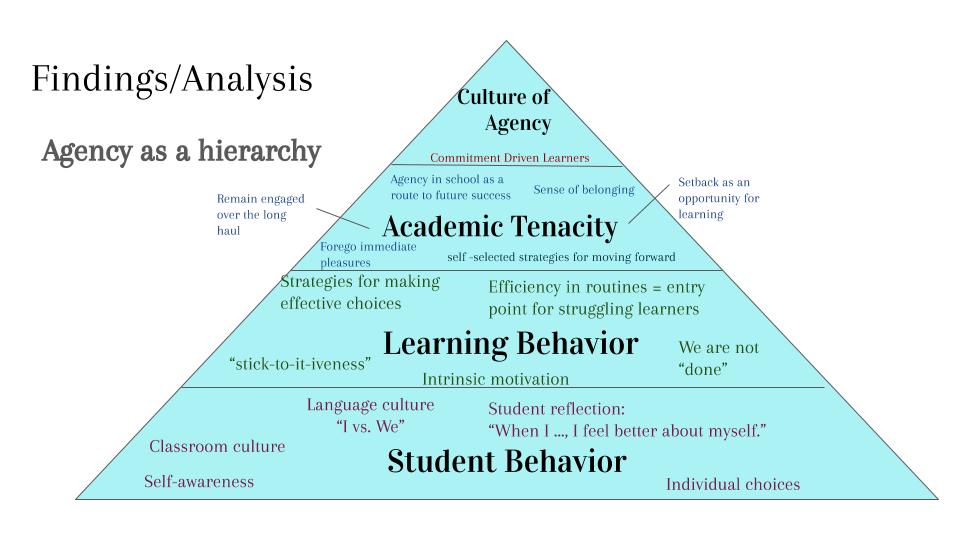
    After working closely with my team and the other hub participants, my thinking on student agency has really changed into a belief that supporting student growth in agency is slow and steady, and is fostered most effectively over time. When we can support students in building these habits of mind, they build a foundation for success in life that will extend beyond their school experience. Agency is grown through hard work and understanding. Building grit and academic tenacity takes focus, attention, and buy-in, from students and teachers alike. Growing agency for students is about goal setting and asking the tough questions about the WHYs of their learning experiences. Questions and considerations about learning that I have been asking my students to become aware of are: Why are you doing this? Why does it matter? Who are you doing this FOR? Is this for you, me, your parents? What you do, make, say, accomplish each day matters – for YOU. Otherwise, what is the point? Providing learning experiences and opportunities for students to grow this mindset should be the point…for all of us. Spending time, scaffolding opportunities for students to make decisions about their learning behaviors with intention is hard work. But it is important work. Helping students build an awareness about their own contributions and responsibilities toward their learning outcomes is one of the most important contributions we can make to them as lifelong learners. This is the work, the learning, the growing, that is most certainly worth doing.

    Emily Mackie has been teaching elementary students for 13 years. She strives to make the classroom a student-centered space which fosters curiosity, exploration, creativity, and FUN so that all children feel safe, valued, and loved. You can find her on Twitter at @MrsMackieD3

  • What is the Role of Mobile Devices in Your School?

    What is the Role of Mobile Devices in Your School?

    A colleague in her Master’s program asked me to answer a few questions for a class project she is completing. My responses are below. I’d love to hear how others would answer these questions.

    What are the instructional goals that we are aiming to accomplish with mobile learning?

    Our goal is to provide students with access to information and resources whenever and wherever they need it. We still have a Tech Lab at each school, but the Tech Lab is for enrichment… a chance for students to learn things that a classroom teacher may not have time or expertise in, like coding. Robotics, greenscreen, etc. Then, with our mobile devices, students should be able to take what they’ve learned in the Tech Lab and apply it to classroom learning. Example: A group of 5th grade students are working together to explain to others how tides work, and what is the significance of their patterns. They weren’t told HOW to teach others. One student grabs his Chromebook and starts building out a Scratch movie… he didn’t learn that in class. Another student starts researching information. And a third boy started a Google Slide. Their self-directing their learning. They need mobile devices if this is to be successful because they shouldn’t have to wait for a scheduled time, or a device to become available, in order for learning to happen. We want technology to be ubiquitous, like binder paper and pencils. Only then can it truly become a learning mechanism and not just a consumer device.

    How will the mobility of the devices in our school/district/institution improve teaching and learning?

    I watched a webinar the other day on Emotional Intelligence (EQ) becoming the key to successful organizations, rep lacing IQ. Why is that? Because IQ used to be connected to WHAT you knew. Now, with technology, it’s easier to fill the holes of what we don’t know. “Google it” is the default answer to many questions asked these days. So consider, if we could reprogram school so that “Google it” becomes the norm (instead of this fearful entity that students use to “cheat”), then teachers and students could spend more time teaching and learning about the really important things, like emotional intelligence and the other soft skills, which are deemed most important to the future of jobs:

    1. Complex problem solving

    2. Critical thinking

    3. Creativity

    4. People management

    5. Coordinating with others

    6. Emotional intelligence (new)

    7. Judgment and decision making

    8. Service orientation

    9. Negotiation

    10. Cognitive flexibility (new)

    What would you like to be able to do with mobile devices that was previously difficult or impossible?

    I’d like to be able to ensure that the mobile devices in students’ hands are all equipped with 4G (5G?) internet. The equity/access gap is real, and we increase it when we give students devices but not access. We create this false sense of equitable access to resources and then say things like, “Well, they can just go to Starbucks if they need internet.” When we say this, we’re negating the full experience of the child. So before we start getting excited about OER (Open Educational Resources) and before we start pushing the “Google It” answer, we have to make sure that all our students have access.

    Then, we need to make sure that all our students are equipped with the tools and resources to navigate the complexities of media literacy. I don’t think a device can provide that…yet… but it’d be great if it had an AI that could help students select reliable sources of information. There are some apps and web extensions that are heading this route, but I’ holding out hope for the Star Trek transponder that meets this need for all of us. ☺

  • The Future of Work is Emotionally Intelligent … Are We Preparing Students?

    The Future of Work is Emotionally Intelligent … Are We Preparing Students?

    I recently participated in a webinar by Singularity University titled, “The Future of Work is Emotionally Intelligent.” Below are some key takeaways I discovered from the discussion.

    Participants:
    Melissa Extein, PsyD, Principal Consultant & Part-time Faculty @Extein Consulting & Milano School of Policy, Management and Environment, The New School
    Nichol Bradford, Exec Director and Co-Founder, Transformative Tech Lab, Lecturer at Stanford University, CEO of Willow Group
    Simone Harris, Certified Emotional Intelligence Coach, Trauma Sensitive Mindfulness Practitioner @Courageous Leadership, LLC and Search Inside Yourself Leadership Institute
    Rob Nail, Singularity University CEO

    What is Emotional Intelligence?

    What is emotional intelligence? Although everyone on the panel had a different definition, I think the baseline is the ability to both recognize/understand our own emotions and to recognize/understand/influence others’ emotions. It’s also important to recognize that this is a learned skill, and not some innate trait that you either have or don’t have. There’s a big difference between having emotions and being emotionally intelligent. Many of us learn from people who also aren’t that skilled in this area, so we can all use some help growing this skillset.

    If you can’t bring the IQ, bring the EQ, says Nail. Leadership’s role is to understand the culture and emotional space of the business. With this understanding, the leader, knowing who’s in the room and how they operate, can connect the people who know the skills required by the team.

    Unbossing an Organization

    Bradford describes one of the benefits of having EQ in the workplace is the ability to unboss an organization. Unbossed organizations “focus on collaborative leadership and developing talent through a mutual learning process.” It’s no longer about a Human Resources Department, but Human Capital Department. These types of shifts require a high level of EQ so that employees can both give and take feedback; reduce fear of not having someone who tells them what to do; and self-regulate behaviors, biases, and feelings for the good of the community.

    Extein expands on this by pointing out the critical role of empathy. “Empathy requires not only the ability to put yourself in other’s shoes but to understand the shoes they are in and to be interested in understanding.” However, diverse workplaces bring diverse levels of emotional intelligence. Nail remarks that a critical component for the organization is a clear, aligned purpose and intention as well as opportunities to facilitate and develop EQ for those in need.

    Millenials and EQ

    Millennials demanding a higher level of authenticity – they don’t want to split their identities between who they are in personal and professional life. and they will be the bulk of the work force, and the managers, in the next five to ten years. Companies that are most successful have a strong sense of meaning and purpose for middle management, and not just upper executives. To know your purpose and have a sense of meaning ties in to how much noise is in your head on a daily basis that prevents people from having empathy, from slowing down and getting into the moment to better understand the emotions present.

    Research says that employee motivation is based on three areas:
    Feelings of autonomy.
    Feelings of competency.
    Build relationships.
    All of these are impacted by emotional intelligence. It reinforces that need for EQ over IQ for those in leadership roles. The smartest engineer, for example, may not be the best CEO for an engineering firm if she lacks the EQ required to provide those feelings of autonomy, competency, and relationships in employees.

    Emotional Intelligence is a learned skill, so here are some ways to increase your EQ, as well as that of the organization:
    – Slow down enough to look under the surface and not just the surface emotions – meditation, quiet sitting
    – Journaling
    – Mindful Listening
    – Find Ways to “Be in Flow”
    – Assess your EQ with Available Tools
    – Executive/Peer Coaching for Leaders
    – Time to Practice the Skill
    – Create an environment where it’s okay to make mistakes and learn
    – Use emoticons to share your emotions with others to increase understanding in written communication

    How are you building your own emotional intelligence? What about the emotional intelligence of students? staff? community?

  • Powering Personalization

    Powering Personalization

    For the next two months, I get the honor to spend time, like serious, dedicated, reflective time, with three groups of teachers as we dive deep into the concepts of personalization and agency. Our goal is to define how these terms are demonstrated in an elementary classroom: What teacher moves are present? What are our learners doing? How does personalization and agency impact their learning? Their sense of self?

    One of the teacher hubs is a group of 1st grade teachers that would like to spend more time getting to know learners’ interests and concerns.

    • How can getting to know our learners help with social and behavior interactions?
    • How do we get to know each child’s culture and traditions?
    • How do we apply personal interests into core curriculum?
    • How can knowing our learner’s interests help with connecting with other students, like big buddies on campus?
    • How can we learn more about a student’s outside learning, and bring that passion into the classroom?

    Plan-Do-Study-Act

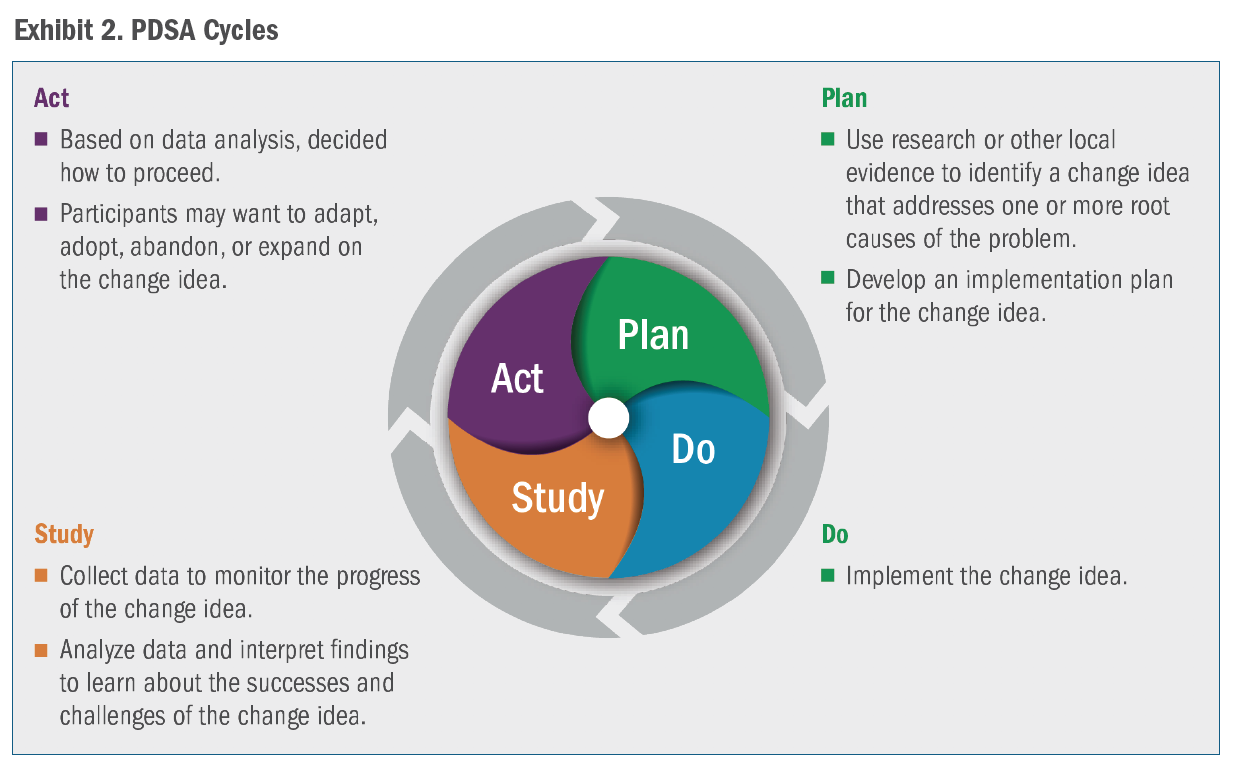
    What I love about my role is that I am simply the facilitator of their discovery. I find resources to help them explore their ideas, and I guide them through the PDSA cycle of Plan-Do-Study-Act. I’m like the fairy godmother in Cinderella, except that the pumpkin coach I provide is ways to grow in understanding, and discover new approaches/strategies that can be applied in the classroom as part of the pursuit towards the extraordinary school experience.

    Below are a few articles I am sharing with the teachers to help provide context around the topic of personalization. I’d love it if you’d share your resources as well, or even . better, ways in which you are providing personalized opportunities for all students to ignite their genius.

    Articles

    This article shows how personalization uses what you know about students (relationships + academics) to build experiences that meet their unique strengths and needs.

    https://www.edelements.com/blog/six-examples-of-what-personalized-learning-looks-like

    This article talks more about the partnership between teacher and parent to create a shared understanding of students, which helps to deeply understand the learner, leading to personalization that is meaningful.

    https://medium.com/@carolynwilson/curiosity-f5e4cedd5af1

    And this article helps build context around personalization, differentiation, and individualization… and the process teachers tend to go through as they head towards a personalized learning environment. It may be helpful to self-identify where you see yourself in the process, and then identify an area for growth/development through the hub plan-do-study-act cycle.

    https://www.advanc-ed.org/source/building-personalized-learning-environments

  • How Strategic is Your Strategic Plan?

    How Strategic is Your Strategic Plan?

    I’ve been wondering about strategic plans lately… during the course of my career I have been part of many strategic planning teams, both writing and executing.

    Some plans looked like a football play, with lots of arrows and lines designating who was doing what and when and for how long.

    Some strategic plans were gorgeous infographics, with colors and icons and benchmarks to outline what actions are being taken to reach an end goal.

    And others were a text document with charts and tables that outlined the steps, the due dates, and the expected outcomes.

    Truth be told, it doesn’t matter how it looks.

    What matter is how it’s lived, how it embodies the culture of the organization, and the alignment of the goals to the organization values and purpose.

    Does the plan reflect the learning and evolving that happens within a people organization or is it a testament to a static moment in time that gets filed on a bookshelf?

    Is it a PDF owned by one or a Google Doc shared by many?

    Would love to hear how strategic plans function within your organization, and how they impact the work you do every day.