Category: Book Reads

  • Reading Our Way to an Understanding of Racial Justice

    A colleague of mine, Andrew Arevalo, posted on Twitter that he had started reading White Fragility: Why It’s So Hard for White People to Talk About Racism by Robin DiAngelo.

    A Twitter conversation began in which people shared other books that would also be great reads.

    Here’s the books that were shared:

    • For White Folks Who Teach in the Hood, and the Rest of Y’all Too by Christopher Emdin
    • Culturally Responsive Teaching and the Brain by Zaretta Hammond
    • Between the World and Me by Ta-Nehisi Coates
    • The Soul of America: The Battle for Our Better Angels by Jon Meacham
    • We Want to Do More Than Survive: Abolitionist Teaching and the Pursuit of Educational Freedom by Bettina L. Love
    • I’m Still Here: Black Dignity in a World Made for Whiteness by Austin Channing Brown
    • Was the Cat in the Hat Black?: The Hidden Racism of Children’s Literature, and the Need for Diverse Books by Philip Nel
    • A People’s History of the United States by Howard Zinn
    • We Want to Do More Than Survive: Abolitionist Teaching and the Pursuit of Educational Freedom by Bettina L. Love
    • Biased: Uncovering the Hidden Prejudice That Shapes What We See, Think, and Do by Jennifer L. Eberhardt, PhD
    • White Rage: The Unspoken Truth of Our Racial Divide
      By Carol Anderson

    Anything else you’d add to this reading list? Any of these books impact your beliefs or actions on matters of representation, diversity, and inclusion?

    And if you haven’t yet read White Fragility, or you read it and want to discuss it with other educators, sign up for EquityEDU’s book study that starts in August.

    Resources shared after the post published:

    Not Light, But Fire: How to Lead Meaningful Race Conversations in the Classroom by Matthew R. Kay

  • Imagining Joyful Learning Spaces

    Imagining Joyful Learning Spaces

    This past month our innovation team has been fortunate to work with a school staff that is looking to reimagine their library space. Currently a traditional space with plain walls, a large circulation desk, and giant book shelves, the staff is wanting to build a space that reflects the joy of learning they want students to experience every day. In their words:

    Imagine a space where students of all ages and adults could create, innovate, and explore the world in an inspiring and natural environment designed to enlighten and change the world! Students need a way to access a variety of learning and discovery spaces in order to respect their age and place in the world and ignite their inner genius and advance the world.

    We’ve been using the design thinking process to guide us on the journey, which has been a fabulous way to keep us grounded in the WHY of our work. Today, I realized that a consistent theme kept reemerging during every brainstorm or prototype session – JOY.

    Adults design schools. Adults who have been schooled for years on how to build buildings. And then adults come in and furnish those buildings. They paint the walls. They choose the chairs. Somewhere in that process, the children become secondary. And often times, so does joy.

    Which brings me to the book Joyful by Ingrid Fetell Lee.

    In her book, Fetell Lee points out that joy isn’t reserved for religious gurus that have attained enlightenment. In fact, it can be found all around us. She summarizes 10 big ideas in which joy can be found:

    1. Harness the power of color.
    2. Live abundantly.
    3. Find your freedom.
    4. Discover harmony.
    5. Fill your life with playful shapes.
    6. Surprise yourself.
    7. Go higher.
    8. Feel the magic.
    9. Spread the love.
    10. Start anew.

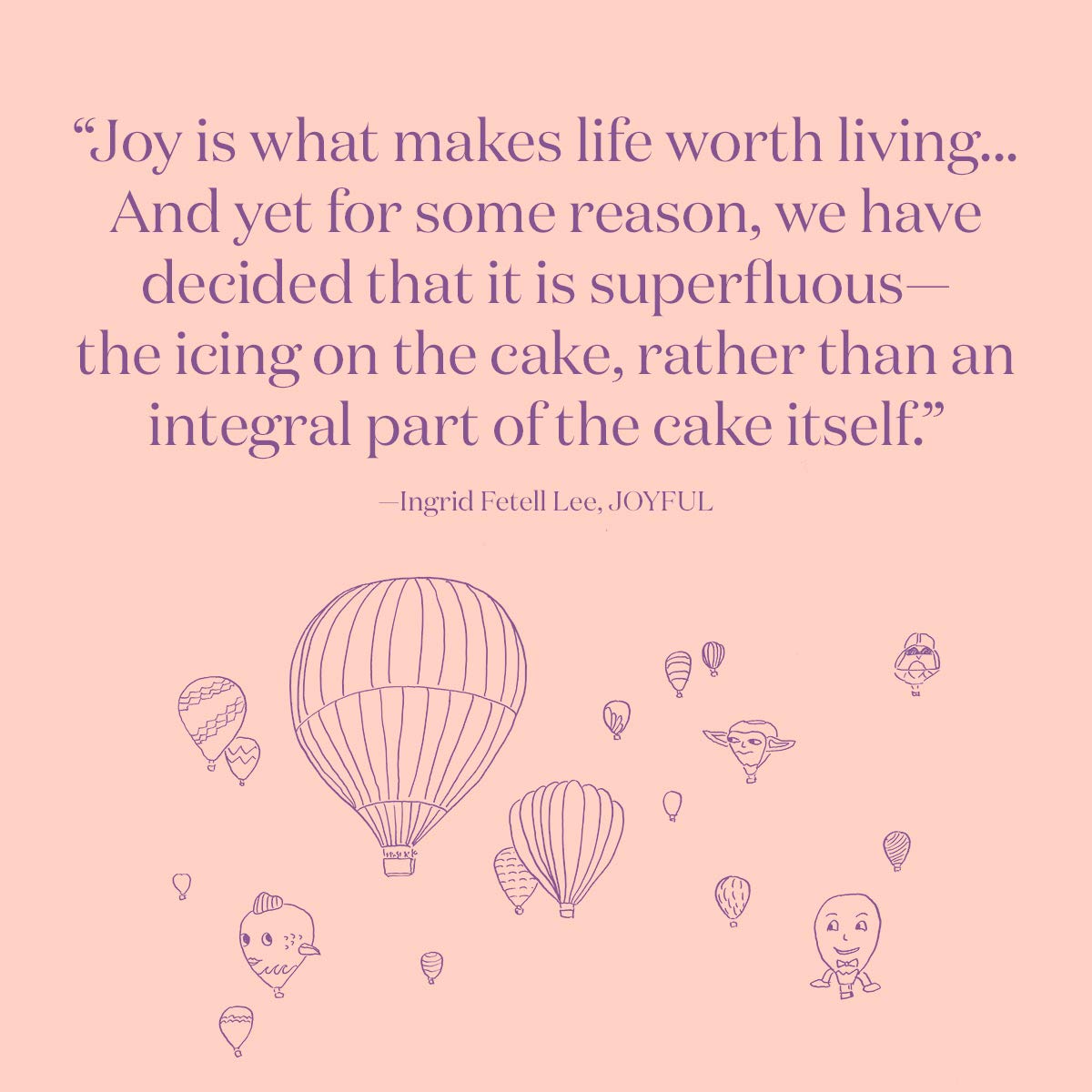
    Schools, and libraries, should truly be places of joy. They should allow for playful wonder. Fetell Lee explains that “play etches itself deeply into our memories for a good reason: it is the only known activity that humans engage in solely because it produces joy. ”

    Play lets us practice give-and-take, through which we learn empathy and fairness. It also promotes flexible thinking and problem solving, which increases our resilience and help us adapt to change. When we play, our awareness of time diminishes, and our self-consciousness fades. Play can put us in a powerful flow state, which allows us to let go of everyday worries and be absorbed in the joy of the moment.

    Joyful, by Ingrid Fetell Lee

    Children understand joy. All you have to do is listen to them dream up the new library to know that they can see that which adults often forget. Their vision of the space includes waterfalls, cafes, and a loft… they see color, comfortable seats, and places for both quiet and social gatherings. They hear music and feel texture. They break down the barriers and let in nature’s beauty. They get it.

    And so did the adults in the room today. I’m excited for the future wonder and joy that awaits the students and staff as they turn their prototypes into a joyful place that ignites genius and empowers students to advance the world.

    Stay tuned…

  • The Overachievers and the Unengaged

    The Overachievers and the Unengaged

    The overwhelming majority of students today want learning to be active, not passive. They want to be challenged to think and to solve problems that do not have easy solutions. They want to know why they are being asked to learn something. They want learning to be an end in itself – rather than a means to the end of boosting test scores or a stepping stone to the next stage of life. They want more opportunities for creativity and self-expression. Finally, they want adults to relate to them on a more equal level.

    The Global Achievement Gap by Tony Wagner

  • Learn from Failure

    Learn from Failure

    One of the books I received from the Next Big Idea Book Club was Never Stop Learning: Stay Relevant, Reinvent Yourself, and Thrive by Bradley R Staats.

    Reading it was more of an affirmation than a “ooh, I didn’t know that.” What I appreciated about Staats book was the reasoning he gave for the ideas I had already come to believe. Staats background is in behavior science, so much of his book focuses on why we are so bad at being lifelong learners, even though there are constant messages about the importance of continual learning to stay relevant in our careers and in our lives.

    Staats shares a few steps in his book for becoming better at learning. They include:

    • Valuing failure
    • Focusing on process, not outcome, and on questions, not answers
    • Making time for reflection
    • Learning to be true to yourself by playing to your strengths
    • Pairing specialization with variety
    • Treating others as learning partners

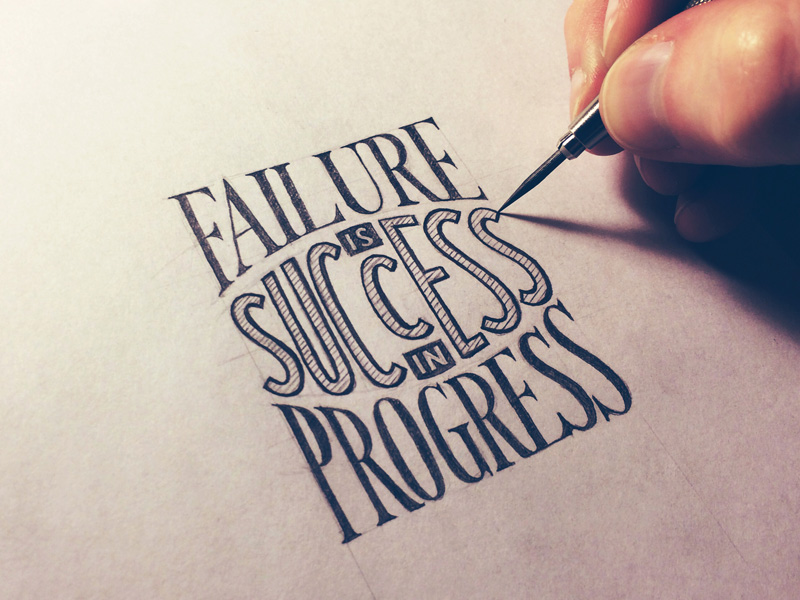
    For me, the bang for the buck was in the valuing failure section. I’ll be honest, I’m one of those people who cringes when I hear phrases like, “Failure is just a first attempt at learning” or “If you aren’t failing, you aren’t trying something new.” It’s not because I have a fear of failure. It’s because I see failure as the end. Mistakes are part of process, but failure is larger. It’s the point of giving up… as long as trying is part of the process, than to me there is no failure. Just learning opportunities and trials. Therefore, I found the following quotes from Staats book enlightened me, and helped me expand my definition of failure.

    ***

    “Failure can change how we act. The discovery that a belief we had was wrong can alter how we look for new information. We become more likely to expand both the breadth and depth of our investigation: we might talk to someone different, and we might spend more time considering what has occurred. Since failure is to some degree a surprise, it makes us change our assumptions. We reflect on what happened and how to address it going forward.”

    “The reason we need failure to learn is straightforward: learning requires trying new things, and sometimes new things don’t work as expected. Failure creates a powerful learning cocktail, mixing new ideas with novel information and a motivation to experiment.”

    “A focus on success leads both to a fear of failure and to an inability to see the failure that occurs around us.”

    Fundamental attribution error…. in considering our own failure, we often “overweight things such as luck or the difficulty of the task and underweight our ability or effort… when you assign responsibility for a failure to outside events, you negatively impact your motivation to try to learn.”

    ***

    To destigmatize failure we need to bring our struggles out into the open. Brene Brown would call this being vulnerable. And Daniel Coyle would add that vulnerability builds trust, which is what is needed to keep that learning-from-failure cycle positive. We also need to shift how we think about acting versus not acting. Staats explains, “We are averse to loss, and failure always brings the possibility of loss. Instead of considering the safety of the status quo and the risk of doing things differently, consider the risk in the status quo and the safety that comes from learning new things.”

    After all, “mistakes aren’t a necessary evil. They aren’t evil at all” says Ed Catmull, co-founder of Pixar. He explains that “they are an inevitable consequence of doing something new (and as such, should be seen as valuable; without them, we’d have no originality).”

  • Book Read: Design for Strengths

    “‘You can have all the right answers, but it doesn’t matter if you are answering the wrong question.’ The willingness to circle back and challenge the central question and continue to ask it in a better way – and potentially abandon the current exploration – that is the hallmark of Design Thinking.” – John K. Coyle in Design for Strengths


    In education, there is a lot of talk about students discovering their passions, their strengths, their interests, and then building upon those through personalized learning opportunities. What does that truly look like? Although Coyle’s book is not specific to education, there are so many nuggets of wisdom that we can apply to our school culture. 


    “Skill gaps are easy – you work at them until you master them. Gravity problems – you accept them, quit solving for them, and then design around them.”

    “Step Zero: Acceptance. You can’t solve a problem you are not willing to have.”

    “Just because you ‘accept’ something does not mean you agree with it or submit that it is ‘OK.’ It simply means you accept that it is.”

    “Most companies hire for diversity of talent, experience, and background – and then they waste it… more often than not, they ask each team member to do the same set of tasks in the very same way… they ignore the unique capabilities and contributions that individuals bring and, in so doing, waste all that unique talent they recruited in the first place.”

    “The ‘one size fits all’ fair approach to work task distribution is a recipe for an unengaged team.”

    “When all the team members have a reasonably good working knowledge of each other’s strengths, they will – on their own (with a nudge of encouragement from leadership) – start to self-organize for their strengths.”


    In all honesty, I probably have Post-Its on every other page in this book and could have put so many quotes in this post. It’d be a great book study for teacher groups looking to better understand ways in which to develop personalized, strengths-based environments for both students and staff.

    Design for Strengths
    Design for Strengths

  • Book Read: Building a Better Teacher

    I thought I knew the history of American education. After all, I had studied John Dewey in school, and isn’t he the source of all things education? Guess not, according to Building a Better Teacher by Elizabeth Green. Turns out, there was a lot of misguided efforts to create a teacher education program, and a lot of failed initiatives to reform education once there was a teacher education program. It’s an interesting read, as it filled in some knowledge holes for me about math pedagogy, charter schools, and the rise in quality of Japanese education.

    A few segments that stood out:

    “Changing the way you taught was a major undertaking. A teacher had to revise everything from the kinds of questions she asked to her very understanding of the subject she was teaching.” It’s complex work. It’s easier to do a “redesign, but not an overhaul. The same old wine in new bottles… carry out the activities without rebuilding core beliefs.”

    While watching an American videotaped lesson, a Japanese researcher was perplexed by a P.A. announcement that came on during the lesson:
    “Were we implying that it was normal to interrupt a lesson? How could that ever happen? Such interruptions would never happen in Japan because they would ruin the flow of the lesson.” Going through all the videos the research team had, it was discovered that 31% of American lessons contained an interruption, while zero of the Japanese lessons did.

    In Japan, no teacher worked alone. “To solve the puzzles that teaching posed, teachers needed the push and pull of other people’s opinions.” This is the power of jugyokenkyu, which is a Japanese lesson study used to hone their craft.

    I’d recommend this book to anyone who is currently working on school reform, as it puts names and personalities and historical context around some of the practices we engage in today. In doing so, it reminded me why change doesn’t happen overnight, and how important culture and communication are to any sustainable movement.