Tag: WD-40

  • Belonging to the Tribe

    Belonging to the Tribe

    I wasn’t the most athletic kid growing up. Haha. Who am I fooling? I’m still not athletic. I tripped trying to run to first base because my legs were moving faster than my body. I fell playing kickball because my foot landed on top of the ball instead of kicking the ball. I sometimes run into walls. So you can probably imagine that I wasn’t the first one picked to be on a team. And even if I was (eventually) picked, I certainly wasn’t in the starting lineup!

    So it really resonated with me when Garry Ridge, CEO of WD-40, explained to my colleagues and I* why the employees at WD-40 consider themselves a tribe and not a team.

    A team, Ridge explained, comes together for a purpose… usually a competitive one. There are top players, and benchwarmers, and people who didn’t get picked to be on the team at all. They practice together to meet their goal of beating the opponent. But when the game is over, they separate. They lead their own lives, independent of each other.

    A tribe, however, is different. Tribes depend on the people within their unit for survival. Every member of the tribe has an important role based on their skills and talents. There are no benchwarmers in a tribe.

    Tribes have other elements as well. They have values; they’re future-focused; they are warriors, when needed; and they place importance on celebrations. All of which are elements that contribute to a positive workplace culture.

    And because the tribe is dependent on each other, the responsibility of the tribal leader is to be a learner and a teacher. Not only is the leader learning and gaining wisdom that will nurture and sustain the tribe, but s/he also must pass the wisdom down so that the tribe’s success continues without the leader.

    The tribe is a much more intentional, and meaningful, connection than a team. People belong to a tribe. They have purpose within the tribe. They are protected by the tribe.

    Seth Godin, in his book Tribes: We Need You To Lead Us, writes: “Caring is the key emotion at the center of the tribe. Tribe members care what happens, to their goals and to one another.”

    Isn’t that, ultimately, at the core of what we want our classrooms and schools to be for our students?

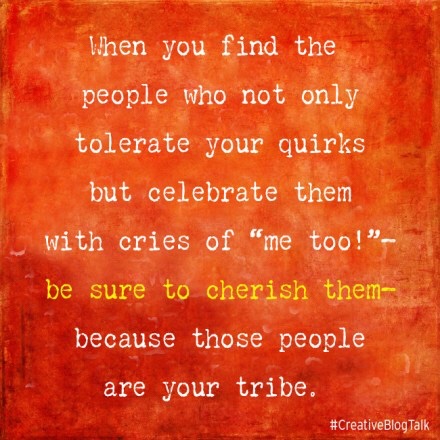
    Find-your-tribe-quote


    *Before meeting Garry, I would have used the phrase “team” to describe my colleagues. But they are my tribe. As Seth Godin describes it: “Tribes are about faith—about belief in an idea and in a community. And they are grounded in respect and admiration…” Grateful to have found my tribe!

    Learn more about the WD-40 tribe on their website.

    Sign up to receive an update when I post. Type your email address in the box and click the “Subscribe” button. My list is completely spam free, and you can opt out at any time

  • What Do I Think I Know and What Do I Have to Learn?

    You never know what you will learn when you step outside your bubble.

    The other day on LinkedIn I saw an event posted by Garry Ridge, CEO of WD-40. It was the Annual Breakfast for the MS in Executive Leadership program at University of San Diego, followed by a panel about servant leadership, creating a culture of values, and how business skills empower performance. All invited. “Why not?” I thought. I’m on vacation, so let’s see what this is all about. A fortuitous decision!

    On the panel:  Ken Blanchard, best selling author of over 50 books on leadership, Garry Ridge, and Barbara Lougee, Associate Dean of Graduate Programs and Associate Professor of Accounting. I have pages of notes (for future blog posts), but today I want to write about one inspirational nugget.

    Garry Ridge, CEO of WD-40, has a constant drive to learn. When he took over as CEO of WD-40, he asked himself, “What do I think I know and what do I have to learn?” Garry realized there was much to learn and therefore enrolled in USD’s first MSEL cohort. How many CEOs decide to go back to school? What tremendous sense of self and lack of ego is required to be able to answer that question when many would consider him to already be at the pinnacle of his career!

    My Post (1)

    It made me wonder when the last time was that I truly asked myself what I thought I knew and what I needed to learn. When I accepted my current position as Executive Director of Innovation and Design, there was a lot to learn. I knew I had to become well versed in Design Thinking. And I quickly realized there were a lot of cultural and pedagogical values in my district that I needed to familiarize myself with, but what did I truly think I knew? And what did I have to learn?

    It’s a question I’m still answering, and I think that’s the point. The more I learn, the more I realize I need to learn more. And then the more I learn, the more I realize that what I thought I knew wasn’t fully developed, and therefore there’s still more I need to learn. Not just about pedagogy and Design Thinking, either. About organizational systems. About change management. About culture. About thinking. About people and values. About visions and missions and the work to carry them out. About industry. And careers. And the Fourth Industrial Revolution. About Sinek’s Golden Circle. And the list goes on and on.

    But what if I asked students that question? Ask a student what they think they know, and what they need to learn. Most may look at you like you’ve lost your marbles. Or they may tell you about the facts that need to be memorized for an upcoming exam. Or the items missed on a previous test. Or the homework that is waiting for them at home.

    But none of that is learning. It’s just playing school.

    When classrooms promote student agency, and the personalization of learning that must co-exist with agency, then students can better articulate their learning because they understand both the purpose and the end goal. Perhaps a student would share how s/he is developing a narrative to include more descriptive elements so as to draw the reader in. Or another student may share that s/he is developing a strategy to approach a complex math problem using known algorithms. Another may say that he thinks he knows how to solve a playground situation, but needs to spend more time empathizing with the users to see if the prototype will solve the underlying issue.

    In each of these answers, students are owners of their learning journey. The teacher, approaching classroom leadership as a side-by-side relationship, is providing the space and the time so that each student’s learning is nurtured.

    That’s what personalization of learning is all about. Every student and teacher being able to ask, “What do I think I know and what do I have to learn?” and being able to answer it, and then travel down the path that not only answers that initial question, but opens up a hundred more.