Category: Design Thinking

  • Empathy is Always Worth the Time

    There are days when we all probably ask ourselves, “Is anyone actually listening?!?” Then I read tweets from teachers like this, and I realize the ripple effects from a pebble can travel much farther than seen from shore.
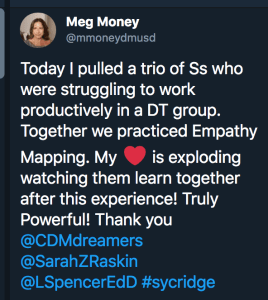
    A Tweet from Meg Money about using empathy mapping with her students

    Meg is one of those teachers I get excited to know and work with because she is willing to reflect on her practices as she continuously looks for connections that make a difference for students. After the above tweet, I asked her to blog this experience for others. Since she doesn’t have her own blog, I am giving her the space here to share. So this is Meg’s story in her own words…


    There’s a little saying that goes, “a stitch in time saves nine.”  
    Is Empathy Mapping worth the time?
    By: Meg Money, Sycamore Ridge 4th Grade teacher

    “As teachers, how do you want to invest your time?” Ron Ritchhart, Harvard’s Project Zero, asked a cohort of DMUSD teachers recently. This question has replayed in my mind time after time since.  Last week I was at a crossroads; time or making a difference? You see, our 4th grade class was in the thick of a Design Thinking challenge. All groups were collaborating ferociously and productively…all but one. But hey, it was my fault. I designed that group knowing that it had a 50-50 chance of working. This group of three included  kids who were bright and capable in their own right but different as day and night. Unfortunately I didn’t play my cards right, and now I had a group on my hands that had potential but was so far behind because productivity and collaboration were nonexistent.

    Now comes in the saying, “Timing is everything.” Fast forward two weeks to another training led by our very own DMUSD Design Team.  Paula (@CDMDreamers) and Sarah (@SarahZRaskin) led us through a Empathy Mapping exercise, and a light bulb went on. This is what my lagging group lacked… Empathy! However, this would take time; time a group was running out of.

    “How should I invest my time?” replayed one more time in my head. Yes, this is exactly what this trio of budding engineers deserved. They deserved to feel safe in a group and showcase their talents. Their assigned grouping shouldn’t be the barrier holding them back.

    I wasted no time and asked the group how they were feeling halfway through the research/prototyping phase. As you can imagine, they were frustrated and asked if they could just work alone. It was then I suggested that we come together and build empathy through the mapping exercise.

    What happened from there surpassed every expectation I’d anticipated. The kids were open, honest, polite and so insightful. They really didn’t need much prompting; they got it! They created NEED statements that immediately inspired them to hurry back to their learning. I watched in AWE as this group of young scholars immediately started approaching a difficult task with empathy and producing with the maturity of adults. I’m not going to lie, I had tears, goosebumps, and a swollen heart.

    So, was this worth the TIME? Oh, you have no idea. Just ask the group members.

    “Ms. Money, thank you for taking the time to do the mapping with us,” said one student.

    “This was the best day of the year,” another added with a hug.

    “Ms. Money, hurry, come see our idea!” shouted one from across the room.

    I will forever be reminded of this experience that truly confirmed that helping students find their potential and giving them a chance at success is absolutely worth the time. Empathy Mapping is now the frontrunner of my long list of “Must Explore and Practice” list. It is worth every second of TIME!

    Connect with Meg on Twitter at @mmoneydmusd

  • So You Want to Create a Flexible Learning Environment…

    So You Want to Create a Flexible Learning Environment…

    A colleague asked me for resources on flexible learning spaces. Her goal is for 6th students to use the Design Thinking mindset to redesign their own classroom. Because we know it’s not just about cool chairs and bright walls, it’s important that students and the teacher understand the WHY behind the decisions being made.

    Luckily, Twitter hashtag #learningspaces has a treasure trove of resources for teachers looking for a place to start. And attending CUE BOLD in May also provided me with access to amazing presenters and ideas around classroom environment.

    So here is the list of resources I curated for the students, in case it helps any of you:

    Tips for Designing Amazing Learning Spaces with Dr. Robert Dillon
    And here’s a visual for that YouTube video.

    Edutopia article showcasing some flexible K-8 classrooms.

    Video Series on the book The Space by Dr. Robert Dillon and Rebecca Hare

    This tweet may be good to spark a deeper conversation questioning why we need so many desks/chairs/etc in the room.

    12 Ways to Upgrade Your Classroom Design takes ideas from The Space and presents them in an easy to read blog post.

    Consider adding a Peace Corner to provide quiet spaces for reflection and emotional centering.

    Designing Brain Friendly Spaces by Dr. Robert Dillon is a short article with some targeted questions to ask while considering how space is used.

    CUE BOLD has made all the presentation slides available for those wanting to learn more. There are quite a few on learning spaces that are worth checking out. Look for Rebecca Hare, Michael Morrison, and Michelle Ho & Danielle Roja for relevant links.

    And of course, as you consider all this, please keep in mind that Pinterest is awesome for beautiful wedding decor, scrumptious recipes, and creative Outfits of the Day, but Pinterest-designed classrooms don’t always meet the needs of the learners (and they’re expensive to create!). My original blog post on that topic is still one of my most popular ones.

    Please let me know in the comments what else should be added to this list.


    And hey, if this post made you smile, or think deeply for a moment, or just scratch your head and go HMM… then share it with a friend. Or two. And subscribe to keep the posts coming!

  • Pickle Hives and Design Thinking

    “Babe, I was eating a pickle and it made my feet break out in hives!”

    Not quite the greeting I was looking for after an exhausting 14 hour day of work, evening teaching, and traffic, but that’s what welcomed me at home. And sure enough there were giant welts all over his feet.

    “Pickles did not give you hives. That’s crazy. You sure you didn’t get bit by an army of baby spiders or something?”

    And so it began… the back and forth over the cause, and solution, for the sudden hives.

    But I’ll get back to that story in a minute. Because this post is actually about problems. And HMW (How Might We) questions. And goals.

    Our leadership team has been digging into culture, and the purpose of school, for a couple years now. Last year was the official first year of our five year plan to transform from a 20th century model of knowledge delivery and compliance to an extraordinary school experience that values the student and his/her inner genius. It was a year filled with first attempts, discoveries, and questions. All of those brought learnings and wonders and even more questions. And through those experiences, we developed a common vision and understanding of the WHY of our five year plan.

    While setting the stage for this school year with the superintendent and assistant superintendent, we realized that, in order for the leadership team to dig deeper into the WHAT and the HOW of the plan, the 20th century model of setting goals and yearlong action plans in August wasn’t going to work. That model is based on the premise that the person setting the goals knows the path that needs to be taken, has an understanding of how to reach the destination, and can do so by an arbitrary deadline. Instead, our goal setting process needed to support our learning journey.

    After reflecting on the vision of our plan, the purpose of setting goals, and the monumental work that lay ahead of us, we realized this year’s goals needed to center around identifying, understanding, and addressing a problem that was impeding the district vision.

    So together, our leadership team identified problems. Some were instructional in nature, while others identified outdated or cumbersome systems and structures that stifled innovative actions.

    Once everyone articulated a problem connected to their site and/or department, time was spent developing a HMW statement to begin understanding the problem more deeply. We shared our articulations with each other for feedback, pushback, and refinement.

    And then some of us started identifying a problem with our problems.

    Turns out, our HMWs had personal hunches embedded within them which was inadvertently skewing them into solution questions instead of problem probing questions. Here’s an example*:

    Problem: Lack of student engagement during writing instruction.

    HMW: How might teachers provide students with personalized topic choices so as to increase student engagement during writing instruction?

    See the hunch?  How do we know personalization is the key to increase the engagement of these identified students? We don’t. It’s a hunch. And that hunch can take us down a road of creating solutions to the wrong problem. Because in reality, personalized topic choices are a potential solution. They could show up on a post-it while ideating. But they shouldn’t have a home in our question.

    Once we realized our preconceived solutions sneaking into the problem statement, we pushed more on the problem and the HMW and a second version emerged:

    Problem: The Principal has observed a lack of student engagement during writing instruction for a group of 4th grade students.

    HMW:How might 4th grade teachers create engaging learning opportunities within the teaching of writing so as to increase students’ active involvement in the writing process?

    Now we’re getting somewhere. This question requires empathy-building with the end-user, aka 4th grade students, so as to figure out what may be causing their disengagement. Boredom? Too hard? Too easy? Language barriers? Personal issues? Something else? This version is not based on a hunch, but on a desire to understand and respond accordingly.

    This goal-setting approach models a learning-centered culture. One not built on hunches. But on a design thinking mindset, which is pretty darn exciting!

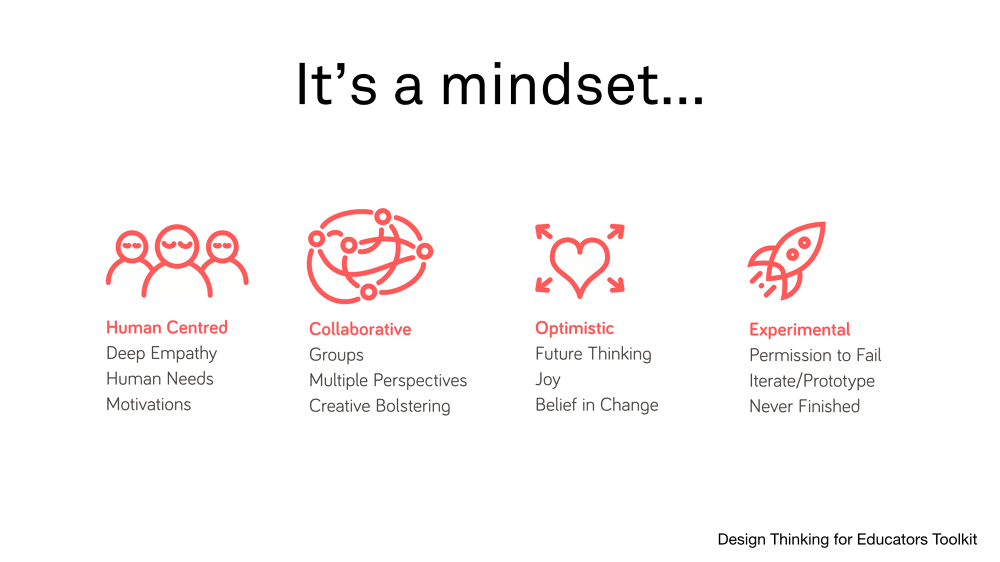
    mindset

    As for John, we learned, after doing some good ol’ Google research, there actually IS such a thing as pickle hives, although it’s technically an allergy to a preservative used in some pickling methods. So maybe his hunch was correct after all. And maybe I should have stayed in the problem space with him a bit instead of jumping to my own conclusion.

    (Although I have to say, I think an army of baby spiders is a much cooler end to his story than 2 Benadryls and some calamine lotion…)

    *Not a real problem shared during our collaboration, but used here to illustrate what I was trying to say.

    You know what’d make me happy? If you shared the link to this post with two friends. I’d be super happy if one of those two subscribed to my posts. Learning together is way more fun than learning on my own.

  • Preparing for Life, or Preparing for School?

    Preparing for Life, or Preparing for School?

    Being as my role includes the words “innovation” and “design,” I often talk to parents about shifts in educational practice, and why they are happening. Our district is elementary only, so some parents naturally worry about what will happen to their children after they leave an innovative elementary experience.

    The question usually goes something like this:

    Are my children going to be prepared for a traditional ______
    (middle school, high school, college) experience?

    It made me think about my own children, and what I prepared them for, and how I prepared them. I knew there’d be a time when both my girls would have their hearts broken by a love interest. But never did I think to myself, “Perhaps I should break their heart fnow so they are prepared for this moment.”

    Instead, I focus on building confidence and independence in my daughters. I model resilience by being open about my own disappointing life experiences. I share books, articles, movies, and songs with positive life messages. And above all else, I encourage open dialogue with them so they see me as a source of support, and not fear.

    I didn’t need to break their hearts to prepare them for heartbreak. They have each experienced the woes of teenage angst, and unreturned love, and came out a stronger, more determined woman.

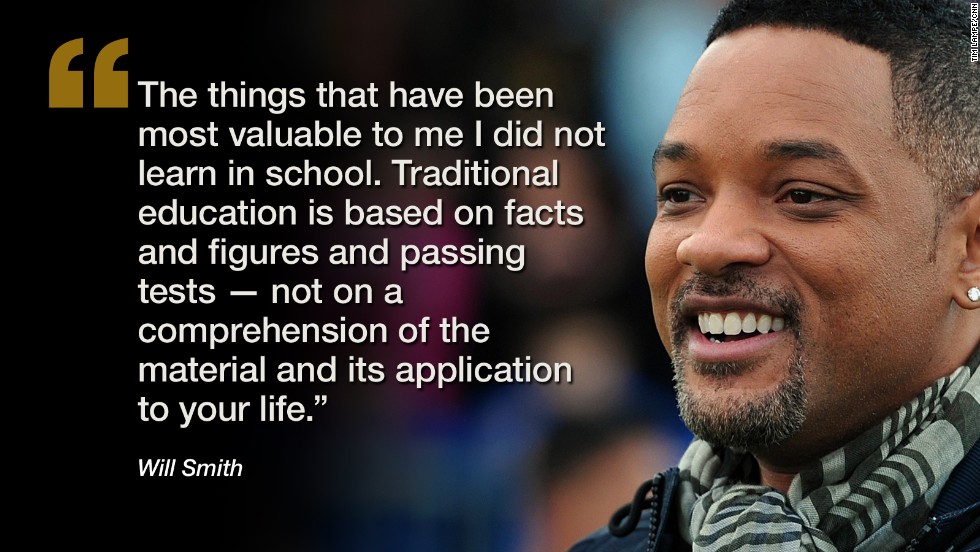
    Likewise, I don’t feel children need to be prepared for traditional school experiences by mimicking those experiences. Instead, children should be taught the skills they will need to thrive and find success regardless of the situation in which they are placed. If they learn critical problem finding and solving skills; how to collaborate with a team, even if the team is less than ideal; ways to empathize with others; and how to engage in creative thought and process they will be equipped with the skills to not only get them through the outdated, err traditional, school experience, but they’ll also have the skills to be successful in life.

    I suggest we help parents instead pose the question:

    Are my children going to be equipped with skills needed for a successful life,
    regardless of their _____ (middle school, high school, college) experience?


  • Has It Only Been a Year?

    To culminate the school year, my Innovation and Design team published a blog post reflecting on all that we accomplished, and more importantly, all that we LEARNED, this past school year.

    It’s crazy to think we’ve only been working together for one school year, and yet in that time, we co-planned with classroom teachers to create 65 design thinking units. There were other design thinking opportunities provided to students that we weren’t directly involved in, too.

    Below is an excerpt from that reflection. I share it here because I think the learnings are universal to many. You can view the original blog post as well, which also includes a fun infographic.

    *****

    When people think and act like a designer, they must be able to see not just what is, but what might be (Berger, Cad Monkeys). The design thinking opportunities teachers facilitated for students this year truly exposed students to what might be by helping students discover their inner genius, and then empowering students to use that genius to advance the world. We watched in awe as students demonstrated sincere empathy and felt a call to action within, and outside of, design thinking experiences. We felt joy when watching the faces of teachers as they saw their students demonstrate their passion for learning. And we enjoyed seeing those proud parents listen to their children present their prototype solutions at packed exhibitions!

    And we learned a lot, too! We learned…
    – how important it is to always start with why and to know the priorities. When people understand the why and have an opportunity to be a voice in building the how and what, there is a greater success in change efforts.
    – that every site and teacher, just like every student, has unique qualities requiring a customized approach to integrate design thinking experiences.
    – connecting with industry experts to not only dive deeper into the content standards and relevant application to careers today, but to provide high-quality feedback on student thinking, exponentially increases student learning. And that expeditionary partnerships with local organizations is truly a game changer that leads to extraordinary experiences for students!
    – a constant feedback loop is important from all stakeholders. Feedback, or better yet, feedforward, is an art form, and we are all working towards being master artists.
    – our beliefs and experiences inform our actions. It is critical to give people an opportunity to experience something new for themselves so that they are empowered to contribute to leading change initiatives.

    DMUSD Innovation & Design Team
    DMUSD Innovation & Design Team


  • A Message to Our Young Design Thinkers

    A Message to Our Young Design Thinkers

    Today I was honored to give a speech at a 6th grade promotion ceremony.

    I will admit, I was scared to give a speech. I mean, I give presentations all the time. I consider myself really good at it (like, really!). But a speech? I don’t do speeches. So I struggled for about a week to come up with something to say. Luckily, I was speaking at a school that had embraced design thinking this year. In fact, that was what I was asked to speak to… easy, right?

    So after procrastinating for a week, I finally wrote it yesterday. I’ll admit to finding inspiration in the pages of Cad Monkeys by Warren Berger. (Thanks, Warren!) I decided to share it here, as I think there are a couple decent nuggets inside.

    *****

    Good morning everyone and welcome to today’s event. I’m honored to have been invited to speak on what I know is a very special day for both the students and families here today. My name is Dr. Laura Spencer. I am the Executive Director of Innovation and Design for the Del Mar Union School District. Basically, I have the coolest job in the district because my role is to work with your awesome teachers, as well as students like yourselves, to create opportunities that ignite the personal, inner genius of students and empower them to advance our world.

    This year, as part of District Design 2022, 6th graders started using the principles of Design Thinking to find ways to make a difference in their classroom, on their campus, and in the world. Design Thinking is a human-centered approach to solving complex problems. It uses empathy and creativity to find innovative solutions.

    In fact, this entire promotion ceremony is the result of a design thinking challenge to rethink how promotion can better meet the needs of the people here. Let’s give our students a hand for all their hard work organizing this special day…

    To the 6th graders, I challenge you to think and act like a designer always. Designers must be able to see not just what is, but what might be. It’s about looking for opportunities to make positive change. To advance our world. And the best part is that you don’t have to wait for adulthood to get started. You can start making positive change today. Find opportunities throughout middle and high school. And don’t stop there. Keep using your inner genius to advance the world!

    Think with empathy. Don’t presume to know what’s going on in someone else’s head. Get to know people. Understand them. Discover what makes them unique. Learn about their challenges. In doing so, you’ll also learn more about yourself.

    When you practice empathy, you’ll find problems in need of solutions. We’ve got large problems and challenges in the world, but there are answers, too. They’re all around you. Don’t be afraid to look. It doesn’t matter how old you are.

    Remember, your first idea is not always the best idea. Brainstorm! Wild and crazy ideas are sometimes the ones that take flight. Just think, when the adults here were kids, we were told to never get in a car with a stranger. Stranger danger was real. Now we use Uber or Lyft on our phone to ask strangers in cars to pick us up and bring us places. So never be afraid to chase after that crazy idea! (But hey, don’t get in cars with strangers!!)

    And remember, prototypes are meant to be rough at first. You won’t always get things right the first time. In fact, you’ll probably get it wrong more often than you’ll get it right, so keep building and seeking out feedback. Doesn’t matter if it’s a crazy complex math problem or a video game you’re designing. Keep refining that prototype until you get it figured out. Ask for help.

    Above all else, be human-centered in all you do.

    So congratulations to the almost 7th graders, congratulations to the families, and finally, congrats to the teachers and everyone else who supported our students along their journey.

    I’ll leave you with this final quote, from a great author with whom I imagine you are all familiar, by the name of Dr. Seuss.

    “You have brains in your head. You have feet in your shoes. You can steer yourself in any direction you choose. You’re on your own. And you know what you know. You are the guy who’ll decide where to go.”