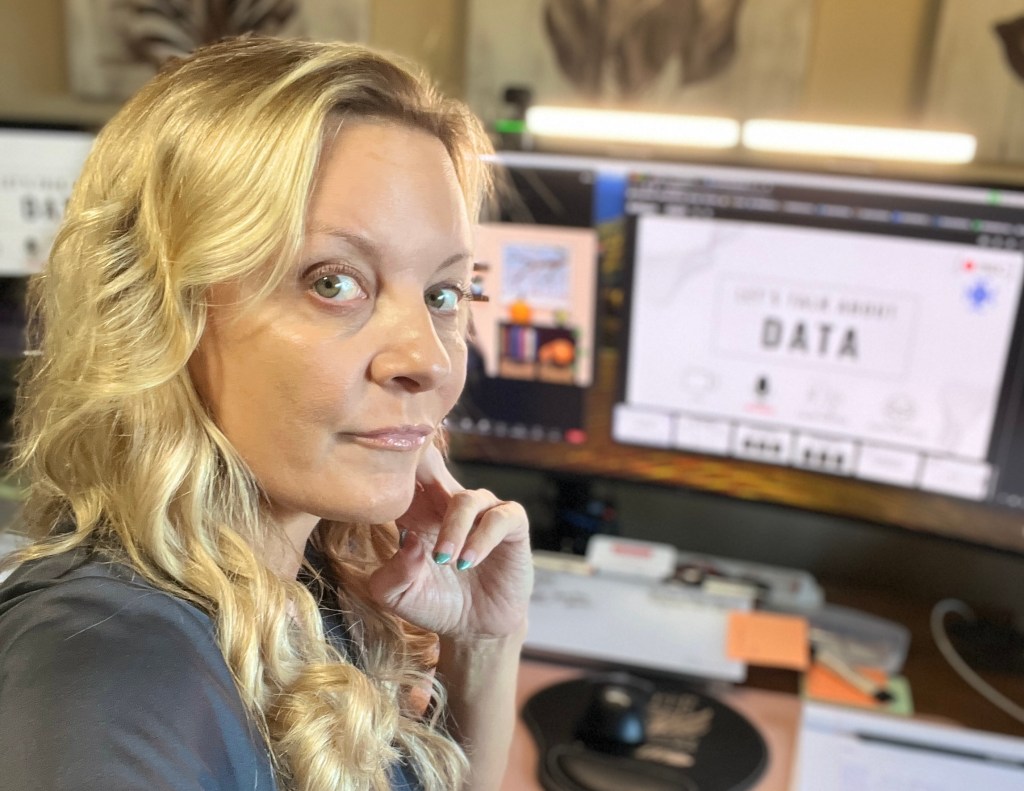
Author: Laura Spencer

  • Finding My Tribe in Bluesky

    Finding My Tribe in Bluesky

    There’s something magical about connecting with like-minded people, especially when those connections spark new ideas and reignite your passion. For me, that magic has been reignited on Bluesky.

    As many educators migrated away from Twitter over the past few years, I found myself missing those vibrant conversations and the chance encounters with brilliant minds from around the world. Sure, I had my local PLN (Professional Learning Network), but something was missing. That’s when I discovered Bluesky.

    Bluesky (bsky.app) is like a breath of fresh air. It’s a decentralized social media platform that feels both familiar and refreshingly different. The interface is clean and intuitive, and the focus is on genuine interaction and community building.
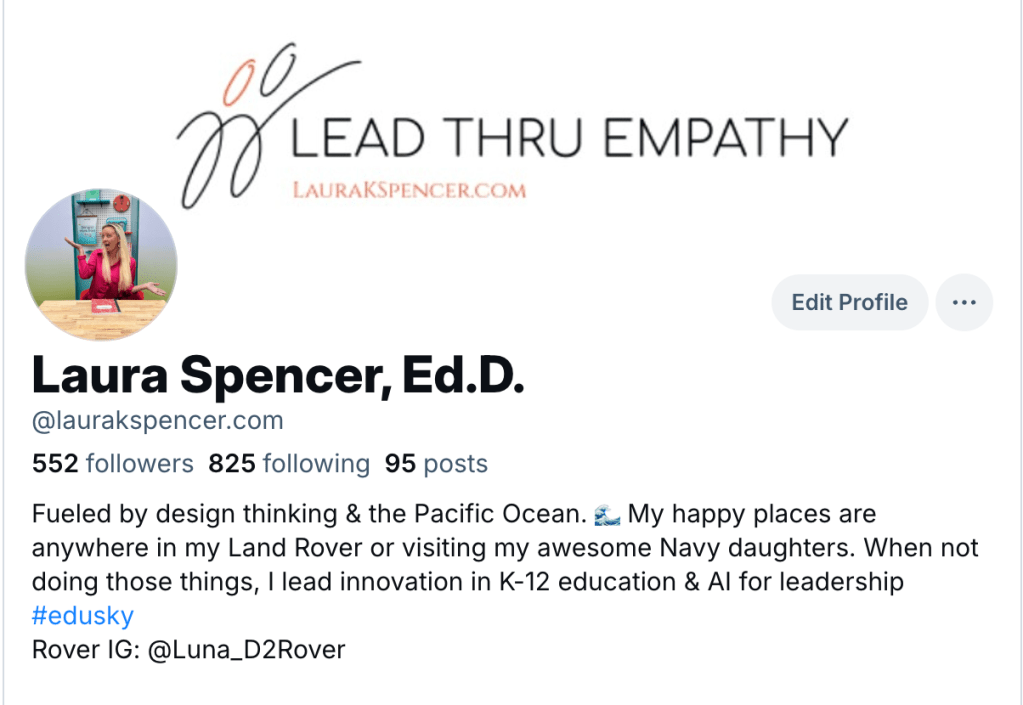
    Bluesky profile for Laura Spencer, Ed.D. with profile picture, follower/following counts, and bio highlighting her interests in design thinking, the Pacific Ocean, and K-12 educational innovation.

    What truly sets Bluesky apart is the ease of connecting with people who share your interests. It’s funny, I actually joined Bluesky quite a while ago, back when you needed an invite code. But honestly, it felt a bit like a ghost town then, so I drifted away. Fast forward to now, and wow, has it changed! It’s been incredible to see the platform come alive with familiar and new educator voices. Within minutes of rejoining, I was following inspiring educators, engaging in thought-provoking discussions, and rediscovering that sense of belonging that had been fading. It’s like stepping into a global staff room filled with passionate, innovative teachers.

    This experience has reminded me of the importance of looking beyond our immediate circles for inspiration and growth. As educators, we have a responsibility to be lifelong learners, and Bluesky provides the perfect platform for continuous learning and collaboration.

    But it’s more than just professional development. Connecting with educators from diverse backgrounds and experiences broadens our perspectives and helps us become more empathetic leaders. We learn to appreciate different teaching styles, understand the challenges faced by students in different contexts, and ultimately, create more inclusive and equitable learning environments.

    Ready to join the Bluesky community? Here’s how to get started:

    1. Download the app: Download the Bluesky app on your iOS or Android device.
    2. Create your profile: Set up your profile with a bio and profile picture.
    3. Find your people: Search for and follow educators you admire. Don’t forget to join the #EduSky community to connect with even more like-minded educators.

  • AI + SEL = More Empathetic Leadership: Join Me This Sunday!

    AI + SEL = More Empathetic Leadership: Join Me This Sunday!

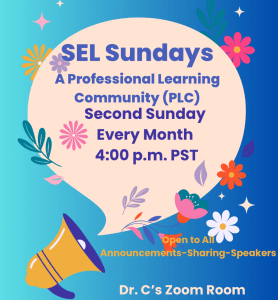
    I’m thrilled to be a guest speaker this Sunday at “SEL Sunday—Our Monthly Online Professional Learning Community” hosted by Dr. Cynthia Sistek-Chandler of National University! Join us as we explore the fascinating intersection of AI and SEL, and uncover how these two powerful forces can work together to create more empathetic and effective leaders.

    In my presentation, I’ll be discussing the AI-powered tool designed to enhance communication and foster deeper connections within teams that I’ve been developing with Google Gemini. This isn’t just about improving workplace efficiency; it’s about cultivating a culture of understanding and emotional intelligence.

    Think of it this way: AI can analyze vast amounts of data, providing insights into communication patterns and potential blind spots. By integrating SEL principles, we can translate this data into actionable strategies for building stronger relationships, improving conflict resolution, and promoting genuine empathy.

    Here’s a sneak peek of what I’m putting together for my talk

    • Real-world examples: I’ll share a few stories of how AI-powered SEL interventions have transformed workplace dynamics.
    • Interactive exploration: We’ll engage in thought-provoking activities to experience the power of AI-driven SEL firsthand.

    My goal is for this presentation to offer valuable insights into the future of empathetic leadership in the age of AI.

    If you’d like to join the SEL chat this Sunday at 4pm PST, send me a message and I’ll get you the information.

  • From Self-Discovery to Team Symphony: Conducting Collaboration with AI

    From Self-Discovery to Team Symphony: Conducting Collaboration with AI

    In my last post, I shared my excitement about using personality assessments and AI to understand my team and myself better. Since then, I’ve embarked on a fascinating journey of discovery and growth. Remember how I mentioned using AI to analyze our different strengths and preferences? Well, things have gotten even more interesting!

    One of the biggest “aha!” moments came when I started using AI to analyze my communication styles. As a Storyteller-Guide, I naturally lean towards sharing anecdotes and offering guidance. However, AI revealed that some of my team members, particularly those with a strong preference for factual data and concise language, sometimes found my communication style a bit overwhelming.

    This realization was a bit of a wake-up call! I was initially a little disheartened, wondering if my natural way of communicating was hindering rather than helping. But then, I remembered the core principle of this whole exercise: understanding and appreciating our differences.

    So…with the help of AI, I started experimenting with different communication approaches. For instance, when presenting ideas, I am making a more conscious effort to balance my storytelling with clear action plans and post-meeting concise summaries (which AI tools like Fireflies have been so helpful in creating!). I also encourage others to share their perspectives, ensuring everyone feels heard and understood.

    The results have been remarkable. Not only have meetings become more efficient and focused, but I feel like there is a greater sense of collaboration and mutual respect. We’re learning to “speak each other’s language,” leveraging our diverse communication styles to achieve common goals.

    This experience has reinforced my belief that AI can be an invaluable tool for fostering growth and connection within teams. It’s not about changing who we are, but rather about using AI to bridge the communication gaps and create a more harmonious and productive work environment.

    I’d love to hear your thoughts! How are you using AI to enhance communication and collaboration in your own workplace?

    Let’s continue this conversation in the comments below!

  • My AI-Powered Teamwork Adventure: It’s More Than Just a Label!

    My AI-Powered Teamwork Adventure: It’s More Than Just a Label!

    I’ve always been fascinated by personality assessments. There’s something intriguing about uncovering those hidden strengths and quirks that make us who we are. Lately, I’ve been on a quest to understand not just myself, but my entire team, using a combination of powerful tools and a little help from AI.

    It all started a few years back when I first took the Clifton Strengths assessment. Discovering my top strengths – Strategic, Problem Solver, Catalyst, Storyteller, and Philomath – gave me a new lens through which to view my work and my passions. More recently, I delved into the Kolbe A™ Index, which highlighted my high Quick Start score. This validated my love for innovation and finding new ways to approach challenges. And just recently, I explored Connector Types as part of my executive leadership coaching with Brian Fretwell, which revealed I’m a Storyteller-Guide. This resonated deeply, confirming my inherent desire to inspire and empower others through narratives.

    But here’s the thing: these assessments aren’t just about self-discovery. They’re about understanding how we interact with others. As one of my team members put it, “It’s like having a user manual for each other!”

    That’s where AI comes in. I’m using it to analyze these results and uncover those “aha!” moments that can transform how we work together. For example, AI helped me see that while I thrive on brainstorming and new ideas, some of my colleagues prefer more structure and detailed information.

    This insight has been a game-changer. I am now making a conscious effort to provide clear agendas and detailed follow-up notes, ensuring everyone feels comfortable and informed.

    It’s not about labeling ourselves; it’s about using this knowledge to build stronger relationships and communicate more effectively. It’s about recognizing that “different” doesn’t mean “difficult.” Instead, it means we have a diverse set of strengths to leverage.

    I believe AI can be a powerful tool for personal and team development. It’s like having a coach in your corner, helping you navigate the complexities of human interaction.

    What are your thoughts? Have you used AI in your own development journey? Share your experiences in the comments below!

  • Empathy as a Catalyst for Innovation in Organizational Culture

    Empathy as a Catalyst for Innovation in Organizational Culture

    In today’s whirlwind of constant change and relentless pursuit of “the next big thing,” it’s easy to lose sight of the human element. But here’s a truth that might surprise you: empathy, that good old-fashioned ability to connect with others on a heart-to-heart level, is actually a secret weapon for igniting innovation.
    Think about it. When leaders cultivate a culture where everyone feels safe to speak their mind, to toss out those “what if?” ideas without the fear of being shot down, that’s where the magic happens. That’s where creativity flourishes, and those lightbulb moments illuminate the path to progress.
    Empathy isn’t just about being “nice” or creating a harmonious workplace (though those are definitely perks!). It’s about tapping into a rich tapestry of perspectives, understanding the unique needs of your team, your students, your community. It’s about seeing the world through their eyes and creating something that truly resonates.
    As educators, we know this firsthand. When we take the time to truly understand our students—their backgrounds, their challenges, their dreams—we can create learning experiences that spark their curiosity and ignite their passions. We can design a curriculum that speaks to their hearts, teaching strategies that resonate with their learning styles, and support systems that empower them to thrive.
    And it’s not just about the classroom. Empathy can fuel innovation in any organization, from a bustling tech startup to a quiet non-profit. By valuing and incorporating diverse viewpoints, leaders can spark breakthroughs that not only achieve success but also make a real difference in the world.
    So, let’s ditch the “me” mentality and embrace the power of “we.” Let’s lead with empathy, listen with our hearts, and watch as innovation blossoms all around us.In a world where businesses constantly strive for innovation, empathy stands out as a major driver for creative problem-solving and a positive workplace culture. An empathetic approach to leadership encourages a culture of openness, where ideas are shared freely without fear of judgment. This environment is fertile ground for innovation, as employees feel supported to think outside the box and challenge the status quo. Moreover, empathy enables leaders to understand and connect with diverse customer needs, leading to the development of products and services that resonate on a deeper level with the market. In educational settings, empathetic leadership can influence curriculum development, teaching strategies, and student-support systems, by actively considering the varied experiences of learners. By valuing and incorporating different viewpoints, leaders can propel their organizations towards innovative breakthroughs that not only have commercial success but also enact positive societal change. Embracing empathy within leadership is not just about creating a harmonious work culture; it’s about setting the stage for continuous innovation and growth.

  • Leading in the Age of Distraction: Clarity, Communication, and AI

    Leading in the Age of Distraction: Clarity, Communication, and AI

    In today’s world, leaders aren’t just battling competing priorities and urgent deadlines; they’re also fighting for their team’s attention. We’re drowning in a sea of information – emails, messages, notifications – all vying for a slice of our already fragmented focus. It’s no wonder that even with constant communication, many teams still struggle to stay aligned and informed.

    Years ago, I came across a powerful concept from Patrick Lencioni, author of The Advantage: employees don’t truly believe a leader’s message until they hear it seven times. Seven times! This highlights the critical need for clarity and consistent reinforcement in leadership communication.

    But how can leaders achieve this level of clarity and repetition without overwhelming their teams with even more information? The answer lies in strategic messaging and leveraging the power of AI.

    Strategic Messaging: The Foundation of Effective Communication

    Before we even consider AI, we need to ensure our messages are strategically crafted. Ask yourself:

    • Is the message clear and concise? Can it be easily understood and remembered?
    • Is it relevant to the audience? Does it address their needs and concerns?
    • Is it aligned with the overall goals and values of the organization?
    • Is it being communicated through the most effective channels?

    Once we have a clear and compelling message, we can leverage AI to amplify its impact.

    AI-Powered Communication: A Concrete Example

    One powerful way AI can enhance communication is through personalized messaging. Imagine being able to tailor your communication to each individual on your team, taking into account their preferred communication style, their learning preferences, and their level of understanding. I promise, it’s not as hard as you think.

    Here’s how you can do this using AI-powered tools:

    1. Gather data on your team’s communication preferences: Use surveys, feedback forms, or even analyze past communication patterns to understand how each individual prefers to receive information. Some might prefer concise bullet points, while others might respond better to visual aids or storytelling. You’d be surprised how many different responses you will get.
    2. Utilize an AI writing assistant: Tools like Jasper.ai or GrammarlyGO allow you to input your core message and then generate variations tailored to different audiences. You can specify the tone (formal, informal, encouraging), the style (concise, detailed, persuasive), and even the desired emotional impact. You can, of course, also use the basic tools like ChatGPT for this.
    3. Personalize the delivery: Some might prefer email, others might prefer a messaging platform like Slack, and some might benefit from a personalized video message. You may be able to use AI to automate the delivery of your message through the preferred channels of each team member. (I’m still playing with this option, but it’s limited depending on what tools you use.)

    By personalizing your communication in this way, you can increase the chances that your message will be heard, understood, and acted upon. You’ll not only reach the magical “seven times” but also ensure that each interaction is meaningful and impactful.

    The Future of Communication

    AI is not about replacing human connection; it’s about enhancing it. By leveraging AI to communicate more strategically and effectively, leaders can build stronger relationships, foster greater understanding, and drive better outcomes. In a world of distractions, AI can help us cut through the noise and ensure our messages truly resonate.