
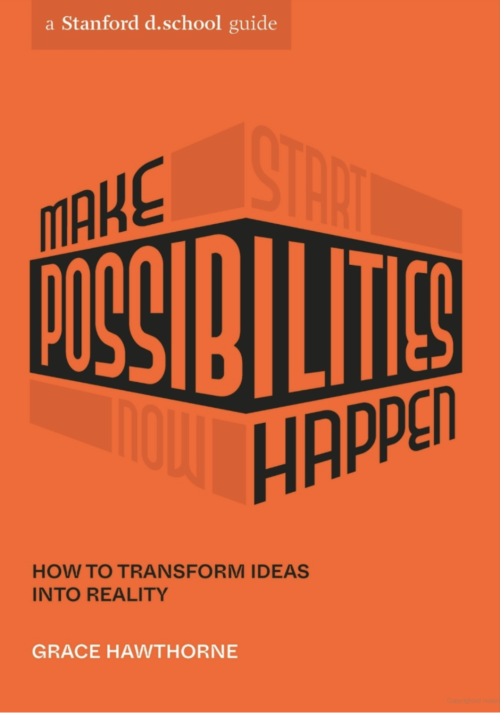
There’s a bit of irony in the title of the first book I picked up from the d.school book club: Make Possibilities Happen. Because I joined the club months ago, full of energy and good intentions, and promptly… fell behind. Haven’t made it to a single Zoom meet. Still playing catch-up on the reading.
So maybe this is my version of possibility-making. The slow, quiet kind. The kind that happens in between work calls and late-night note scribbles. The kind that shows up long after the calendar reminder has passed but still feels meaningful.
As I work my way through the books and recorded discussions, I’ll be sharing reflections here. Consider it my asynchronous book club journey, with plenty of margin for detours and delayed starts.
Creativity Isn’t a Trait. It’s a Practice.
One of the biggest myths we carry, especially in education, is that creativity belongs to a select few. You’ve probably heard it (or said it) before: “I’m just not creative.” It’s the same script as “I’m not a math person,” and it does just as much damage.
The truth is, we’re all creative. We just haven’t all been given the space or encouragement to practice it.
Grace Hawthorne doesn’t let you off the hook with that kind of thinking. She reminds us that creativity isn’t something you have. It’s something you do. And doing it means letting go of the pressure to get it perfect the first time.
That shift matters. In classrooms. In leadership. In design. When we treat creativity like a skill instead of a talent, we open up space for trying things before we’re ready. We make room for mess. For feedback. For growth.
Whether you’re planning a lesson, testing out AI, or brainstorming a new learning experience, creativity isn’t about brilliance. It’s about movement.
Small Mistakes Matter
There’s a line in the book I keep coming back to: make small mistakes so you can course-correct along the way.
It’s simple, but it cuts through so much noise. In education, we’re often so focused on getting it right the first time. But what if we shifted the goal? What if we built space for mistakes that teach us something?
When I support teams who are exploring things like AI or designing immersive VR learning experiences, I remind them: we don’t have to launch with perfection. We just have to start. Reflect. Adjust. Keep going.
It’s not failure. It’s feedback.
The Power of Putting It on Paper
Another gem from Grace: when the idea feels too big, get it out of your head.
Sounds obvious, but how many of us let big ideas swirl until they turn into stress?
When I’m working on early-stage lesson design, especially for VR or other emerging tech, the hardest part is getting started. The second I sketch something on paper,even if it’s a mess (and sometimes especially when it’s a mess), it stops feeling like a mountain and starts feeling like a puzzle.
Grace’s advice here isn’t just tactical. It’s kind. She respects the overwhelm but doesn’t let it win.
Detours as the Main Road
One of the most encouraging ideas from the book was that detours often become the real path.
I didn’t plan for much of the work I do now. None of it was on some neat five-year plan. But somewhere between the classroom, school leadership, and the world of instructional design, I started following threads that felt like purpose. That still surprises me.
And yet, those side trails have led to some of the most aligned work I’ve done.
Grace’s reminder gave me permission to stop apologizing for the path I didn’t plan. Sometimes the unexpected turn is the destination.
Final Thought
I may not be caught up with the book club, but I did add “catch up on the book club” to at least three to-do lists this month so that counts, right? And while I haven’t earned any gold stars for participation, I have wrestled with big ideas, highlighted half the book, and scribbled questions in the margins. Maybe that’s what making possibilities looks like sometimes: quiet, nonlinear, and slightly behind schedule.
Leave a Reply