
Tag: storytelling

  • What Grover Taught Us About Fear and Leadership

    What Grover Taught Us About Fear and Leadership

    This post is the second in a new series exploring leadership lessons tucked inside childhood classics. If you missed the first—on elephants, sneezes, and innovation—you can find it here.

    A Puppet, a Page, and a Pause

    One of my most vivid memories from childhood is my dad reading The Monster at the End of This Book. But he didn’t just read it. He performed it. Grover wasn’t just a character. With a blue puppet in hand and a gravely voice, my dad turned each page into theater.

    Each night, Grover begged me not to turn the page. He built walls. He tied knots. He panicked. And, of course, I turned the page anyway. I had to see what was coming.

    Spoiler: The “monster” at the end of the book… was Grover himself.

    He feared what he didn’t understand. He made assumptions. He underestimated both me and himself.

    Sound familiar? (Certainly does to me!)

    When Leaders Pull a Grover

    In leadership, we sometimes panic about what’s ahead. We put up barriers. We try to control the pace of change. We yell, “Don’t turn the page yet!” believing we’re protecting others. But real empathy doesn’t mean controlling the narrative. It means walking with people through it.

    Empathetic leadership says:

    • I won’t rush you.
    • I won’t minimize your fear.
    • I will sit beside you and turn the page when you’re ready.

    What If We All Just Turned the Page?

    Whether we’re implementing new technologies, navigating tough decisions, or supporting someone through a tough transition, there’s always a Grover in the room, scared of the unknown, convinced the end of the book holds doom.

    And maybe we are Grover sometimes.

    But what if we just… turned the page anyway?

    With empathy.
    With curiosity.
    And with someone beside us.

    Like my dad. It wasn’t just the puppet or the funny voice. It was that my dad fully entered my world. He didn’t try to fix Grover. He didn’t roll his eyes or fast-forward to the end. He honored the moment, and me, page by page.

    Let’s Keep Reading Together

    This series is reminding me how much childhood stories still shape my adult lens. If a children’s book has ever changed your perspective on leadership or learning, I’d love to hear about it.

    Drop your favorite title in the comments and let’s turn some pages together.

    P.S. It was only a few years ago that my Grover puppet finally met his demise.
  • Crafting a New Story of Learning

    Crafting a New Story of Learning

    This was a fascinating read the other night…

    From: Making the World a Better Place Starts with a Really Good Story

    Kathleen: One of the things I saw in the organizations that I interviewed is that they prioritize storytelling, not only at the executive director or CEO level, but at every single level of the organization. Everyone within the organization can be a brand ambassador for the cause, whether it’s a staff member who happens to be at a cocktail party and comes across a donor, or whether it’s a beneficiary talking to a funder about the effectiveness of the work.

    Some of the organizations that I interviewed actually did storytelling practice in their staff meetings. IDEO.org does this storytelling roulette where they spin a wheel, and on the spot, a staff member has to tell a story about a project that they worked on. It’s that repetitive practice that really helps build storytelling skills.

    Nadine: One of the great benefits of doing that is that within the organization, it builds cohesion and alignment around the messaging and the brand. It’s really a powerful internal development tool, as well as an external development tool.

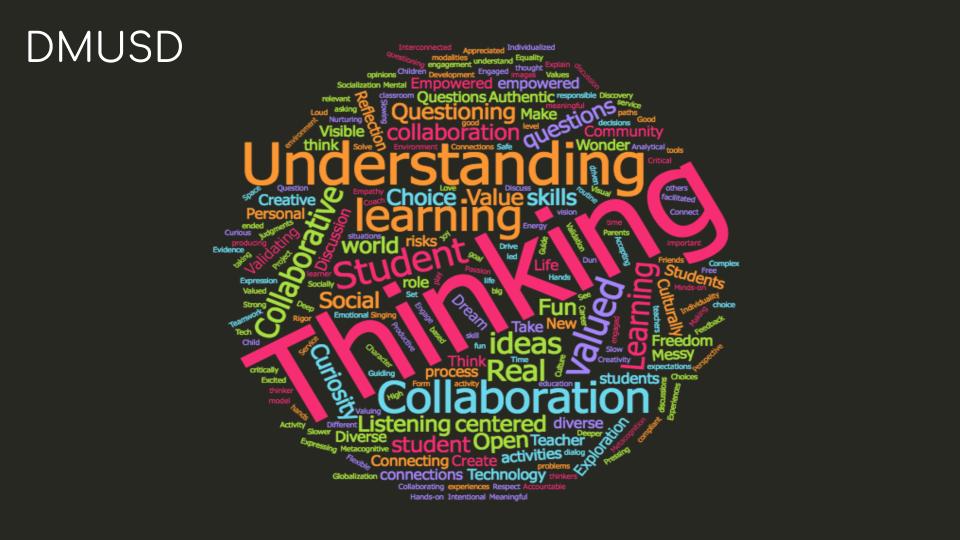
    How are you empowering both staff and students to tell the story of learning at your site? I just spent a day of professional learning with every teacher in our district. Based on an activity in Ron Ritchhart’s Creating Cultures of Thinking, we looked at the story of learning we were told growing up through beliefs, behaviors, expectations, etc. Phrases such as compliance, tracking, and worksheets kept rising up.

    Our district has already spent a year researching what education should look like for our students. We met with industry experts, read countless books, went to conferences across the country, and most importantly, talked to our stakeholders: students, parents, staff, and community.

    With this information, as well as some video and article reads during our professional learning day, we began crafting a new story of education; one that values the unique geniuses of all students through strong instructional practices that promote student agency, collaboration, personalization, cultural intelligence, and design thinking. Our new story has much different phrases:

    Word Clouds from New Sticky Notes

    So how do we build a storytelling culture amongst all our stakeholders? That’s the next chapter we’re writing.

    How are you telling your story? Do you have a storytelling culture, or is a lone storyteller writing your book?

    Sign up to receive an update when I post. Type your email address in the box and click the “Subscribe” button. My list is completely spam free, and you can opt out at any time.