Tag: Sesame Street

  • What Grover Taught Us About Fear and Leadership

    What Grover Taught Us About Fear and Leadership

    This post is the second in a new series exploring leadership lessons tucked inside childhood classics. If you missed the first—on elephants, sneezes, and innovation—you can find it here.

    A Puppet, a Page, and a Pause

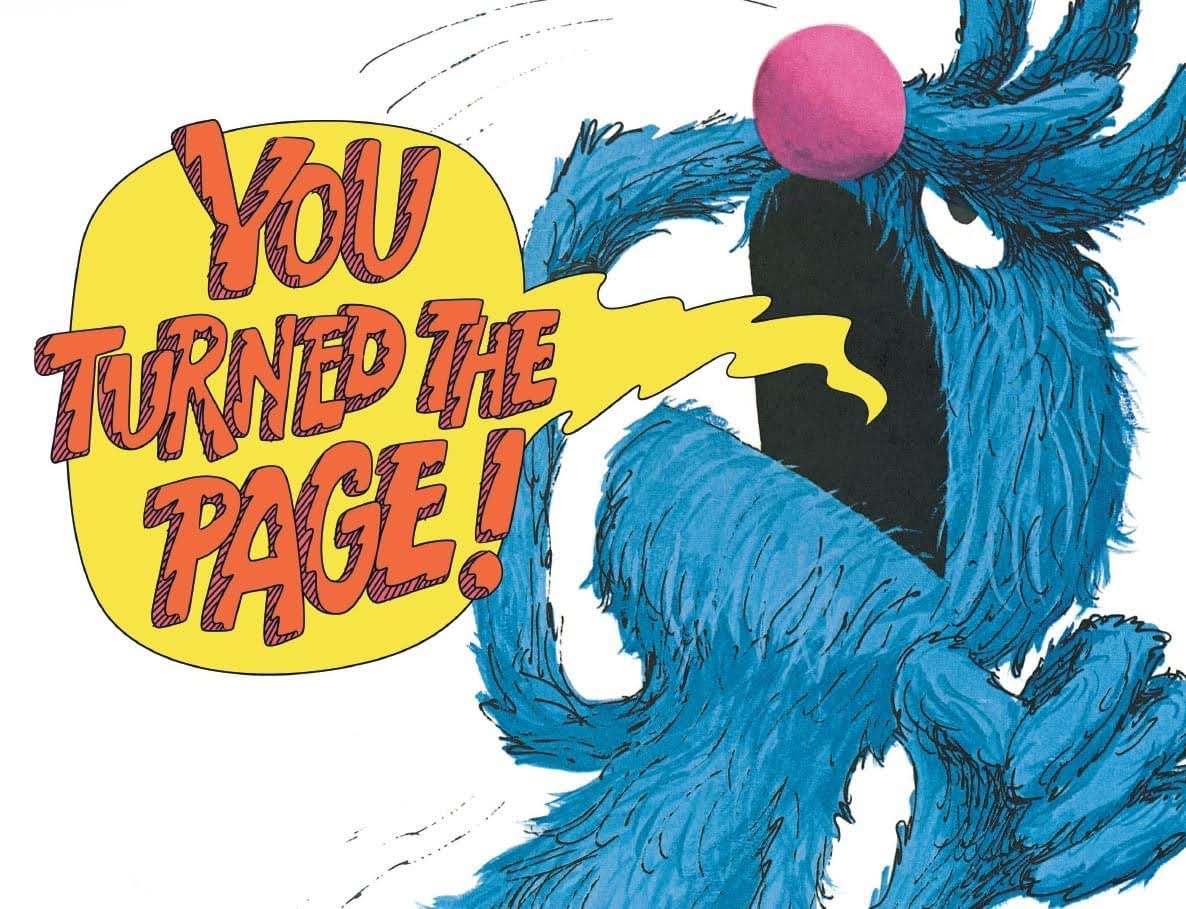
    One of my most vivid memories from childhood is my dad reading The Monster at the End of This Book. But he didn’t just read it. He performed it. Grover wasn’t just a character. With a blue puppet in hand and a gravely voice, my dad turned each page into theater.

    Each night, Grover begged me not to turn the page. He built walls. He tied knots. He panicked. And, of course, I turned the page anyway. I had to see what was coming.

    Spoiler: The “monster” at the end of the book… was Grover himself.

    He feared what he didn’t understand. He made assumptions. He underestimated both me and himself.

    Sound familiar? (Certainly does to me!)

    When Leaders Pull a Grover

    In leadership, we sometimes panic about what’s ahead. We put up barriers. We try to control the pace of change. We yell, “Don’t turn the page yet!” believing we’re protecting others. But real empathy doesn’t mean controlling the narrative. It means walking with people through it.

    Empathetic leadership says:

    • I won’t rush you.
    • I won’t minimize your fear.
    • I will sit beside you and turn the page when you’re ready.

    What If We All Just Turned the Page?

    Whether we’re implementing new technologies, navigating tough decisions, or supporting someone through a tough transition, there’s always a Grover in the room, scared of the unknown, convinced the end of the book holds doom.

    And maybe we are Grover sometimes.

    But what if we just… turned the page anyway?

    With empathy.
    With curiosity.
    And with someone beside us.

    Like my dad. It wasn’t just the puppet or the funny voice. It was that my dad fully entered my world. He didn’t try to fix Grover. He didn’t roll his eyes or fast-forward to the end. He honored the moment, and me, page by page.

    Let’s Keep Reading Together

    This series is reminding me how much childhood stories still shape my adult lens. If a children’s book has ever changed your perspective on leadership or learning, I’d love to hear about it.

    Drop your favorite title in the comments and let’s turn some pages together.

    P.S. It was only a few years ago that my Grover puppet finally met his demise.

  • There’s a Fly in My Soup!

    There’s a Fly in My Soup!

    How many times have you found yourself trying over and over again to explain a problem, only to have the other person jump to solutions without quite hearing you? Reminds me of this Sesame Street routine.

    What I love about Design Thinking is that the focus on empathy requires the designer to truly listen, observe, and immerse oneself into the problem through the lens of the user, and not the lens of the designer. It requires us to hear about the issue with the fly in the soup.

    This hit home for me Saturday at #DesignCamp. I attended Ellen Deutscher’s (@Lndeutsch) “Nurturing Design Thinking Mindsets through Play and Improv” session. I told her I was attending because improv gives me anxiety and I needed to step outside my comfort zone.

    Ellen is a wizard at leading people through collaborative experiences that build active listening and risk taking so I knew I was in good hands. At one point, after an activity, she asked if anyone wanted to share how that experience made them feel. She said, “Be mindful of your process. If you don’t like it, why force your students?”

    https://tenor.com/embed.js

    How can a concept so seemingly simple not actually be so? Why do we, as educators, keep forcing processes on students that would make us cringe? Timed tests, novel selection by Lexile level, five-paragraph essays…

    Perhaps it has to do with the fact that education tends to search for the middle ground, the average, and solve accordingly. Instead of being mindful of what makes us unique, it’s easier to solve for the middle.

    The Air Force learned the flaw in this approach when they discovered that their cockpit, designed based on average measurements of hundreds of pilots, actually fit none of their pilots, resulting in many crashes … on one particularly rough day, 17 plane crashes!

    Average doesn’t work in cockpits, and it doesn’t work in education. Randy Scherer (@RandellScherer) reiterated this in his “Design for Extreme Users” session. Randy explains how extreme users (or “radical people!”) lead us to “deep insights about why our designs sort-of, kind-of work.” When we set aside the concept of average, we can make a huge difference in the lives of students.

    When we set aside the concept of average, we can be mindful of our processes. We can design education not for the average, but for every user. And when we do that, then we can truly take care of the fly in the soup.