Tag: Leadership

  • Why Leaders Need Trail Markers

    Why Leaders Need Trail Markers

    When I’m off-roading, there’s a moment every adventurer knows well. You’re deep on the trail, the terrain is uneven, and suddenly, you realize you haven’t seen a trail marker in a while. That’s when doubt creeps in. Am I still on the right path, or am I about to waste daylight backtracking?

    One time, I missed the markers completely because I was chatting with a friend who had joined me. By the time I realized it, I was 20 miles further than I had planned and ended up staring at the Salton Sea. It wasn’t catastrophic. I still had gas, daylight, and options, but I lost time, energy, and focus. The trail had taken me somewhere, just not where I meant to go.

    Leadership feels like that more times than not. The obstacles are different, sure. Things like competing priorities, stretched budgets, multiple staff asking if you just “have a moment”… but the risk is the same: drifting further and further off course, only realizing later how far you’ve gone.

    That’s why Charlotte Burgess-Auburn’s book You Need a Manifesto should be required reading for all leaders. She describes a manifesto as a compass, not a map. It doesn’t spell out every twist and turn. Instead, it’s the equivalent of those markers on the side of the trail that reassure you you’re still on track, even when the terrain is unknown.

    As Chief Academic Officer with 25 years in education, I see how often schools operate without these markers. We hand teachers a vision statement or a beautiful Portrait of a Graduate poster, but it doesn’t show up in the day-to-day decisions. When leaders are unmoored, every trail looks the same, and that’s when we burn precious energy circling or overshooting instead of moving forward with intention.

    A manifesto changes that. It anchors decision-making in values you’ve actually named. It gives you language that cuts through noise and offers reassurance in complexity. On the trail, that’s the difference between pressing forward with confidence and burning miles in the wrong direction. In schools, it’s the difference between progress and burnout.

    A Challenge for Leaders

    Don’t wait until you’re lost at your own “Salton Sea moment” to wish you had trail markers. Write a manifesto that’s small enough to remember, clear enough to use, and visible enough to check when the fog rolls in.

    Because whether you’re off-roading in the desert or steering a district through turbulent times, one truth holds: the terrain will test you. The question is whether you’ll have trail markers when you need them.

  • Spotting the Cracks

    Spotting the Cracks

    A Reflection on Systems Change and Personal Resistance

    I just listened to The Conversation Factory podcast episode called “The Seven Everyday Habits for Transforming Systems” with Adam Kahane, and I felt like he was talking just to me.

    “A crack in a system is a sign that, at least for some people, it is not working. A crack offers a not-yet-realized opportunity to transform the system… it presents hope, but also disruption, confusion, conflict, and danger.”

    That quote is screaming my name, because cracks are where I like to live.

    I’m someone who notices when things aren’t working… when systems create friction, when people are quietly struggling inside processes that look good on paper. It’s never about blame. It’s about possibility. I see cracks not as flaws to cover up, but as places we can step into. Openings. Invitations.

    But here’s the hard part:
    Pointing out a crack in a system often makes people uncomfortable. It feels personal. Defensive responses come fast. And I get it. No one wants to hear that something they helped build isn’t working anymore.

    But if we’re serious about equity, about innovation, about better serving people, then we have to get better at seeing cracks as something to work with, not avoid.

    I’ve watched teams double down on outdated processes simply because they didn’t want to admit the cracks were there. And I’ve seen how that keeps people stuck.

    The systems we design aren’t static. They shouldn’t be. What worked five years ago, or even last year, might not work now. And that’s not failure. That’s growth.

    When someone points out what isn’t working, it’s not an attack. It’s an act of care. It means they’re invested enough to want things to be better.

    So let’s embrace the cracks as opportunity.

  • Gratitude Reimagined: Spotlighting Authentic Appreciation

    Gratitude Reimagined: Spotlighting Authentic Appreciation

    Subscribe to continue reading

    Subscribe to get access to the rest of this post and other subscriber-only content.

  • This Week, I Get to Do What I Love

    This Week, I Get to Do What I Love

    This week, I get to do what I love: lead professional learning with the incredible staff at Elite Academic Academy.

    We are a virtual school. For most of the year, we wave at each other through screens, send messages in GChat, and meet in tiny Zoom boxes. So when we come together in person, it’s not just a training. It’s a reunion.

    Three days of learning. Three days of hugs, hallway laughter, hallway tears, hallway everything. It’s sacred.

    It’s also the result of months of planning. Spreadsheets, logistics, late-night ideas scribbled in a notebook, and, let’s be honest, a whole lot of anxiety. Will it come together? Will it feel meaningful? Will we use this time in a way that honors how precious it really is?

    And then Tuesday morning arrives, and that first staff member walks down the hall and gives you a hug, and it all clicks into place.

    Yes, we’ll be sharing some amazing things happening at Elite. AI. VR. A live virtual all-school musical that still gives me goosebumps. But the technology is not the story. The people are.

    We’re spending this time focusing on culture, community, and relationships. On making sure every student, every staff member, every person connected to Elite feels like they matter. Because they do.

    This is the work I love. And if you’re planning your own event, or looking for a speaker who leads with heart and clarity, I’d be honored to help.

  • Are You My Leader? Insights from Classic Stories

    Are You My Leader? Insights from Classic Stories

    This post continues my series exploring leadership lessons in the picture books that shaped me. If you’ve been following along, you know I started with sneezing elephants and then followed Grover’s panicked pages. This one? It belongs to my little brother.

    A Bird, a Brother, and the Big Question

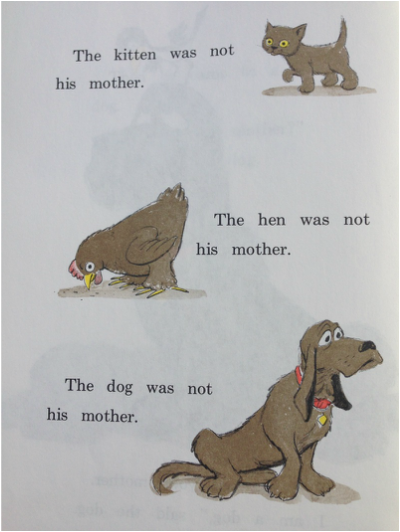
    When we were kids, Are You My Mother? by P.D. Eastman was one of my younger brother’s go-to bedtime book. He couldn’t get enough of that baby bird wandering through the world, asking every creature if they were his mother. (Maybe it’s because I told him he wasn’t really my brother…haha)

    It’s a sweet, silly story on the surface. But re-reading it through a leadership lens? It hits differently.

    Because let’s be honest: most of us, at some point in our personal or professional journeys, have looked around and asked: Are you my person? Is this where I belong? Who’s guiding me through this?

    And for those of us in leadership roles: how often do we recognize that the people we lead are walking in, asking that question of us?

    Leadership as Recognition

    The baby bird isn’t just looking for his mother. He’s looking for connection and affirmation. For someone who will recognize him, respond to him, and meet his needs.

    Leadership, at its heart, is about that same thing: recognition.

    Are we seeing the people in front of us?
    Are we helping them find where they fit?
    Are we guiding them, not just directing them?

    Because when people feel unseen, like that baby bird talking to cows and planes and boats, they start to doubt their place. They go looking, often desperately, for someone to say, “Yes. You belong.”

    And Here’s Where It Gets Techy

    Today’s world is buzzing with talk of AI and machine learning, and this supposed promise to replicate human intuition, automate connection, and even mimic empathy.

    But Are You My Mother? reminds me of the limits of simulation.

    At its core, the baby bird’s journey is about relationship, not recognition alone. He doesn’t just want a “yes” to his question. He wants to feel known. Seen. Held in someone’s awareness.

    No matter how advanced our tools become, we have to ask: can an artificial system truly replicate that? Can it understand the nuance of belonging, or the ache of being unmoored?

    Don’t Be the Bulldozer

    One of the most absurd moments in the book is when the baby bird asks a literal bulldozer if it’s his mother. The machine doesn’t respond, of course. It doesn’t even acknowledge the question. It simply scoops him up and drops him back into the nest.

    Was it efficient? Sure.
    Did it solve the problem? Technically.
    But did it provide comfort and connection? Umm, I’m going to say no to this one.

    That’s the cautionary tale as we advance AI. When our solutions are cold, transactional, or mechanistic, we might get people from point A to point B, but we risk leaving them emotionally stranded along the way.

    True leadership doesn’t just lift. It listens.

    Finding Our People

    The reunion at the end isn’t dramatic. The bird finds his mother, and in that simple moment of recognition, everything settles. It wasn’t about finding the best option. It was about finding home.

    As leaders, our job isn’t to have all the answers.
    It’s to be present when someone asks, “Are you my person?”
    And to have the wisdom—and the heart—to say, “I’m here. Let’s figure it out together.”

    Let’s Keep Exploring Together

    This series has me looking at childhood stories through a whole new lens. What seemed like simple bedtime tales now feel like blueprints for how we show up – for ourselves, for each other, and for the technologies we’re building.

    If there’s a book that’s stayed with you… a story you loved as a kid that now whispers something deeper, I’d love to hear it.

    Drop it in the comments. Let’s keep turning the pages and discovering what they have to teach us. Together.

  • What Grover Taught Us About Fear and Leadership

    What Grover Taught Us About Fear and Leadership

    This post is the second in a new series exploring leadership lessons tucked inside childhood classics. If you missed the first—on elephants, sneezes, and innovation—you can find it here.

    A Puppet, a Page, and a Pause

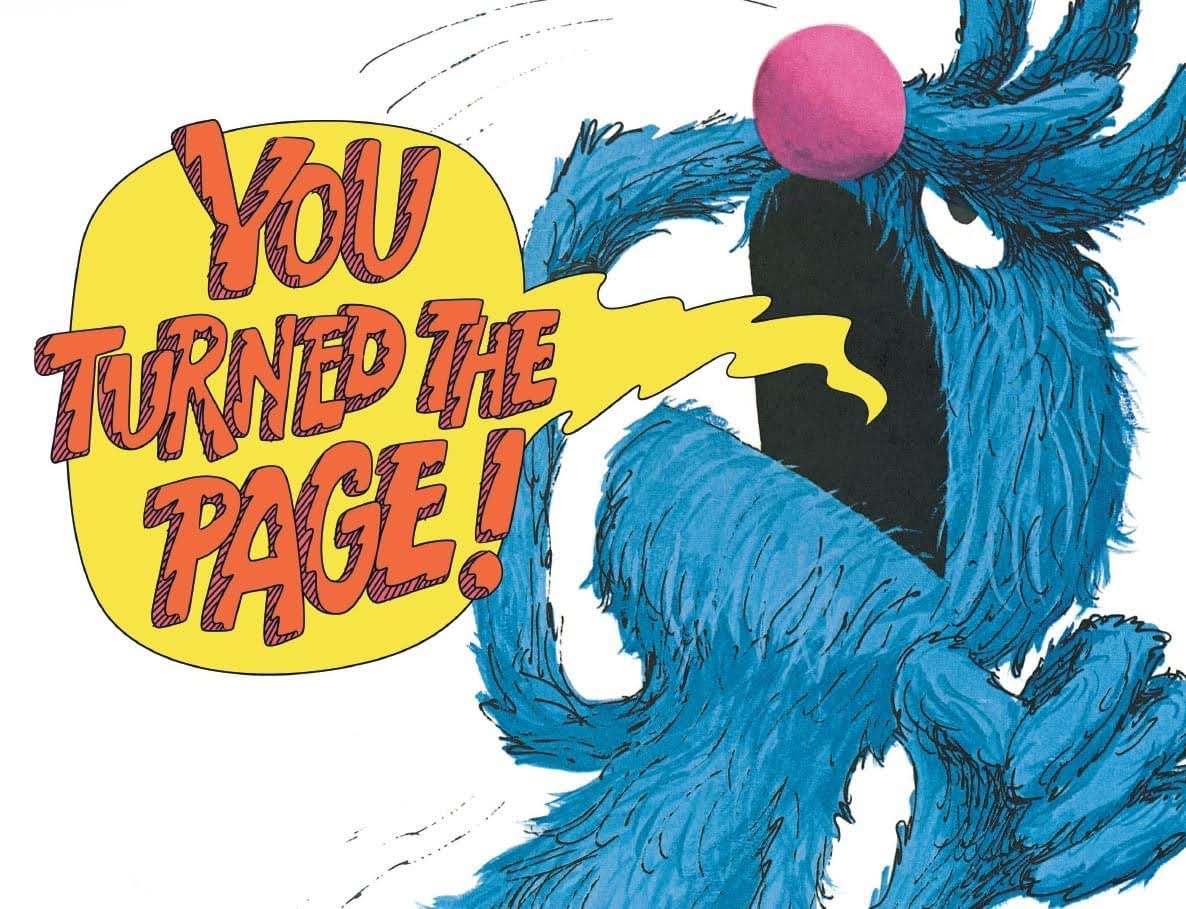
    One of my most vivid memories from childhood is my dad reading The Monster at the End of This Book. But he didn’t just read it. He performed it. Grover wasn’t just a character. With a blue puppet in hand and a gravely voice, my dad turned each page into theater.

    Each night, Grover begged me not to turn the page. He built walls. He tied knots. He panicked. And, of course, I turned the page anyway. I had to see what was coming.

    Spoiler: The “monster” at the end of the book… was Grover himself.

    He feared what he didn’t understand. He made assumptions. He underestimated both me and himself.

    Sound familiar? (Certainly does to me!)

    When Leaders Pull a Grover

    In leadership, we sometimes panic about what’s ahead. We put up barriers. We try to control the pace of change. We yell, “Don’t turn the page yet!” believing we’re protecting others. But real empathy doesn’t mean controlling the narrative. It means walking with people through it.

    Empathetic leadership says:

    • I won’t rush you.
    • I won’t minimize your fear.
    • I will sit beside you and turn the page when you’re ready.

    What If We All Just Turned the Page?

    Whether we’re implementing new technologies, navigating tough decisions, or supporting someone through a tough transition, there’s always a Grover in the room, scared of the unknown, convinced the end of the book holds doom.

    And maybe we are Grover sometimes.

    But what if we just… turned the page anyway?

    With empathy.
    With curiosity.
    And with someone beside us.

    Like my dad. It wasn’t just the puppet or the funny voice. It was that my dad fully entered my world. He didn’t try to fix Grover. He didn’t roll his eyes or fast-forward to the end. He honored the moment, and me, page by page.

    Let’s Keep Reading Together

    This series is reminding me how much childhood stories still shape my adult lens. If a children’s book has ever changed your perspective on leadership or learning, I’d love to hear about it.

    Drop your favorite title in the comments and let’s turn some pages together.

    P.S. It was only a few years ago that my Grover puppet finally met his demise.