Tag: emotional intelligence

  • Are You My Leader? Insights from Classic Stories

    Are You My Leader? Insights from Classic Stories

    This post continues my series exploring leadership lessons in the picture books that shaped me. If you’ve been following along, you know I started with sneezing elephants and then followed Grover’s panicked pages. This one? It belongs to my little brother.

    A Bird, a Brother, and the Big Question

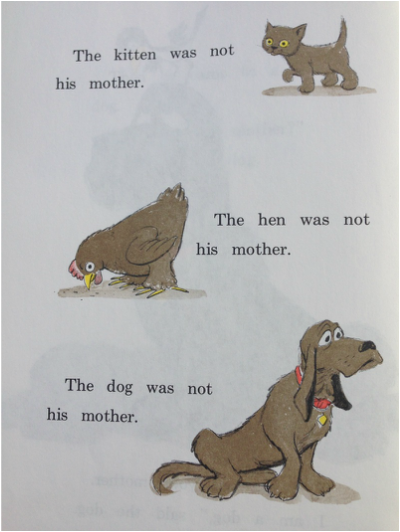
    When we were kids, Are You My Mother? by P.D. Eastman was one of my younger brother’s go-to bedtime book. He couldn’t get enough of that baby bird wandering through the world, asking every creature if they were his mother. (Maybe it’s because I told him he wasn’t really my brother…haha)

    It’s a sweet, silly story on the surface. But re-reading it through a leadership lens? It hits differently.

    Because let’s be honest: most of us, at some point in our personal or professional journeys, have looked around and asked: Are you my person? Is this where I belong? Who’s guiding me through this?

    And for those of us in leadership roles: how often do we recognize that the people we lead are walking in, asking that question of us?

    Leadership as Recognition

    The baby bird isn’t just looking for his mother. He’s looking for connection and affirmation. For someone who will recognize him, respond to him, and meet his needs.

    Leadership, at its heart, is about that same thing: recognition.

    Are we seeing the people in front of us?
    Are we helping them find where they fit?
    Are we guiding them, not just directing them?

    Because when people feel unseen, like that baby bird talking to cows and planes and boats, they start to doubt their place. They go looking, often desperately, for someone to say, “Yes. You belong.”

    And Here’s Where It Gets Techy

    Today’s world is buzzing with talk of AI and machine learning, and this supposed promise to replicate human intuition, automate connection, and even mimic empathy.

    But Are You My Mother? reminds me of the limits of simulation.

    At its core, the baby bird’s journey is about relationship, not recognition alone. He doesn’t just want a “yes” to his question. He wants to feel known. Seen. Held in someone’s awareness.

    No matter how advanced our tools become, we have to ask: can an artificial system truly replicate that? Can it understand the nuance of belonging, or the ache of being unmoored?

    Don’t Be the Bulldozer

    One of the most absurd moments in the book is when the baby bird asks a literal bulldozer if it’s his mother. The machine doesn’t respond, of course. It doesn’t even acknowledge the question. It simply scoops him up and drops him back into the nest.

    Was it efficient? Sure.
    Did it solve the problem? Technically.
    But did it provide comfort and connection? Umm, I’m going to say no to this one.

    That’s the cautionary tale as we advance AI. When our solutions are cold, transactional, or mechanistic, we might get people from point A to point B, but we risk leaving them emotionally stranded along the way.

    True leadership doesn’t just lift. It listens.

    Finding Our People

    The reunion at the end isn’t dramatic. The bird finds his mother, and in that simple moment of recognition, everything settles. It wasn’t about finding the best option. It was about finding home.

    As leaders, our job isn’t to have all the answers.
    It’s to be present when someone asks, “Are you my person?”
    And to have the wisdom—and the heart—to say, “I’m here. Let’s figure it out together.”

    Let’s Keep Exploring Together

    This series has me looking at childhood stories through a whole new lens. What seemed like simple bedtime tales now feel like blueprints for how we show up – for ourselves, for each other, and for the technologies we’re building.

    If there’s a book that’s stayed with you… a story you loved as a kid that now whispers something deeper, I’d love to hear it.

    Drop it in the comments. Let’s keep turning the pages and discovering what they have to teach us. Together.


  • Understanding Transitions: What William Bridges Taught Me About Leading Change in Education

    Understanding Transitions: What William Bridges Taught Me About Leading Change in Education

    I just finished reading Managing Transitions by William Bridges, and all I can think is, where was this book five years ago?

    I didn’t even realize I needed it until now. But with every chapter, I found myself reflecting on moments in my past that suddenly made a whole lot more sense. The times I felt out of sync during a leadership change, doubted myself in the midst of a new initiative, or held tightly to familiar routines when everything else was shifting. I thought I was just resistant to change.

    Now I understand I was in transition.

    What is the difference between change and transition?

    Bridges explains that change is external. It’s the new policy, the reorganization, the updated bell schedule. Transition is internal. It’s the emotional process of letting go, wandering through the uncertainty in the middle, and eventually stepping into something new.

    That middle part, which Bridges calls the Neutral Zone, isn’t often talked about. But it’s where many of us live, especially in education. It’s the space where routines unravel and identity feels blurry. I’ve been there more than once, unsure if I was doing something wrong simply because everything felt off.

    I remember as a teacher when our school was modernized. It was supposed to be an upgrade. Bigger rooms, better resources, fresh paint. But I didn’t feel excited. I felt like a stranger in my classroom. Looking back, I wasn’t grieving the building itself. I was mourning the comfort of the familiar, the rhythm we had built, and the sense of belonging that came with it. At the time, I called it stress. Now I know it was transition.

    Why this matters for educators and school leaders

    One of the most powerful insights in the book is that people don’t resist change because they’re stuck. They resist because they haven’t had the chance to let go. They haven’t grieved what they’re leaving behind.

    In education, we’re often celebrated for our flexibility and resilience. We move fast. We make it work. But too often, we skip over the emotional work of transitioning. We jump from one initiative to the next without taking a breath. Without asking what we need to release.

    Bridges reminded me that real resilience isn’t about powering through. It’s about moving with intention. Letting go with grace. Approaching the new with clarity, even when it’s uncomfortable. (And even if I want to scream into my pillow!)

    How I’ve experienced the Neutral Zone

    I see now how often I’ve lived in that uncertain space. Not ready to let go of the old, not sure how to embrace the new. Whether it was a leadership change, a a procedure shift, or a redefinition of my own role, I wasn’t just adapting. I was transitioning.

    This book gave me the language to name those experiences. It helped me understand why those moments felt so heavy, even when the changes were objectively positive.

    If you are leading through change or simply trying to find your way in something unfamiliar, maybe you’re not stuck. Maybe you’re in transition. And that is not a flaw. That is being fully human.

    P.S. Thanks to Scott at YouSchool for the book suggestion!

  • What Grover Taught Us About Fear and Leadership

    What Grover Taught Us About Fear and Leadership

    This post is the second in a new series exploring leadership lessons tucked inside childhood classics. If you missed the first—on elephants, sneezes, and innovation—you can find it here.

    A Puppet, a Page, and a Pause

    One of my most vivid memories from childhood is my dad reading The Monster at the End of This Book. But he didn’t just read it. He performed it. Grover wasn’t just a character. With a blue puppet in hand and a gravely voice, my dad turned each page into theater.

    Each night, Grover begged me not to turn the page. He built walls. He tied knots. He panicked. And, of course, I turned the page anyway. I had to see what was coming.

    Spoiler: The “monster” at the end of the book… was Grover himself.

    He feared what he didn’t understand. He made assumptions. He underestimated both me and himself.

    Sound familiar? (Certainly does to me!)

    When Leaders Pull a Grover

    In leadership, we sometimes panic about what’s ahead. We put up barriers. We try to control the pace of change. We yell, “Don’t turn the page yet!” believing we’re protecting others. But real empathy doesn’t mean controlling the narrative. It means walking with people through it.

    Empathetic leadership says:

    • I won’t rush you.
    • I won’t minimize your fear.
    • I will sit beside you and turn the page when you’re ready.

    What If We All Just Turned the Page?

    Whether we’re implementing new technologies, navigating tough decisions, or supporting someone through a tough transition, there’s always a Grover in the room, scared of the unknown, convinced the end of the book holds doom.

    And maybe we are Grover sometimes.

    But what if we just… turned the page anyway?

    With empathy.
    With curiosity.
    And with someone beside us.

    Like my dad. It wasn’t just the puppet or the funny voice. It was that my dad fully entered my world. He didn’t try to fix Grover. He didn’t roll his eyes or fast-forward to the end. He honored the moment, and me, page by page.

    Let’s Keep Reading Together

    This series is reminding me how much childhood stories still shape my adult lens. If a children’s book has ever changed your perspective on leadership or learning, I’d love to hear about it.

    Drop your favorite title in the comments and let’s turn some pages together.

    P.S. It was only a few years ago that my Grover puppet finally met his demise.

  • Finding My EQ Sweet Spot: A Leader’s Journey of Self-Discovery

    Finding My EQ Sweet Spot: A Leader’s Journey of Self-Discovery

    Leadership isn’t just about strategy and spreadsheets; it’s about people. It’s about understanding their emotions, motivations, and perspectives. It’s about building relationships, fostering trust, and creating a positive and supportive environment where everyone can thrive. This is where emotional intelligence (EQ) takes center stage.

    My own journey with EQ has been one of self-discovery, filled with valuable lessons and the occasional face-palm moment. It’s a journey I’m still on, constantly learning and striving to improve.

    The EQ Awakening: The “Hard Worker” vs. the “Efficient Leader”

    I vividly remember a time when my lack of EQ created friction within my team. As a new supervisor, I was eager to streamline systems and boost efficiency. However, one of my managers, Mark, a long-time employee with a “hard worker” reputation, resisted my efforts. He thrived on being seen putting in long hours and going the extra mile. My approach, focused on working smarter, not harder, clashed with his values.

    I’ll admit, I initially struggled to connect with Mark. I didn’t fully grasp the importance he placed on being seen as a hard worker. Our differing perspectives led to tension and misunderstandings. I was so fixated on logic and results that I overlooked the emotional needs of my team, particularly Mark’s.

    It took time, numerous conversations, and a few missteps before I truly understood Mark’s perspective. I realized that his need to be “in the field” and actively involved in the work wasn’t just about showing off; it was a core part of how he felt valued and fulfilled.

    While I still believed in efficiency, I learned to appreciate diverse working styles and motivations. I found ways to allow Mark to spend more time working directly with the team while still encouraging him to embrace more efficient processes. The relationship wasn’t perfect, but it became workable.

    This experience was a crucial step in my EQ journey, teaching me the importance of empathy, understanding, and adapting my leadership style to meet the individual needs of my team members.

    My EQ Strengths and Challenges:

    My greatest strength as a leader is my empathy. I genuinely care about my team members and strive to understand their perspectives and emotions. However, this empathy can sometimes be a double-edged sword. While it allows me to connect with others on a deeper level, it can also be emotionally draining. I’m learning to manage this by setting boundaries and practicing self-care, but it’s an ongoing process.

    AI-Powered EQ Enhancement: Practicing Empathy Through Simulated Conversations

    AI can be a powerful tool for developing empathy and practicing challenging conversations. By engaging in mock conversations with an AI, you can explore different approaches, receive feedback on your communication style, and gain insights into how your words might impact others.

    Here’s how you can use a large language model like Gemini to create a simulated conversation with an employee:

    Step 1: Define the Scenario

    Think of a specific situation where you need to have a potentially challenging conversation with an employee. This could be providing constructive feedback, addressing a conflict, discussing a sensitive personal issue, or delivering difficult news.

    Step 2: Create a Persona for the Employee

    Develop a brief persona for the employee you’ll be interacting with. Consider their role, personality traits, communication style, and potential emotional state.

    Step 3: Craft a Prompt for the AI

    Provide a clear prompt to the AI, outlining the scenario and the employee persona. Be specific about the employee’s characteristics and the context of the conversation.

    Step 4: Engage in the Conversation

    Start the conversation with the AI and see how it unfolds. Be mindful of your communication style, tone of voice, and word choice. Pay attention to the AI’s responses and try to understand the employee’s perspective.

    Step 5: Experiment with Different Approaches

    Try different approaches and communication styles throughout the conversation. See how the AI responds to different tactics. This will help you understand the potential impact of your words and actions.

    Step 6: Reflect on the Experience

    After the conversation, reflect on the experience. What did you learn about your communication style? How did the AI’s responses make you feel? What were the most and least effective approaches? How could you improve your communication in similar situations?

    Benefits of AI-Powered Mock Conversations:

    • Safe Space for Practice: Practice challenging conversations without real-world consequences.
    • Experimentation and Feedback: Experiment with different approaches and receive immediate feedback.
    • Increased Empathy: Gain a deeper understanding of the employee’s perspective.
    • Improved Confidence: Build confidence in handling difficult conversations.

    The Ongoing Quest for EQ Mastery:

    Developing EQ is an ongoing journey, not a destination. It requires continuous self-reflection, a willingness to learn, and a commitment to growth. I’m embracing this journey with open arms, and I encourage you to do the same.

    A Call to Action:

    • What are your EQ strengths and challenges?
    • How can you leverage AI to enhance your EQ and become a more effective leader?
    • Share your thoughts and experiences in the comments below!

  • The Future of Work is Emotionally Intelligent … Are We Preparing Students?

    The Future of Work is Emotionally Intelligent … Are We Preparing Students?

    I recently participated in a webinar by Singularity University titled, “The Future of Work is Emotionally Intelligent.” Below are some key takeaways I discovered from the discussion.

    Participants:
    Melissa Extein, PsyD, Principal Consultant & Part-time Faculty @Extein Consulting & Milano School of Policy, Management and Environment, The New School
    Nichol Bradford, Exec Director and Co-Founder, Transformative Tech Lab, Lecturer at Stanford University, CEO of Willow Group
    Simone Harris, Certified Emotional Intelligence Coach, Trauma Sensitive Mindfulness Practitioner @Courageous Leadership, LLC and Search Inside Yourself Leadership Institute
    Rob Nail, Singularity University CEO

    What is Emotional Intelligence?

    What is emotional intelligence? Although everyone on the panel had a different definition, I think the baseline is the ability to both recognize/understand our own emotions and to recognize/understand/influence others’ emotions. It’s also important to recognize that this is a learned skill, and not some innate trait that you either have or don’t have. There’s a big difference between having emotions and being emotionally intelligent. Many of us learn from people who also aren’t that skilled in this area, so we can all use some help growing this skillset.

    If you can’t bring the IQ, bring the EQ, says Nail. Leadership’s role is to understand the culture and emotional space of the business. With this understanding, the leader, knowing who’s in the room and how they operate, can connect the people who know the skills required by the team.

    Unbossing an Organization

    Bradford describes one of the benefits of having EQ in the workplace is the ability to unboss an organization. Unbossed organizations “focus on collaborative leadership and developing talent through a mutual learning process.” It’s no longer about a Human Resources Department, but Human Capital Department. These types of shifts require a high level of EQ so that employees can both give and take feedback; reduce fear of not having someone who tells them what to do; and self-regulate behaviors, biases, and feelings for the good of the community.

    Extein expands on this by pointing out the critical role of empathy. “Empathy requires not only the ability to put yourself in other’s shoes but to understand the shoes they are in and to be interested in understanding.” However, diverse workplaces bring diverse levels of emotional intelligence. Nail remarks that a critical component for the organization is a clear, aligned purpose and intention as well as opportunities to facilitate and develop EQ for those in need.

    Millenials and EQ

    Millennials demanding a higher level of authenticity – they don’t want to split their identities between who they are in personal and professional life. and they will be the bulk of the work force, and the managers, in the next five to ten years. Companies that are most successful have a strong sense of meaning and purpose for middle management, and not just upper executives. To know your purpose and have a sense of meaning ties in to how much noise is in your head on a daily basis that prevents people from having empathy, from slowing down and getting into the moment to better understand the emotions present.

    Research says that employee motivation is based on three areas:
    Feelings of autonomy.
    Feelings of competency.
    Build relationships.
    All of these are impacted by emotional intelligence. It reinforces that need for EQ over IQ for those in leadership roles. The smartest engineer, for example, may not be the best CEO for an engineering firm if she lacks the EQ required to provide those feelings of autonomy, competency, and relationships in employees.

    Emotional Intelligence is a learned skill, so here are some ways to increase your EQ, as well as that of the organization:
    – Slow down enough to look under the surface and not just the surface emotions – meditation, quiet sitting
    – Journaling
    – Mindful Listening
    – Find Ways to “Be in Flow”
    – Assess your EQ with Available Tools
    – Executive/Peer Coaching for Leaders
    – Time to Practice the Skill
    – Create an environment where it’s okay to make mistakes and learn
    – Use emoticons to share your emotions with others to increase understanding in written communication

    How are you building your own emotional intelligence? What about the emotional intelligence of students? staff? community?