
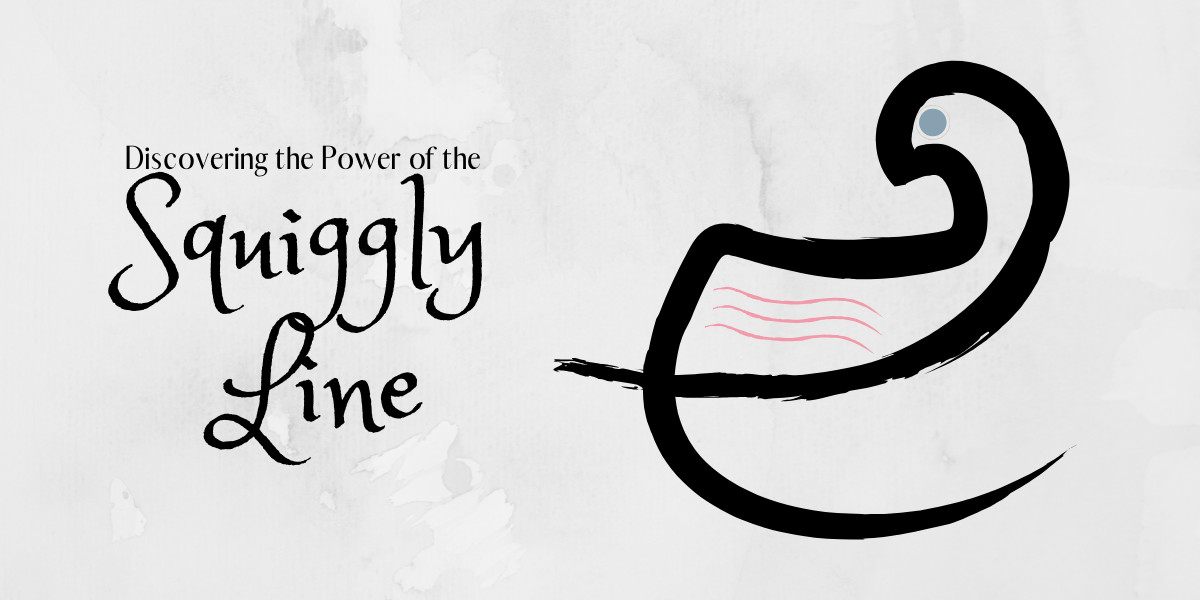
When I was little, my dad was on the road a lot for work. So when he was home, we’d often go out to dinner so my mom could take a break from cooking. The best restaurants were the ones with plain, paper placemats because those were the ones in which creativity could flourish.
My dad would grab a pen from my mom, and draw a squiggly line on the placemat. My job, then, was to create something from the perceived nothing. Like looking for cloud animals, somewhere in that squiggly line was an animal, or an airplane, or something else just waiting to be discovered, and drawn, with the pen. When I finished my creation, we’d swap roles, and I’d create the squiggly line with which he would create.

This back and forth continued until the waiter inevitably ruined our creative masterpiece with my dinner plate. Back then, it seemed like a simple way to pass the time with a child anxious for her food. But now, I can look back and see a much greater result of those encounters.
It was in those moments that I learned the power of “ish.”
In Ish, by Peter Reynolds, the main character learns that drawing “ish-ly” provides more creative freedom than getting it just right.
For me, a young girl who struggled with perfection, this was an important learning. My mom was artistic, as were my uncle and my grandpa, so my self-judgment would often result in a desire to skip the creative aspects of any school project. “Ish” thinking helped me to set aside my negative self-talk and see the value in my creations.
In Creative Confidence: Unleashing the Creative Potential Within Us All, Tom and David Kelley explain that “striving for perfection can get in the way during the early stages of the creative process.” Unfortunately, schools don’t always provide the time, the space, the freedom to engage in the early stages of the creative process. The “ish” loses to the strive for perfection when learning is connected to an assignment with a deadline and an assessment.
Students need to learn “ish,” to value “ish,” and to believe in the power of a squiggly line. Squiggly lines aren’t about being perfect, or the best. And that’s what makes them perfectly ‘ish.”
*P.S. I created the above drawing to illustrate the squiggly line concept, and it was very hard for me to let go and just draw something… guess I need to start going out to eat with my dad more again!
P.P.S. This short video from Pixar Animation Studios shows how characters can be created from squiggly lines.
 World renowned psychologist and Stanford professor Albert Bandura has shown through his body of research that “our belief systems affect our actions, goals, and perception. Individuals who come to believe that they can effect change are more likely to accomplish what they set out to do… People with self-efficacy set their sights higher, try harder, persevere longer, and show more resilience in the face of failure.” (
 )
)