This post continues my series exploring leadership lessons in the picture books that shaped me. If you’ve been following along, you know I started with sneezing elephants and then followed Grover’s panicked pages. This one? It belongs to my little brother.
A Bird, a Brother, and the Big Question
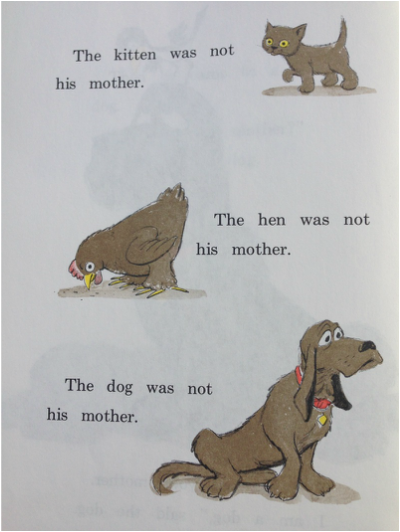
When we were kids, Are You My Mother? by P.D. Eastman was one of my younger brother’s go-to bedtime book. He couldn’t get enough of that baby bird wandering through the world, asking every creature if they were his mother. (Maybe it’s because I told him he wasn’t really my brother…haha)
It’s a sweet, silly story on the surface. But re-reading it through a leadership lens? It hits differently.
Because let’s be honest: most of us, at some point in our personal or professional journeys, have looked around and asked: Are you my person? Is this where I belong? Who’s guiding me through this?
And for those of us in leadership roles: how often do we recognize that the people we lead are walking in, asking that question of us?
Leadership as Recognition
The baby bird isn’t just looking for his mother. He’s looking for connection and affirmation. For someone who will recognize him, respond to him, and meet his needs.
Leadership, at its heart, is about that same thing: recognition.
Are we seeing the people in front of us?
Are we helping them find where they fit?
Are we guiding them, not just directing them?
Because when people feel unseen, like that baby bird talking to cows and planes and boats, they start to doubt their place. They go looking, often desperately, for someone to say, “Yes. You belong.”
And Here’s Where It Gets Techy
Today’s world is buzzing with talk of AI and machine learning, and this supposed promise to replicate human intuition, automate connection, and even mimic empathy.
But Are You My Mother? reminds me of the limits of simulation.
At its core, the baby bird’s journey is about relationship, not recognition alone. He doesn’t just want a “yes” to his question. He wants to feel known. Seen. Held in someone’s awareness.
No matter how advanced our tools become, we have to ask: can an artificial system truly replicate that? Can it understand the nuance of belonging, or the ache of being unmoored?
Don’t Be the Bulldozer
One of the most absurd moments in the book is when the baby bird asks a literal bulldozer if it’s his mother. The machine doesn’t respond, of course. It doesn’t even acknowledge the question. It simply scoops him up and drops him back into the nest.
Was it efficient? Sure.
Did it solve the problem? Technically.
But did it provide comfort and connection? Umm, I’m going to say no to this one.
That’s the cautionary tale as we advance AI. When our solutions are cold, transactional, or mechanistic, we might get people from point A to point B, but we risk leaving them emotionally stranded along the way.
True leadership doesn’t just lift. It listens.
Finding Our People
The reunion at the end isn’t dramatic. The bird finds his mother, and in that simple moment of recognition, everything settles. It wasn’t about finding the best option. It was about finding home.
As leaders, our job isn’t to have all the answers.
It’s to be present when someone asks, “Are you my person?”
And to have the wisdom—and the heart—to say, “I’m here. Let’s figure it out together.”
Let’s Keep Exploring Together
This series has me looking at childhood stories through a whole new lens. What seemed like simple bedtime tales now feel like blueprints for how we show up – for ourselves, for each other, and for the technologies we’re building.
If there’s a book that’s stayed with you… a story you loved as a kid that now whispers something deeper, I’d love to hear it.
Drop it in the comments. Let’s keep turning the pages and discovering what they have to teach us. Together.