Author: Laura Spencer

  • Designing Belonging: What a Pizza Box Taught Me About Connection

    Designing Belonging: What a Pizza Box Taught Me About Connection

    I’ve written before about the time I ordered a pizza to reconnect my ex-husband to the outside world. No car. No phone. No internet. A disconnection, both literal and emotional. We used Domino’s delivery notes as our 21st-century carrier pigeon. It worked, but only because someone made the effort to reach out, to bridge the gap, to make belonging possible when the system failed.

    I was thinking about that moment when I read Design for Belonging by Susie Wise.

    “The work of belonging is to counteract [othering]. It is to open up spaces and places so that all people regardless of their backgrounds can join in and contribute.”

    I can’t stop thinking about how often we overlook the micro-moments where belonging breaks, and how many more we ignore where it could be rebuilt.

    That pizza box moment was belonging by design, even if I didn’t have a name for it then. It was messy. Unconventional. A little ridiculous. But it worked.

    And maybe that’s the real design challenge: how do we notice when belonging is fractured? And more importantly, what do we do next?

    When Wise talks about the “design levers” of rituals, roles, spaces, systems, it isn’t just a nice framework for planners and strategists. It’s a lifeline for educators, leaders, and humans trying to hold fragmented communities together. Especially when those communities are separated by distance, devices, and distraction.

    I’ve seen this in classrooms. In Zoom faculty meetings. In Twitter (“X”) threads that start with good intentions and devolve into ego matches. And I’ve felt it in the silence after someone says something unintentionally harmful, followed by… nothing.

    That’s where the work is.

    We talk a lot about invitation. How do we invite students into learning? Colleagues into collaboration? Families into school systems that weren’t built with them in mind?

    But Wise pushes us further. She explains that invitation isn’t just about showing up. It’s about showing up in a space that sees you. Hears you. Values your perspective.

    That only happens with intention.

    I think about how many times I’ve created systems that worked “in theory” but didn’t feel like belonging in practice. The school-wide email that no one read. The virtual office hours that no one joined. The peer feedback protocol that favored the loudest voices. None of those were belonging, even if they were well-designed.

    Because belonging isn’t the form. It’s the feeling.

    Wise also talks about dissent and repair—two words we don’t sit with enough in schools.

    We love our norms and expectations and “we’re all in this together” mantras. But what happens when someone pushes back? When they say, “This space doesn’t feel safe for me,” or “That comment hurt”?

    Too often, we go straight to defense. Or worse—silence.

    But real belonging means we stay. We sit in the discomfort. We acknowledge the impact even if it wasn’t our intent. We ask what repair could look like—and then we act.

    Sometimes that action is a redesign.
    Sometimes it’s an apology.
    Sometimes it’s a damn pizza box with a handwritten message to reboot the phone so messages arrive. haha

    I don’t have a neat ending here. Belonging is squiggly like that. It’s a process, not a product. But what I’m learning from Susie Wise, and remembering from my own messy, human moments, is this:

    We can design for belonging in every space we touch.
    Even the ones that feel too big, too broken, too remote.
    Even the ones held together by pizza and Post-it notes.
    Especially those.

  • More Than Content: Why the Future of School Must Be Human

    More Than Content: Why the Future of School Must Be Human

    Everywhere I turn, people seem exhausted. Not just by the pace of change, but by the growing sense that our systems, especially in education, are still answering the wrong questions.

    We’re designing for efficiency when what we need is empathy. We’re measuring content mastery when what’s slipping through the cracks is human development.

    I keep coming back to a question I shared recently with educators at our Elite kickoff:

    What if school wasn’t built for content delivery, but for human development?

    It’s not just a question for classrooms. It’s a lens for our entire society.

    If we keep treating education like a conveyor belt of content, we’ll keep producing students who know what to memorize, but not how to belong, contribute, adapt, or lead.

    But if we build schools where curiosity is safe, connection is prioritized, and hope is cultivated? Then maybe, just maybe, we’ll raise a generation that can heal what’s fractured and build what’s missing.

    Because in a volatile world, content is important. But character, compassion, and critical thinking are essential.

  • Creativity, Failure, and Starting Late

    Creativity, Failure, and Starting Late

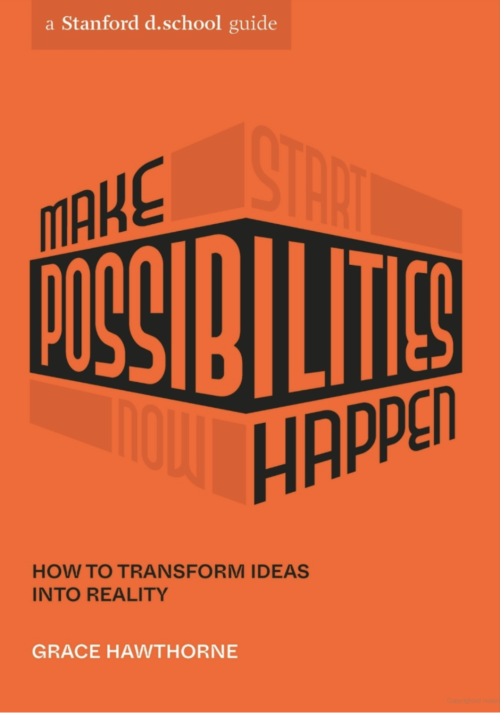
    There’s a bit of irony in the title of the first book I picked up from the d.school book club: Make Possibilities Happen. Because I joined the club months ago, full of energy and good intentions, and promptly… fell behind. Haven’t made it to a single Zoom meet. Still playing catch-up on the reading.

    So maybe this is my version of possibility-making. The slow, quiet kind. The kind that happens in between work calls and late-night note scribbles. The kind that shows up long after the calendar reminder has passed but still feels meaningful.

    As I work my way through the books and recorded discussions, I’ll be sharing reflections here. Consider it my asynchronous book club journey, with plenty of margin for detours and delayed starts.

    Creativity Isn’t a Trait. It’s a Practice.

    One of the biggest myths we carry, especially in education, is that creativity belongs to a select few. You’ve probably heard it (or said it) before: “I’m just not creative.” It’s the same script as “I’m not a math person,” and it does just as much damage.

    The truth is, we’re all creative. We just haven’t all been given the space or encouragement to practice it.

    Grace Hawthorne doesn’t let you off the hook with that kind of thinking. She reminds us that creativity isn’t something you have. It’s something you do. And doing it means letting go of the pressure to get it perfect the first time.

    That shift matters. In classrooms. In leadership. In design. When we treat creativity like a skill instead of a talent, we open up space for trying things before we’re ready. We make room for mess. For feedback. For growth.

    Whether you’re planning a lesson, testing out AI, or brainstorming a new learning experience, creativity isn’t about brilliance. It’s about movement.

    Small Mistakes Matter

    There’s a line in the book I keep coming back to: make small mistakes so you can course-correct along the way.

    It’s simple, but it cuts through so much noise. In education, we’re often so focused on getting it right the first time. But what if we shifted the goal? What if we built space for mistakes that teach us something?

    When I support teams who are exploring things like AI or designing immersive VR learning experiences, I remind them: we don’t have to launch with perfection. We just have to start. Reflect. Adjust. Keep going.

    It’s not failure. It’s feedback.

    The Power of Putting It on Paper

    Another gem from Grace: when the idea feels too big, get it out of your head.

    Sounds obvious, but how many of us let big ideas swirl until they turn into stress?

    When I’m working on early-stage lesson design, especially for VR or other emerging tech, the hardest part is getting started. The second I sketch something on paper,even if it’s a mess (and sometimes especially when it’s a mess), it stops feeling like a mountain and starts feeling like a puzzle.

    Grace’s advice here isn’t just tactical. It’s kind. She respects the overwhelm but doesn’t let it win.

    Detours as the Main Road

    One of the most encouraging ideas from the book was that detours often become the real path.

    I didn’t plan for much of the work I do now. None of it was on some neat five-year plan. But somewhere between the classroom, school leadership, and the world of instructional design, I started following threads that felt like purpose. That still surprises me.

    And yet, those side trails have led to some of the most aligned work I’ve done.

    Grace’s reminder gave me permission to stop apologizing for the path I didn’t plan. Sometimes the unexpected turn is the destination.

    Final Thought

    I may not be caught up with the book club, but I did add “catch up on the book club” to at least three to-do lists this month so that counts, right? And while I haven’t earned any gold stars for participation, I have wrestled with big ideas, highlighted half the book, and scribbled questions in the margins. Maybe that’s what making possibilities looks like sometimes: quiet, nonlinear, and slightly behind schedule.

  • Spotting the Cracks

    Spotting the Cracks

    A Reflection on Systems Change and Personal Resistance

    I just listened to The Conversation Factory podcast episode called “The Seven Everyday Habits for Transforming Systems” with Adam Kahane, and I felt like he was talking just to me.

    “A crack in a system is a sign that, at least for some people, it is not working. A crack offers a not-yet-realized opportunity to transform the system… it presents hope, but also disruption, confusion, conflict, and danger.”

    That quote is screaming my name, because cracks are where I like to live.

    I’m someone who notices when things aren’t working… when systems create friction, when people are quietly struggling inside processes that look good on paper. It’s never about blame. It’s about possibility. I see cracks not as flaws to cover up, but as places we can step into. Openings. Invitations.

    But here’s the hard part:
    Pointing out a crack in a system often makes people uncomfortable. It feels personal. Defensive responses come fast. And I get it. No one wants to hear that something they helped build isn’t working anymore.

    But if we’re serious about equity, about innovation, about better serving people, then we have to get better at seeing cracks as something to work with, not avoid.

    I’ve watched teams double down on outdated processes simply because they didn’t want to admit the cracks were there. And I’ve seen how that keeps people stuck.

    The systems we design aren’t static. They shouldn’t be. What worked five years ago, or even last year, might not work now. And that’s not failure. That’s growth.

    When someone points out what isn’t working, it’s not an attack. It’s an act of care. It means they’re invested enough to want things to be better.

    So let’s embrace the cracks as opportunity.

  • Gratitude Reimagined: Spotlighting Authentic Appreciation

    Gratitude Reimagined: Spotlighting Authentic Appreciation

    Subscribe to continue reading

    Subscribe to get access to the rest of this post and other subscriber-only content.

  • This Week, I Get to Do What I Love

    This Week, I Get to Do What I Love

    This week, I get to do what I love: lead professional learning with the incredible staff at Elite Academic Academy.

    We are a virtual school. For most of the year, we wave at each other through screens, send messages in GChat, and meet in tiny Zoom boxes. So when we come together in person, it’s not just a training. It’s a reunion.

    Three days of learning. Three days of hugs, hallway laughter, hallway tears, hallway everything. It’s sacred.

    It’s also the result of months of planning. Spreadsheets, logistics, late-night ideas scribbled in a notebook, and, let’s be honest, a whole lot of anxiety. Will it come together? Will it feel meaningful? Will we use this time in a way that honors how precious it really is?

    And then Tuesday morning arrives, and that first staff member walks down the hall and gives you a hug, and it all clicks into place.

    Yes, we’ll be sharing some amazing things happening at Elite. AI. VR. A live virtual all-school musical that still gives me goosebumps. But the technology is not the story. The people are.

    We’re spending this time focusing on culture, community, and relationships. On making sure every student, every staff member, every person connected to Elite feels like they matter. Because they do.

    This is the work I love. And if you’re planning your own event, or looking for a speaker who leads with heart and clarity, I’d be honored to help.