Author: Laura Spencer

  • Agency Through FortNite? Sure. Why not?

    Fortnite, and other games like it, require students to practice “teamwork, collaboration, strategic thinking, spatial understanding, and imagination,”  Stanford Graduate School of Education experts say. 5th graders would agree, although they didn’t realize it at first.

    I’ve been working with small groups of teachers to critically examine student agency, and how it is developed, nurtured, and grown in the learning environment. In one of our meetings, 5th grade teacher Dan Dahl shared with us that he has a group of students that love Fortnite. He asked them, “So what do you do when you get stuck in the game?” Students were quick to share their strategies:

    • Look at YouTube videos to see how others completed the task
    • Ask a friend who may have already beaten that level
    • Practice the skill needed in the online “playground mode”
    • Try other skills to see if the task can be accomplished other ways
    • And of course, keep trying!

    When Dan asked students what strategies they might use when they are stuck with a math problem, it took a moment…

    tenor

    and then…

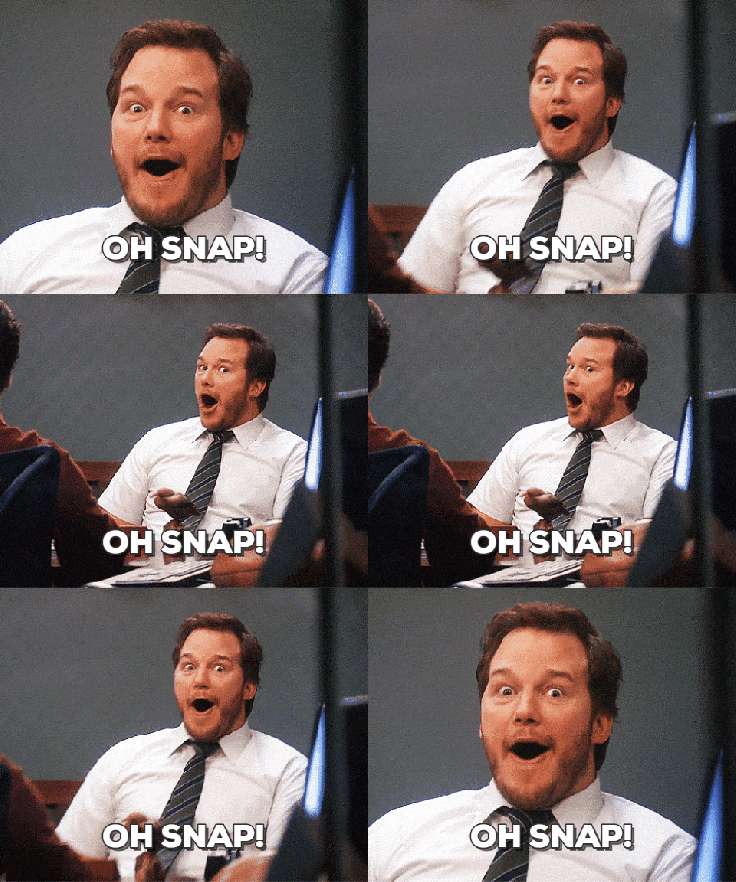
    Oh snap! GIF

    The connection was made – the strategies students were using to find the path to success in Fortnite are the same strategies they could use to find the path to success in their academic life, too.

    For some, it was a #mindblown moment.

    Thing is, many of our students already exhibit agency, which is the capacity and propensity to take purposeful initiative. They just don’t always get the opportunity to do it at school. It’s up to us to connect those dots and provide meaningful ways for students to take their own initiative to learn.

    (Postscript: For those of you who are enraged at the prospect of 5th graders playing Fortnite, deep breath! We are not endorsing violent games in elementary schools… just engaging in conversations to better connect and understand the passions and joys of our students.)
  • Lucid Wonderings

    Lucid Wonderings

    I’ve been overwhelmed lately by life changes – my Navy daughter moved to the East Coast for her first duty assignment; my boyfriend and I bought a house; my work responsibilities have increased; and I have resumed teaching college courses parttime.

    All of these changes had my mind and my heart going in a million different directions and as a result, my blog and my tweets and my readings have gone in a million different directions as well.

    In that journey, i’ve come across some interesting reads. Here they are for you to explore as well:

    “A Thousand Rivers” by Carol Black

    Thanks to Will Richardson for this awesome find. As I grapple with cultural intelligence, a principle our district has called out as integral to student development, this article touched my heart on many levels. Black sets out to explain how we’ve gotten it all wrong in our focus on the science of learning because we have focused on the science of learning in schools, which is like “collecting data on killer whales based on their behavior at Sea World.” This short, pithy description doesn’t do it justice. Grab some hot cocoa or something, a cozy blanket, and settle in for an eye-opening, or life affirming, read.

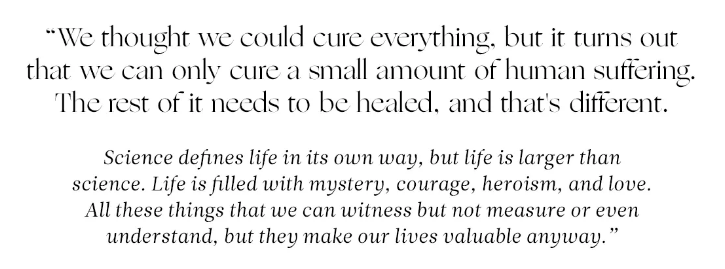
    “The Difference Between Fixing and Healing” by Rachel Naomi Remen

    When I attended Deloitte U’s Courageous Principal Institute, they had us all take a business chemistry survey. I was designated a “Driver,” which means I am direct, logical, competitive, goal oriented, and tough minded. To that end, I tend to want to fix situations and move on so that they don’t divert me from my destination. This article reminded me that there is much in life that can not be fixed. Sometimes, the focus needs to be on healing. And it made me think, how often have we looked at our students, our children, as people needing fixing instead of humans needing healing. It’s a move that requires empathy, and time to really understand and connect. Something Drivers like me need to put more conscious effort into to ensure it happens.
    Screen Shot 2018-12-03 at 16.15.43.png

    She Never Saw A Classroom Until College. Now She Has A Ph.D. And A Lot Of Thoughts About Education” by Catherine Brown

    In this interview, Brown talks to Tara Westover, author of the bestselling memoir Educated. Westover was raised by survivalist, fundamentalist parents, and as a result, did not attend school as a child. It’s a fascinating interview, and I look forward to reading her book. In the article, Westover states, “Become educated but don’t let your education petrify into arrogance. Education should always be an expansion of your mind, a deepening of your empathy, a broadening of your perspective. It should never harden your prejudices. If people become educated, they should become less certain, not more. They should listen more, they should talk less. They should have a passion for difference and a love of ideas that aren’t theirs.”

    That’s my approach these days… to try to listen more and talk less. So now I’d love to listen to you …

    What are you reading and thinking these days? Would love to hear all about what’s resonating with you.

    If you enjoyed this post, share the link to this post with two friends. Learning together is way more fun than learning on my own.

     

  • Book Read: Building a Better Teacher

    I thought I knew the history of American education. After all, I had studied John Dewey in school, and isn’t he the source of all things education? Guess not, according to Building a Better Teacher by Elizabeth Green. Turns out, there was a lot of misguided efforts to create a teacher education program, and a lot of failed initiatives to reform education once there was a teacher education program. It’s an interesting read, as it filled in some knowledge holes for me about math pedagogy, charter schools, and the rise in quality of Japanese education.

    A few segments that stood out:

    “Changing the way you taught was a major undertaking. A teacher had to revise everything from the kinds of questions she asked to her very understanding of the subject she was teaching.” It’s complex work. It’s easier to do a “redesign, but not an overhaul. The same old wine in new bottles… carry out the activities without rebuilding core beliefs.”

    While watching an American videotaped lesson, a Japanese researcher was perplexed by a P.A. announcement that came on during the lesson:
    “Were we implying that it was normal to interrupt a lesson? How could that ever happen? Such interruptions would never happen in Japan because they would ruin the flow of the lesson.” Going through all the videos the research team had, it was discovered that 31% of American lessons contained an interruption, while zero of the Japanese lessons did.

    In Japan, no teacher worked alone. “To solve the puzzles that teaching posed, teachers needed the push and pull of other people’s opinions.” This is the power of jugyokenkyu, which is a Japanese lesson study used to hone their craft.

    I’d recommend this book to anyone who is currently working on school reform, as it puts names and personalities and historical context around some of the practices we engage in today. In doing so, it reminded me why change doesn’t happen overnight, and how important culture and communication are to any sustainable movement.

  • You Have To Find Ways Around Things

    I received this email from a colleague:

    In the mix of conferences…
    What if….
    We completely reimagined what that looked like??? How would we make that change?

    It made me think about IDEO’s blog vignettes called “Thoughtless Acts.”

    Human-centered design requires us to observe human behavior with beginner’s eyes, so that we can spot the innate ways people interact with the world around them. We call these intuitive and unconscious reactions Thoughtless Acts. – IDEO

    A recent Thoughtless Act called “Going with Gravity” described an old woman leaning over her small wall to pick an herb because it was easier on her body than bending down, and then having to get back up.  The woman, explaining her new moves to her grandson, shared that, “At my age, you have to find ways around things.”

    You have to find ways around things. 

    I would venture to guess that our teachers and students are always finding ways around things. They find ways around internet content filters. They find ways around limited supplies. They find ways around dress codes, outdated textbooks, and high-stakes testing. So many items that could be added to this list!

    Why do so many of the systems, structures, and beliefs of schooling require the users to find ways around them?

    Jose Vilson asks, “Why do we hold so tightly to the rigid ideas of what teaching used to look like and work with the generation of students we currently do, with different, valid values and diverse understandings of the way the world works?”

    If we aren’t constantly tackling educational systems, structures, and beliefs, then the changes schools make will continue to be Thoughtless Acts of working around the system, instead of working on the system.

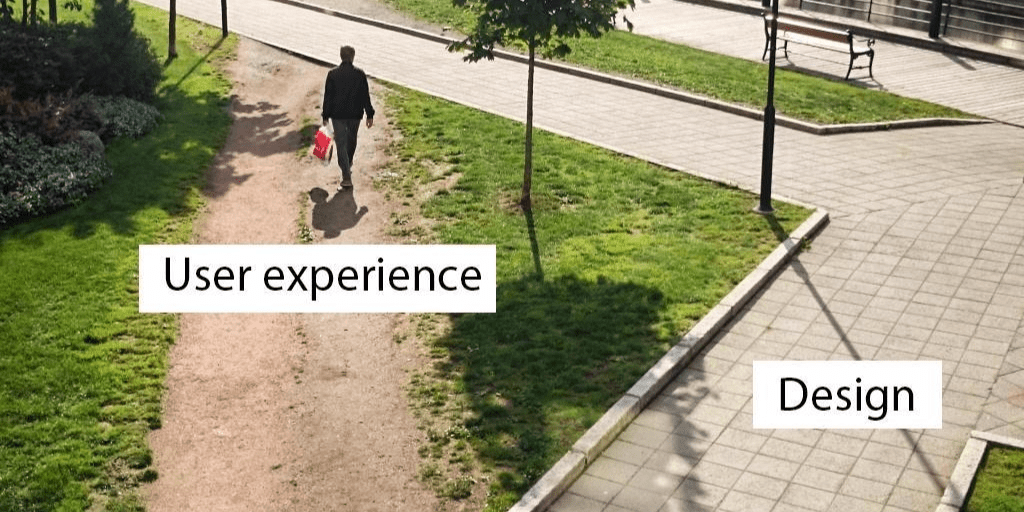
    ux


  • I Want Your Absolute Worst Thinking

    I Want Your Absolute Worst Thinking

    “I want your absolute WORST thinking…”

    The other day I was co-presenting a session to educators that focused on why design thinking is needed in K-8 classrooms. We talked about the need for empathy, for designing a new future, for “soft” skill development, etc. You know how it goes… you sit and listen to a presenter talk about why their idea is going to revolutionize education, and you get all pumped up and ready to take on the world.

    Then I led them through a brainstorming activity in which I asked them to quickly brainstorm all the WORST possible ways to introduce design thinking in their classroom. They stared at me. Surely I had misspoke. “No,” I clarified, “I don’t want your best thinking. I want your absolute WORST thinking. The most TERRIBLE ideas you can come up with…” and off they went.

    The ideas they shared were eye-opening. Some were:

    • Present design thinking as a worksheet
    • Micro-manage every aspect of the design thinking process
    • Use a K-W-L at every stage of design thinking
    • Grade them on their final product
    • Provide no direction whatsoever and expect them to figure out what design thinking is
    • Make it a mandate

    And so on… from those terrible ideas, we were able to springboard into great ideas because underneath every bad idea is a great idea just waiting to get out. It was a fun activity, yes, but a meaningful one as well.

    Then today I read an article called “How You Can Get Better at Predicting the Future”  Steven Johnson, author of Where Good Ideas Come From, discussed the importance of a premortem before making an important decision. Opposite of a postmortem, a premortem figures out what killed a person before the person actually dies. It has fantastic implications for the edu sector.  In the premortem, you take your decision, or planned course of action, and describe how it proves to be a “catastrophic failure” in two years time. Why was the idea so terrible? How did it fail?

    Johnson explains that this forces people to look at their decision from a different angle. Usually, we ask, “Do you foresee any issues with this idea/program/solution?” and people say, “No, looks good” and we move forward with the idea. But when you ask people, “Okay, invent the story of how this path ends up leading to disaster,” they see flaws they might not have seen otherwise.

    How many school initiatives or even classroom lessons have been failures because we didn’t conduct a premortem? Even our best laid plans have room for improvement.

    Next time I conduct my “most terrible idea” brainstorm, I think I’m going to switch it up and also ask them to brainstorm the catastrophic failure of their best plan so that the plan can become even better. Maybe then, we can eliminate some of our silver bullet solutions and dig deeper for a real edu revolution.

  • Innovate Forward: Our Story

    Innovate Forward: Our Story

    When you know your ‘why’ then your ‘what’ has more impact,
    because you’re working towards your purpose.
    – Michael Jr. 

    Today I was fortunate to present at the online #InnovateSD conference hosted by San Diego County Office of Education, thanks to an invitation extended to me by PowerSchool Senior Director of Educator Engagement Mike Lawrence.

    At around 1 hour and 18 minutes of this YouTube video is my presentation.

    Screen Shot 2018-11-02 at 11.46.11
    Sorry – it won’t allow embedding

    I’ve asked about the story of learning to over 300 educators over the past year, and regardless of age, background, or socioeconomic status, the answers were largely the same. The story of learning has been one largely comprised of compliance. Even those who shared about projects and experiential learning still shared a common message that you must do what you are told if you are to be labeled successful.

    Many of our practices and our beliefs are so ingrained that they are institutionalized. After all, most educators have been in the school system since the age of four or five. It’s all many of us have ever known so it’s not a surprise that we don’t notice the messages we send through our systems, structures, and beliefs, or why we send them.

    This video is about how Del Mar Union is pushing back on those systems, structures, and beliefs. It’s about the importance of providing students with the foundations and the experiences needed to think and to know their voice matters. It may be the story of Del Mar, but I am hopeful that it becomes the story of learning for all of us.