Author: Laura Spencer

  • What is the Role of Mobile Devices in Your School?

    What is the Role of Mobile Devices in Your School?

    A colleague in her Master’s program asked me to answer a few questions for a class project she is completing. My responses are below. I’d love to hear how others would answer these questions.

    What are the instructional goals that we are aiming to accomplish with mobile learning?

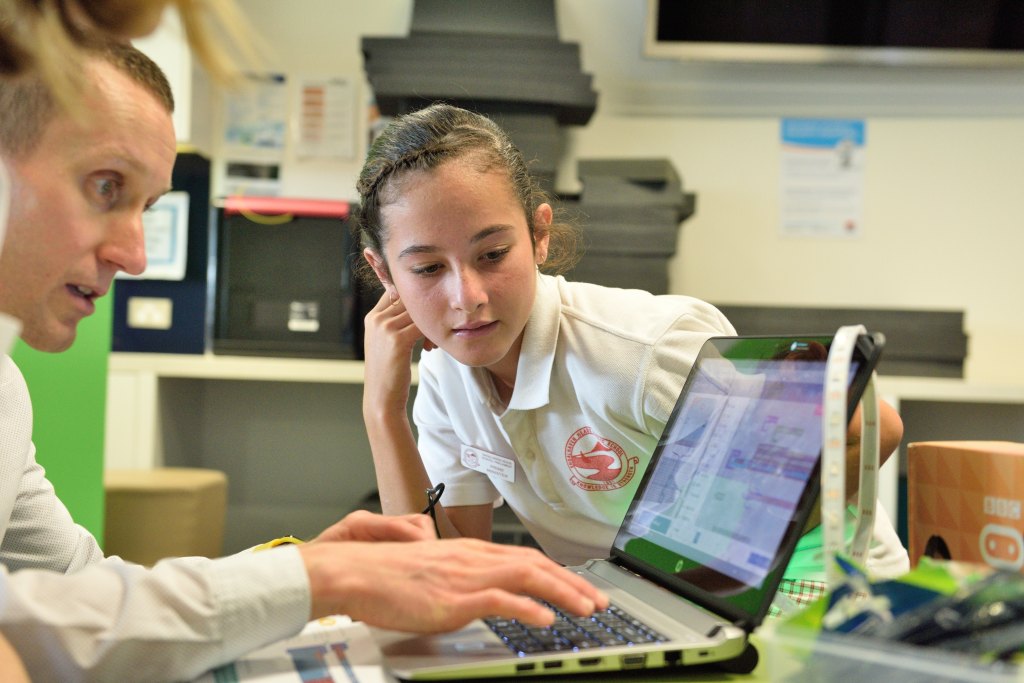
    Our goal is to provide students with access to information and resources whenever and wherever they need it. We still have a Tech Lab at each school, but the Tech Lab is for enrichment… a chance for students to learn things that a classroom teacher may not have time or expertise in, like coding. Robotics, greenscreen, etc. Then, with our mobile devices, students should be able to take what they’ve learned in the Tech Lab and apply it to classroom learning. Example: A group of 5th grade students are working together to explain to others how tides work, and what is the significance of their patterns. They weren’t told HOW to teach others. One student grabs his Chromebook and starts building out a Scratch movie… he didn’t learn that in class. Another student starts researching information. And a third boy started a Google Slide. Their self-directing their learning. They need mobile devices if this is to be successful because they shouldn’t have to wait for a scheduled time, or a device to become available, in order for learning to happen. We want technology to be ubiquitous, like binder paper and pencils. Only then can it truly become a learning mechanism and not just a consumer device.

    How will the mobility of the devices in our school/district/institution improve teaching and learning?

    I watched a webinar the other day on Emotional Intelligence (EQ) becoming the key to successful organizations, rep lacing IQ. Why is that? Because IQ used to be connected to WHAT you knew. Now, with technology, it’s easier to fill the holes of what we don’t know. “Google it” is the default answer to many questions asked these days. So consider, if we could reprogram school so that “Google it” becomes the norm (instead of this fearful entity that students use to “cheat”), then teachers and students could spend more time teaching and learning about the really important things, like emotional intelligence and the other soft skills, which are deemed most important to the future of jobs:

    1. Complex problem solving

    2. Critical thinking

    3. Creativity

    4. People management

    5. Coordinating with others

    6. Emotional intelligence (new)

    7. Judgment and decision making

    8. Service orientation

    9. Negotiation

    10. Cognitive flexibility (new)

    What would you like to be able to do with mobile devices that was previously difficult or impossible?

    I’d like to be able to ensure that the mobile devices in students’ hands are all equipped with 4G (5G?) internet. The equity/access gap is real, and we increase it when we give students devices but not access. We create this false sense of equitable access to resources and then say things like, “Well, they can just go to Starbucks if they need internet.” When we say this, we’re negating the full experience of the child. So before we start getting excited about OER (Open Educational Resources) and before we start pushing the “Google It” answer, we have to make sure that all our students have access.

    Then, we need to make sure that all our students are equipped with the tools and resources to navigate the complexities of media literacy. I don’t think a device can provide that…yet… but it’d be great if it had an AI that could help students select reliable sources of information. There are some apps and web extensions that are heading this route, but I’ holding out hope for the Star Trek transponder that meets this need for all of us. ☺
  • The Future of Work is Emotionally Intelligent … Are We Preparing Students?

    The Future of Work is Emotionally Intelligent … Are We Preparing Students?

    I recently participated in a webinar by Singularity University titled, “The Future of Work is Emotionally Intelligent.” Below are some key takeaways I discovered from the discussion.

    Participants:
    Melissa Extein, PsyD, Principal Consultant & Part-time Faculty @Extein Consulting & Milano School of Policy, Management and Environment, The New School
    Nichol Bradford, Exec Director and Co-Founder, Transformative Tech Lab, Lecturer at Stanford University, CEO of Willow Group
    Simone Harris, Certified Emotional Intelligence Coach, Trauma Sensitive Mindfulness Practitioner @Courageous Leadership, LLC and Search Inside Yourself Leadership Institute
    Rob Nail, Singularity University CEO

    What is Emotional Intelligence?

    What is emotional intelligence? Although everyone on the panel had a different definition, I think the baseline is the ability to both recognize/understand our own emotions and to recognize/understand/influence others’ emotions. It’s also important to recognize that this is a learned skill, and not some innate trait that you either have or don’t have. There’s a big difference between having emotions and being emotionally intelligent. Many of us learn from people who also aren’t that skilled in this area, so we can all use some help growing this skillset.

    If you can’t bring the IQ, bring the EQ, says Nail. Leadership’s role is to understand the culture and emotional space of the business. With this understanding, the leader, knowing who’s in the room and how they operate, can connect the people who know the skills required by the team.

    Unbossing an Organization

    Bradford describes one of the benefits of having EQ in the workplace is the ability to unboss an organization. Unbossed organizations “focus on collaborative leadership and developing talent through a mutual learning process.” It’s no longer about a Human Resources Department, but Human Capital Department. These types of shifts require a high level of EQ so that employees can both give and take feedback; reduce fear of not having someone who tells them what to do; and self-regulate behaviors, biases, and feelings for the good of the community.

    Extein expands on this by pointing out the critical role of empathy. “Empathy requires not only the ability to put yourself in other’s shoes but to understand the shoes they are in and to be interested in understanding.” However, diverse workplaces bring diverse levels of emotional intelligence. Nail remarks that a critical component for the organization is a clear, aligned purpose and intention as well as opportunities to facilitate and develop EQ for those in need.

    Millenials and EQ

    Millennials demanding a higher level of authenticity – they don’t want to split their identities between who they are in personal and professional life. and they will be the bulk of the work force, and the managers, in the next five to ten years. Companies that are most successful have a strong sense of meaning and purpose for middle management, and not just upper executives. To know your purpose and have a sense of meaning ties in to how much noise is in your head on a daily basis that prevents people from having empathy, from slowing down and getting into the moment to better understand the emotions present.

    Research says that employee motivation is based on three areas:
    Feelings of autonomy.
    Feelings of competency.
    Build relationships.
    All of these are impacted by emotional intelligence. It reinforces that need for EQ over IQ for those in leadership roles. The smartest engineer, for example, may not be the best CEO for an engineering firm if she lacks the EQ required to provide those feelings of autonomy, competency, and relationships in employees.

    Emotional Intelligence is a learned skill, so here are some ways to increase your EQ, as well as that of the organization:
    – Slow down enough to look under the surface and not just the surface emotions – meditation, quiet sitting
    – Journaling
    – Mindful Listening
    – Find Ways to “Be in Flow”
    – Assess your EQ with Available Tools
    – Executive/Peer Coaching for Leaders
    – Time to Practice the Skill
    – Create an environment where it’s okay to make mistakes and learn
    – Use emoticons to share your emotions with others to increase understanding in written communication

    How are you building your own emotional intelligence? What about the emotional intelligence of students? staff? community?

  • Powering Personalization

    Powering Personalization

    For the next two months, I get the honor to spend time, like serious, dedicated, reflective time, with three groups of teachers as we dive deep into the concepts of personalization and agency. Our goal is to define how these terms are demonstrated in an elementary classroom: What teacher moves are present? What are our learners doing? How does personalization and agency impact their learning? Their sense of self?

    One of the teacher hubs is a group of 1st grade teachers that would like to spend more time getting to know learners’ interests and concerns.

    • How can getting to know our learners help with social and behavior interactions?
    • How do we get to know each child’s culture and traditions?
    • How do we apply personal interests into core curriculum?
    • How can knowing our learner’s interests help with connecting with other students, like big buddies on campus?
    • How can we learn more about a student’s outside learning, and bring that passion into the classroom?

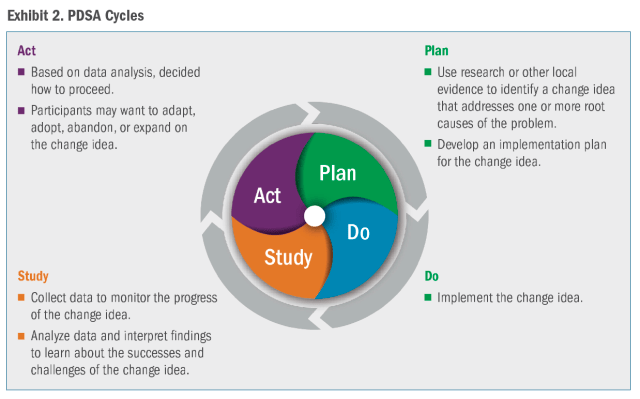
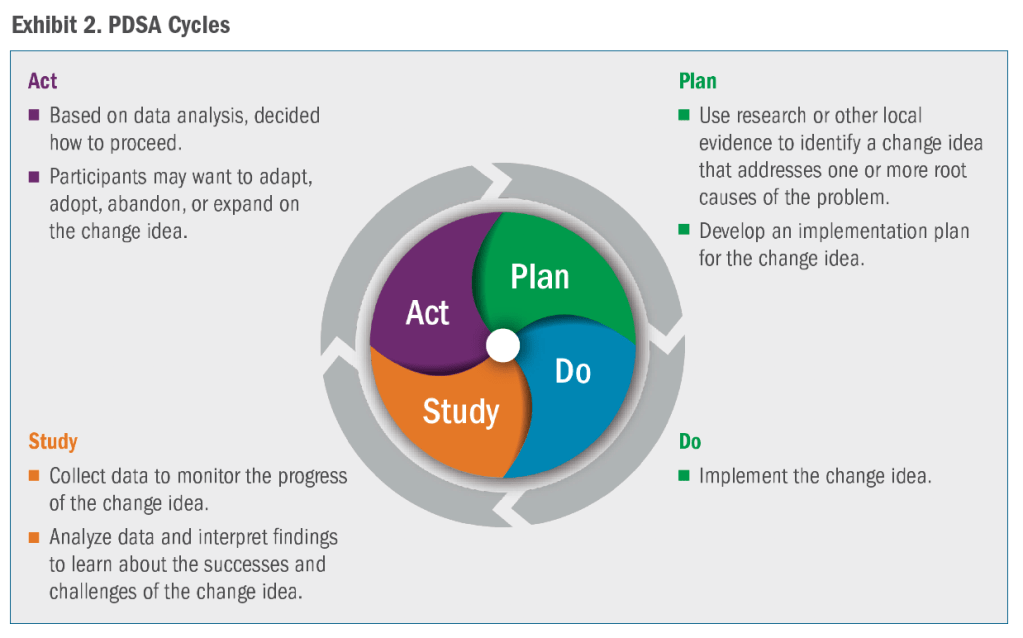
    Plan-Do-Study-Act

    What I love about my role is that I am simply the facilitator of their discovery. I find resources to help them explore their ideas, and I guide them through the PDSA cycle of Plan-Do-Study-Act. I’m like the fairy godmother in Cinderella, except that the pumpkin coach I provide is ways to grow in understanding, and discover new approaches/strategies that can be applied in the classroom as part of the pursuit towards the extraordinary school experience.

    Below are a few articles I am sharing with the teachers to help provide context around the topic of personalization. I’d love it if you’d share your resources as well, or even . better, ways in which you are providing personalized opportunities for all students to ignite their genius.

    Articles

    This article shows how personalization uses what you know about students (relationships + academics) to build experiences that meet their unique strengths and needs.

    https://www.edelements.com/blog/six-examples-of-what-personalized-learning-looks-like

    This article talks more about the partnership between teacher and parent to create a shared understanding of students, which helps to deeply understand the learner, leading to personalization that is meaningful.

    https://medium.com/@carolynwilson/curiosity-f5e4cedd5af1

    And this article helps build context around personalization, differentiation, and individualization… and the process teachers tend to go through as they head towards a personalized learning environment. It may be helpful to self-identify where you see yourself in the process, and then identify an area for growth/development through the hub plan-do-study-act cycle.

    https://www.advanc-ed.org/source/building-personalized-learning-environments

  • How Strategic is Your Strategic Plan?

    How Strategic is Your Strategic Plan?

    I’ve been wondering about strategic plans lately… during the course of my career I have been part of many strategic planning teams, both writing and executing.

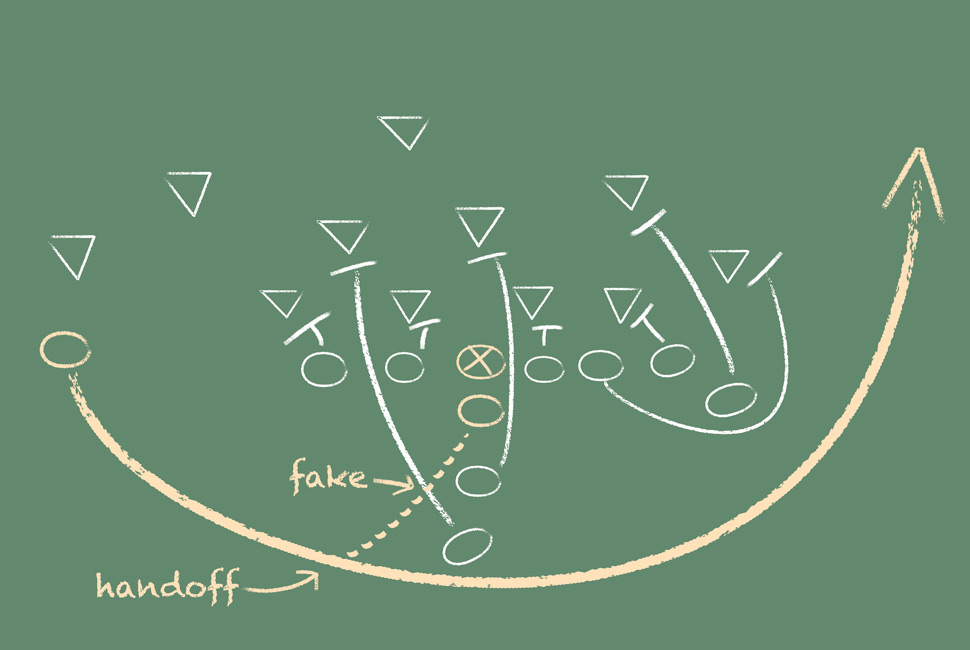
    Some plans looked like a football play, with lots of arrows and lines designating who was doing what and when and for how long.

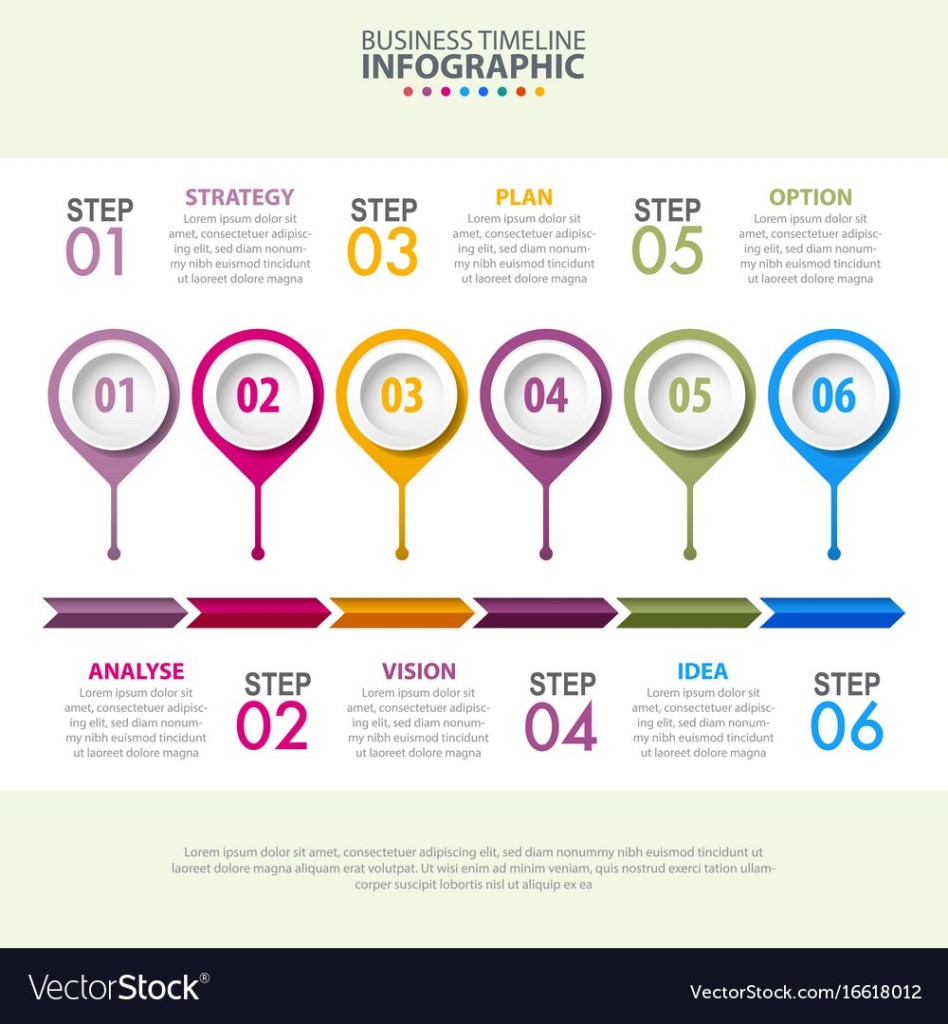
    Some strategic plans were gorgeous infographics, with colors and icons and benchmarks to outline what actions are being taken to reach an end goal.

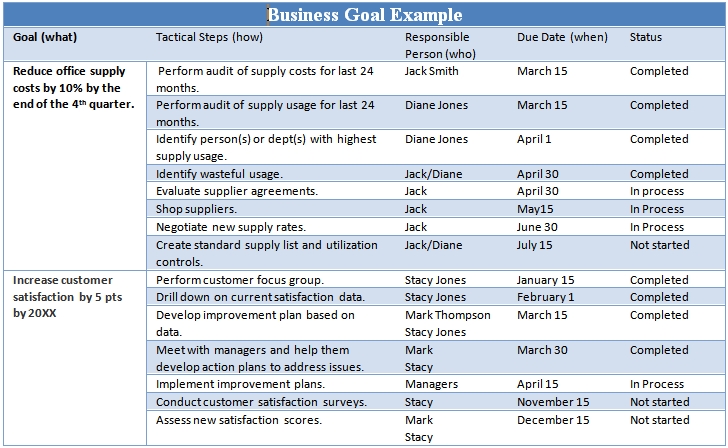
    And others were a text document with charts and tables that outlined the steps, the due dates, and the expected outcomes.

    Truth be told, it doesn’t matter how it looks.

    What matter is how it’s lived, how it embodies the culture of the organization, and the alignment of the goals to the organization values and purpose.

    Does the plan reflect the learning and evolving that happens within a people organization or is it a testament to a static moment in time that gets filed on a bookshelf?

    Is it a PDF owned by one or a Google Doc shared by many?

    Would love to hear how strategic plans function within your organization, and how they impact the work you do every day.

  • Imagining Joyful Learning Spaces

    Imagining Joyful Learning Spaces

    This past month our innovation team has been fortunate to work with a school staff that is looking to reimagine their library space. Currently a traditional space with plain walls, a large circulation desk, and giant book shelves, the staff is wanting to build a space that reflects the joy of learning they want students to experience every day. In their words:

    Imagine a space where students of all ages and adults could create, innovate, and explore the world in an inspiring and natural environment designed to enlighten and change the world! Students need a way to access a variety of learning and discovery spaces in order to respect their age and place in the world and ignite their inner genius and advance the world.

    We’ve been using the design thinking process to guide us on the journey, which has been a fabulous way to keep us grounded in the WHY of our work. Today, I realized that a consistent theme kept reemerging during every brainstorm or prototype session – JOY.

    Adults design schools. Adults who have been schooled for years on how to build buildings. And then adults come in and furnish those buildings. They paint the walls. They choose the chairs. Somewhere in that process, the children become secondary. And often times, so does joy.

    Which brings me to the book Joyful by Ingrid Fetell Lee.

    In her book, Fetell Lee points out that joy isn’t reserved for religious gurus that have attained enlightenment. In fact, it can be found all around us. She summarizes 10 big ideas in which joy can be found:

    1. Harness the power of color.
    2. Live abundantly.
    3. Find your freedom.
    4. Discover harmony.
    5. Fill your life with playful shapes.
    6. Surprise yourself.
    7. Go higher.
    8. Feel the magic.
    9. Spread the love.
    10. Start anew.

    Schools, and libraries, should truly be places of joy. They should allow for playful wonder. Fetell Lee explains that “play etches itself deeply into our memories for a good reason: it is the only known activity that humans engage in solely because it produces joy. ”

    Play lets us practice give-and-take, through which we learn empathy and fairness. It also promotes flexible thinking and problem solving, which increases our resilience and help us adapt to change. When we play, our awareness of time diminishes, and our self-consciousness fades. Play can put us in a powerful flow state, which allows us to let go of everyday worries and be absorbed in the joy of the moment.

    Joyful, by Ingrid Fetell Lee

    Children understand joy. All you have to do is listen to them dream up the new library to know that they can see that which adults often forget. Their vision of the space includes waterfalls, cafes, and a loft… they see color, comfortable seats, and places for both quiet and social gatherings. They hear music and feel texture. They break down the barriers and let in nature’s beauty. They get it.

    And so did the adults in the room today. I’m excited for the future wonder and joy that awaits the students and staff as they turn their prototypes into a joyful place that ignites genius and empowers students to advance the world.

    Stay tuned…

  • Empathy Can Sneak Up On You!

    “If we want people to fully show up, to bring their whole selves including their unarmored, whole hearts—so that we can innovate, solve problems, and serve people—we have to be vigilant about creating a culture in which people feel safe, seen, heard, and respected.”

    ― Brené Brown, Dare to Lead: Brave Work. Tough Conversations. Whole Hearts.

    A while back I received an email from a 3rd grade teacher asking me to help her and the music teacher develop an integrated design thinking challenge for the class that would meet both ELA standards and music class objectives. During our meeting, we decided to focus on the topic of JOY.

    How might we provide joy to our 5th grade buddies
    through an original music composition?

    We outlined a plan, and I left the teachers to work their magic.

    Today I met with the two teachers because they wanted to discuss how to help 3rd graders empathy map. As the classroom teacher recapped about the experiences thus far, I realized that something far more powerful than just design thinking had already taken place.

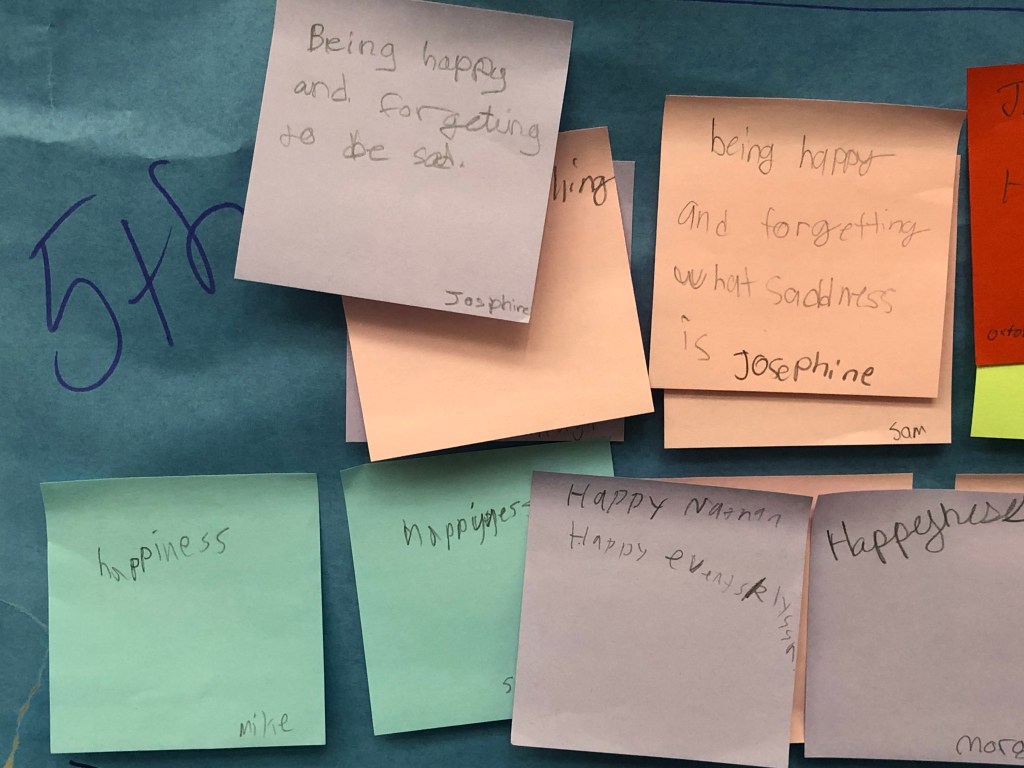
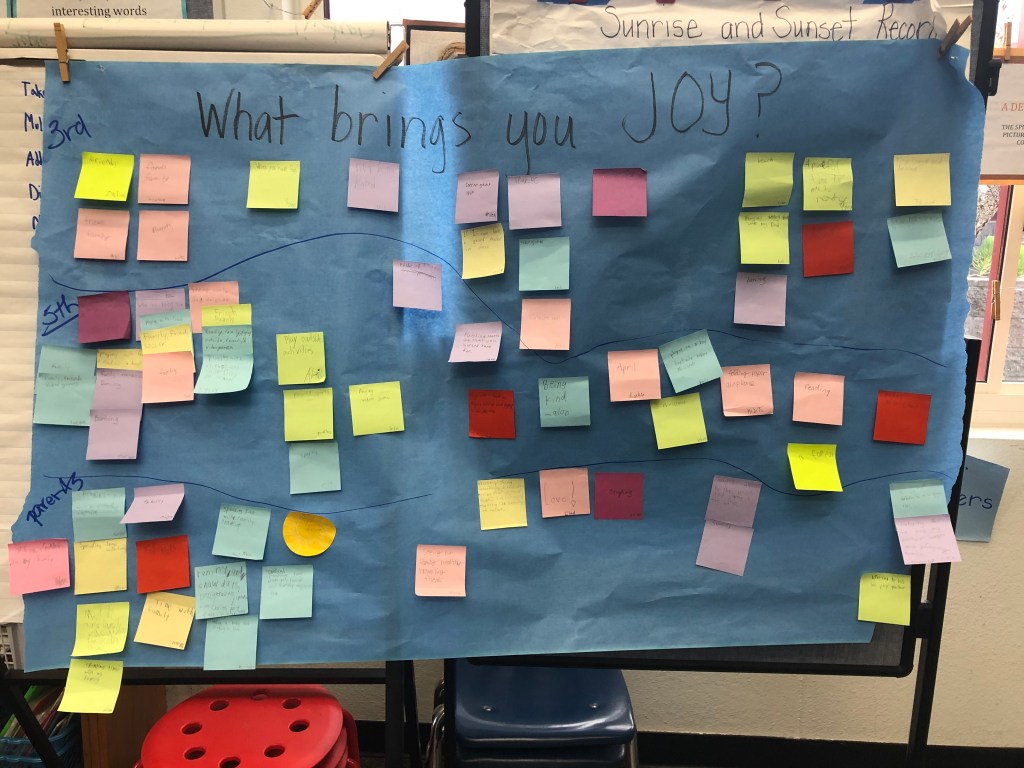
    As part of the empathy and define process of this challenge, students developed a definition of joy, through their own experiences as well as by interviewing 5th grade students and their parents. The 3rd graders quickly noticed some trends arising in the responses received – many noted happiness; an absence of sadness; and feelings of peace.

    When asked what brings people joy, parents shared moments like seeing family after a business trip, or hearing the laughter of their children.

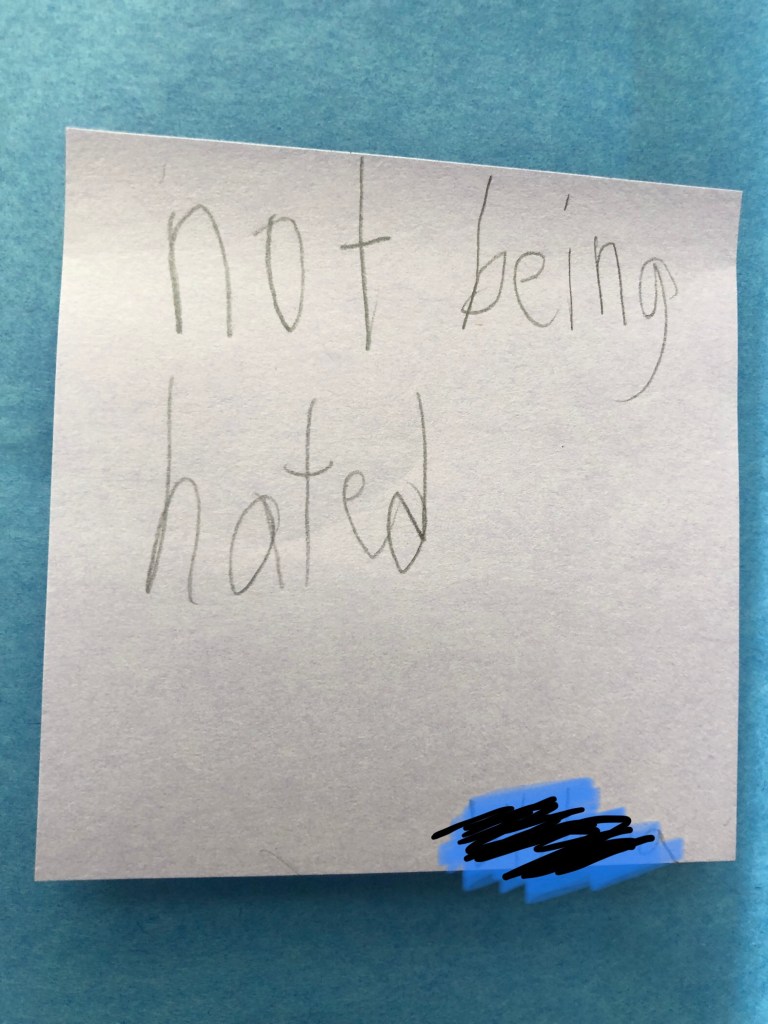
    But for one third grader, the answer was very different: not being hated.

    Post-It that says "not being hated"

    Whoa…

    What do you do with an answer like that? For this teacher, she tackled it head on. She asked the class, “Have you ever felt hated in this classroom?” Because she had created a safe place for them to share, a few did share moments when a peer situation made them feel less than loved…hated, even.

    Reflecting on the situation, the teacher shared that, even if their musical projects don’t turn out as well as she wants them to, this project is a success because it opened her eyes to the depth of feelings these kiddos have, the complexities of their lives at such a young age, and her need to continue with social-emotional lessons.

    That’s the thing about empathy… it can catch you when you least expect it. It doesn’t require an empathy map template or a Post-It. It requires an open heart and a receptive ear, and the capacity to be vulnerable so that you are open to the experiences of others.

    I’m always grateful to the teachers that take these risks for our students, and even more grateful when they share their learning with me. It reminds me of how valuable our role is, and how important these authentic moments are to both students and adults.

    Humble thanks.