Author: Laura Spencer

  • Girls Deserve More than a Hashtag if We Want Them in STEM Fields

    Girls Deserve More than a Hashtag if We Want Them in STEM Fields

    I’m still amazed that it’s been 50 years since man landed on the moon. I love watching old footage of Apollo 11’s mission, and reading about the innovations that have come as a result of that mission.

    Lately, I’ve been reading a lot about the role women played, not only this mission, but in a lot of NASA’s successes. And yet, I never saw women in any of the official NASA photos, nor were they featured in documentaries.

    Today, there is a growing movement to increase the amount of girls interested in STEM. Most of the movements center around how to get girls to feel more connected to science, math, engineering, etc. If you look on Twitter, there are hashtags created to highlight empowering girls in STEM. In those hashtags, conversations seem to revolve around things like:

    They just need more exposure to women role models.

    Or …

    They need more LEGO and Barbie figurines that promote STEM as cool.

    Or …

    We need to make sure girls develop the skills needed to succeed in that environment.

    What’s not mentioned?

    The role of men in keeping women out of these fields. If we truly believe women have a seat at the table, how can we encourage men to offer the seat instead of requiring women to break down a hundred extra barriers to try to get access?

    The problem with the hashtag movement is that it comes from a deficit viewpoint… if only girls just did this, or had this, then they’d be better. What it fails to tackle is the systemic oppression that downplays women in these fields.

    Things like:

    So how do we inspire boys to share the STEM playground with the girls? What are you doing in your classroom, your school, to create an empowering STEM environment for both girls and boys so that they can support and elevate each other one day as STEM professionals?

  • From No to What If

    From No to What If

    Being part of the Top Tech Exec winner’s circle has introduced me to so many innovative executives. I’m always inspired after our times together.

    Last night, a group of us were invited to watch the Padres battle the Dodgers from within the Cox suite. Fun time, good food, great convos.

    No painted on the ground next to a set of shoes.
    Photo by Jon Tyson on Unsplash

    Every time I see this group, I learn something new. Last night’s takeaway came from Casey Cotton, Chief Technology Officer for Madison Avenue Securities and Asset Marketing Systems, who shared the importance of IT leadership moving away from no and developing a “what if” approach. 

    It’s not just IT that could benefit from this approach. So could education. IT is often known as the Department of “No”​ but I think education says no just as much, if not more than, IT. If educational leaders stopped saying, “it can’t be done” and instead entertained the “what if we could…” approach, imagine what we could become 😏.

  • Upskilling Teachers

    Upskilling Teachers

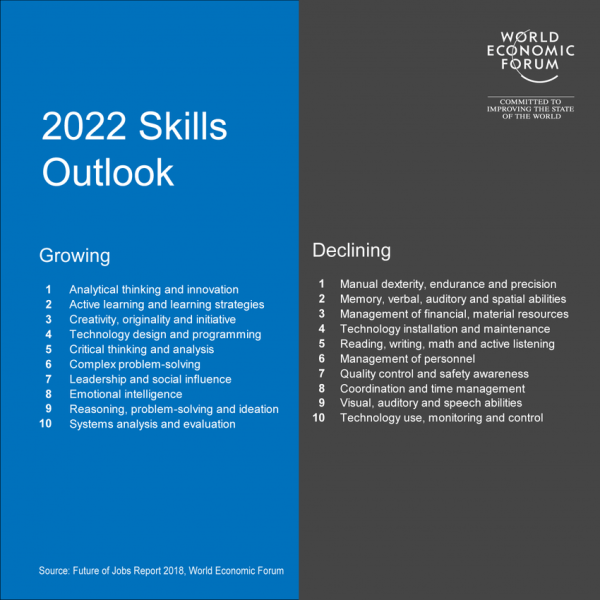
    According to the World Economic Forum’s The Future of Jobs 2018 report, by 2022, no less than 54% of all employees will require significant re- and upskilling. To deal with the lack of skills of current employers, companies have three options:

    1. Retrain current staff
    2. Automate more tasks to reduce staff needed
    3. Hire new staff that already has the required skills

    The report goes on to state that the likelihood of hiring new permanent staff with relevant skills is high, since nearly a quarter of companies surveyed are unlikely to attempt a retraining of existing employees.

    This upskilling is not just for those in industry. Educators also need upskilling. If education is to prepare students for college and career, then educators will need to be informed as to what those careers look like, and what skills are needed to thrive in them. They’ll then need to develop the skills themselves so as to model, and teach, those skills to students. Skills like emotional intelligence; leadership and social influence; and persuasion and negotiation will become critical skills for educators as they become critical skills for industry careers.

    How are educators getting these skills? Are schools and districts investing in professional development that goes beyond curriculum and content knowledge?

    Or, like industry, will there be a push to hire new teachers that already have these skills?

    Regardless of the methodology, schools cannot continue to afford to ignore the importance of preparing students and staff for the 2022 skills outlook.

  • A Tribute to My Bestie

    On July 31st, I lost my best friend. She died, unexpectedly, of a blood clot after battling breast cancer and undergoing reconstructive surgery.

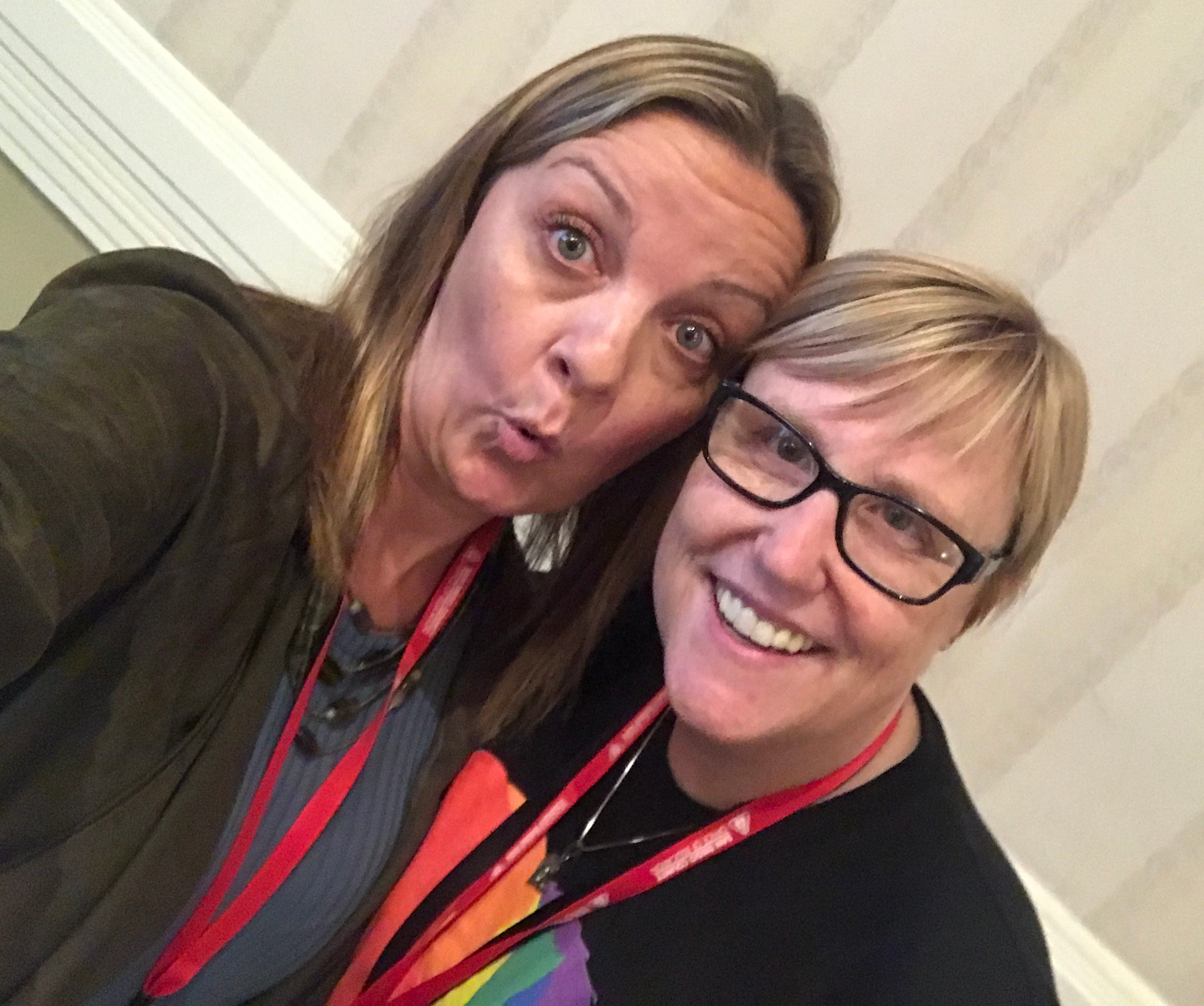
    Laura and Christine smiling for the camera
    Christine and me at the SDCOE Equity Symposium

    Christine’s been my best friend since I moved to San Diego in 2000. Before her, friendships for me were fleeting. They came, they went, and that was life. But Christine… she was a different story.

    I could fill this blog with stories about our friendship. Stories about us learning hip hop dancing – okay, failing to learn hip hop dancing. Although we could do the sprinkler and the lawn mower better than anyone… just ask our 8th grade students!

    Or about the time we hauled the new kayak into the middle of her cul-de-sac and pretended to row the open ocean, all the time yelling, “Are we there yet?” for a yearbook video. 

    There are stories from our 14 hour bus trip to Reno that we thought was going to be on a train.

    And stories about our attempt to start our own greeting card company.

    Like I said, so many stories! 

    A couple years into our friendship, we were talking about growing old and Christine mentioned all the trouble we’d get into at the nursing home. I remember saying to her, “I won’t know you when I’m 80.” I’ll never forget the look on her face. In total seriousness, she said to me, “That’s the meanest thing you could ever say to me. Of course we’ll know each other. We’re besties.” 

    That day, she changed my perspective on not only friendship, but on life.

    A few years later, we sat beside her mom Jean’s bed as her mom’s fight with cancer was coming to an end … we had been chatting light-heartedly while Jean slept when Christine’s brother Eric noticed that Jean had quietly passed away. I remember us talking about how she was able to finally let go because she knew we were all going to be okay. 

    Even though Christine may not be around when I’m 80 to perform all those old folk home antics, I have to believe that, like Jean, Christine knew everyone she loved was going to be okay because she made everyone better by knowing her.

    They say the body is 70% water, but for Christine Fax-Huckaby, it was all heart. She was a passionate educator; a passionate animal advocate; a passionate fighter for equity; and a passionate wife, friend, and colleague. For 23 years, Christine touched the lives of students and staff as a public school teacher and mentor in both Lemon Grove and Sweetwater.

    Christine was always a cheerleader for me.

    She believed in the ability of each student to achieve his/her inner greatness, and never let them settle for less. She had just as much love for animals. Whether they were hers or not, Christine loved every fur baby she ever saw. She was constantly rescuing dogs and cats, finding them their fur-ever home. Although truth be told, a lot of times that home ended up being her own!

    I’m sad without her in my physical life. Sad without her laughter, her jokes, and her unconditional love.

    Winnie the Pooh said it best: If ever there is a tomorrow when we’re not together there is something you must always remember… You are braver than you believe. Stronger than you seem and smarter than you think. But the most important thing is even if we are apart I’ll always be with you.

  • Learning to Stand

    Learning to Stand

    A young flamingo has to learn how to stand on one leg.

    And like the flamingo, our students need to learn executive functioning skills for school success. We take for granted that they should know how:

    to study,

    to stay organized,

    to plan their time efficiently,

    to find a learning buddy,

    to pick out a good book to read,

    to ask for help when needed,

    to respect each other.

    If a student is not finding success in the classroom, let’s stop blaming them and instead help them develop the skills they may still need.

  • Reading Our Way to an Understanding of Racial Justice

    A colleague of mine, Andrew Arevalo, posted on Twitter that he had started reading White Fragility: Why It’s So Hard for White People to Talk About Racism by Robin DiAngelo.

    A Twitter conversation began in which people shared other books that would also be great reads.

    Here’s the books that were shared:

    • For White Folks Who Teach in the Hood, and the Rest of Y’all Too by Christopher Emdin
    • Culturally Responsive Teaching and the Brain by Zaretta Hammond
    • Between the World and Me by Ta-Nehisi Coates
    • The Soul of America: The Battle for Our Better Angels by Jon Meacham
    • We Want to Do More Than Survive: Abolitionist Teaching and the Pursuit of Educational Freedom by Bettina L. Love
    • I’m Still Here: Black Dignity in a World Made for Whiteness by Austin Channing Brown
    • Was the Cat in the Hat Black?: The Hidden Racism of Children’s Literature, and the Need for Diverse Books by Philip Nel
    • A People’s History of the United States by Howard Zinn
    • We Want to Do More Than Survive: Abolitionist Teaching and the Pursuit of Educational Freedom by Bettina L. Love
    • Biased: Uncovering the Hidden Prejudice That Shapes What We See, Think, and Do by Jennifer L. Eberhardt, PhD
    • White Rage: The Unspoken Truth of Our Racial Divide
      By Carol Anderson

    Anything else you’d add to this reading list? Any of these books impact your beliefs or actions on matters of representation, diversity, and inclusion?

    And if you haven’t yet read White Fragility, or you read it and want to discuss it with other educators, sign up for EquityEDU’s book study that starts in August.

    Resources shared after the post published:

    Not Light, But Fire: How to Lead Meaningful Race Conversations in the Classroom by Matthew R. Kay