Every time this commercial pops up on Hulu for Pella windows, I can’t help but smile.
The energy of the girl dancing. The simple but powerful message: don’t let what’s happening outside control what’s going on inside. It’s such a perfect little reminder, especially in leadership, education, and life. There will always be rainy days, unexpected delays, tough conversations, or outside pressures. But how we show up inside – our attitude, our creativity, our hope – is something we can choose. Let this be your nudge today: Turn up the music. Shake it out. Reclaim your energy. Even if it’s raining. 🌧️
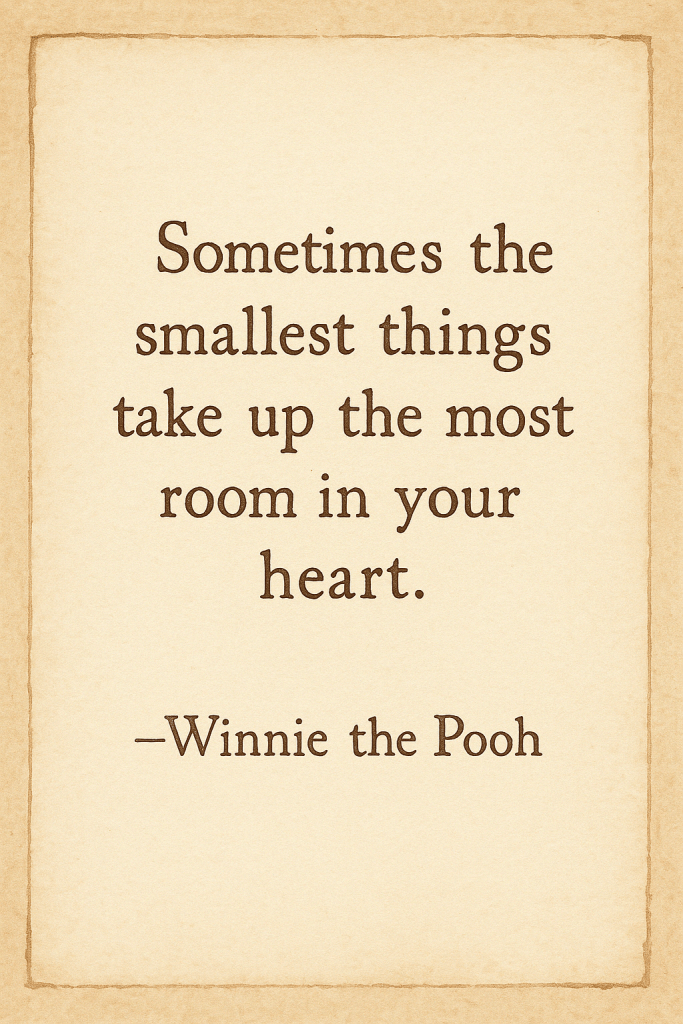
I picked up The Tao of Pooh again recently, expecting a cozy, familiar read. I’ve read it before, but this time I noticed something I missed the first time around.
Beneath the charm of the Hundred Acre Wood is a quiet, powerful introduction to Taoist philosophy—one that feels especially relevant to how we lead. Taoism reminds us that leadership doesn’t always require action. Sometimes, it asks for stillness, presence, and trust in the natural flow of things.
Pooh models this beautifully. He listens when Piglet worries, sits silently with Eeyore, and simply enjoys Tigger’s chaos. He doesn’t fix or push or force. He’s just there. Fully present. And that’s the kind of empathy I keep coming back to in my own leadership journey.
Too often, I’ve rushed to solve things. Jumped in with advice. Tried to shape outcomes. But empathy isn’t about control—it’s about showing up. About making space for others to be fully seen and accepted.
Pooh also leads without ego. He doesn’t try to change others or turn every moment into a teaching opportunity. He accepts each character exactly as they are. That kind of acceptance is deeply human, and a leadership skill I’m still working to grow.
What struck me most on this re-read is how Taoist leadership is so quiet. It’s not about charisma or control. It’s about presence. Attunement. A conversation. A shared moment over honey. In a world that often rewards the loudest voice in the room, that approach feels surprisingly radical.
So this week, I’m taking a note from Pooh: slow down, be present, and let empathy guide the way.
A few weeks ago, I completed a leadership self-assessment using a prompt shared by Piloteer.AI on LinkedIn. It asked me to reflect on my leadership style through the lens of their Chosen XIII™ framework—13 essential behaviors that define leadership impact.
I walked away from the exercise feeling affirmed. I identified as an “Empathetic Empowerer,” someone who leads with trust, open dialogue, and encouragement. I rated myself high across emotional intelligence, coaching, authenticity, and empowerment. So far, so good.
Then came the real test.
After sharing my results with Dan at Piloteer, he offered a simple but powerful suggestion: What if you asked your team to complete the same assessment of you?
It was one of those “why didn’t I think of that?” moments. Because self-awareness isn’t just about reflection, it’s about reality. And reality lives in the minds of those we lead.
The feedback was humbling in the best way. My team confirmed many of the strengths I see in myself, especially around adaptability, emotional intelligence, and coaching. But they also pointed out a few blind spots I hadn’t fully recognized. Some felt they didn’t have equal access to me. Others said I could clarify direction better during change. And yes, my bandwidth shows.
Reading their insights was a reminder that leadership isn’t about being perfect; it’s about being consistent, intentional, and open to growth.
What I love about this process is how simple it was to do, but how deep the impact has been. I didn’t need a retreat or a 360-degree survey platform. I just needed to ask.
So here’s my reflection for other leaders: If you think you know how your team experiences your leadership, great. But ask them anyway. The answers might surprise you. They’ll definitely make you better.
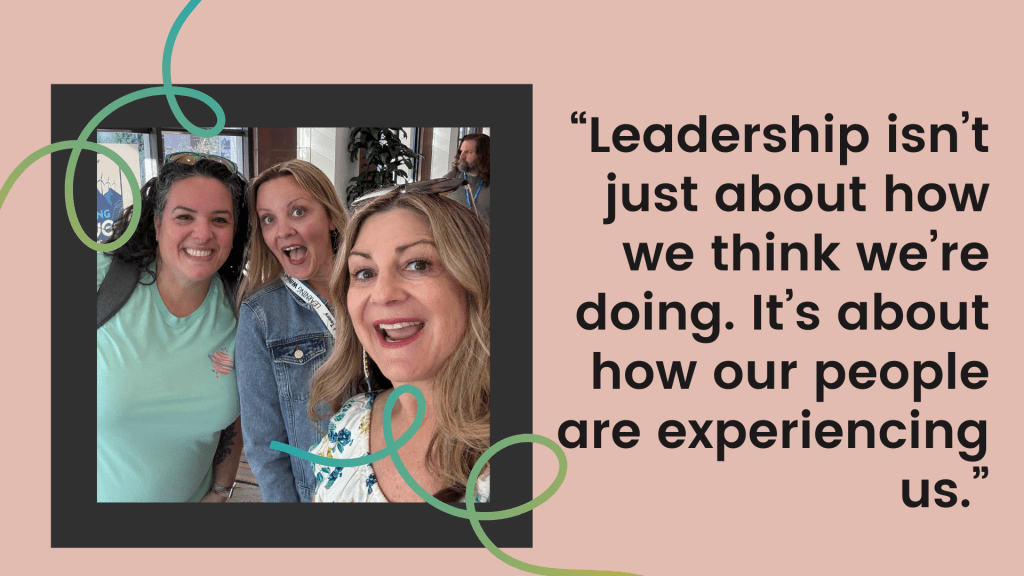
Leadership isn’t just about how we think we’re doing. It’s about how our people are experiencing us.
(And if you’re curious, yes, I’d be happy to share the ChatGPT prompts used or more info about Piloteer AI. Just message me.)
As we navigate the complexities of the workplace, it’s easy to get caught up in the daily grind and lose sight of the bigger picture. Our goals, once so clear and inspiring, can become obscured by the relentless stream of tasks and responsibilities. That’s why it’s crucial to periodically take a step back, revisit our goals, revise them if necessary, and recommit to our pursuit of them.
This process of revisiting, revising, and recommitting is not only essential for our individual growth and development, but it’s also crucial for the success of our teams. When we take the time to reflect on our goals and how they align with the overall mission of our organization, we create a sense of clarity and purpose that can boost productivity and job satisfaction.
Revisiting Our Goals
The first step in this process is to revisit our goals. This means taking a long, hard look at what we’re trying to achieve and why. It’s about asking ourselves questions like:
Are these goals still relevant to our current situation?
Are they aligned with our values and aspirations?
Are they challenging enough to keep us motivated, but not so overwhelming that they discourage us?
By revisiting our goals, we can gain a fresh perspective and identify any areas that need to be adjusted or revised.
Revising Our Goals
The second step is to revise our goals as needed. This could involve making minor tweaks or completely overhauling them. It’s about being honest with ourselves and acknowledging when a goal is no longer serving us or our team. It’s also about being open to new possibilities and opportunities that may have emerged since we first set our goals.
Recommitting to Our Goals
The final step is to recommit to our goals. This means renewing our sense of purpose and determination to achieve them. It’s about creating a plan of action and taking concrete steps towards our desired outcomes. It’s also about surrounding ourselves with a supportive team and holding ourselves accountable for our progress.
The Benefits of Revisiting, Revising, and Recommitting
This process of revisiting, revising, and recommitting can have a profound impact on our productivity and job satisfaction. When we’re clear about our goals and committed to achieving them, we’re more likely to be engaged and motivated in our work. This can lead to increased efficiency, improved performance, and a greater sense of accomplishment.
Moreover, when we revisit, revise, and recommit to our goals with our teams, we create a shared vision and a sense of collective purpose. This can foster collaboration, strengthen relationships, and build a more cohesive and productive work environment.
Conclusion
In today’s fast-paced world, it’s easy to get caught up in the whirlwind of daily tasks and lose sight of our goals. But by periodically taking the time to revisit, revise, and recommit to our goals, both individually and with our teams, we can create a path towards greater productivity, job satisfaction, and overall success.
Just finished Adam Kahane’s Collaborating with the Enemy, and it’s truly shifted my perspective on conflict and collaboration. What struck me most powerfully was the central role of empathy, not as a soft skill, but as a vital tool for transformation. Kahane’s gems, like “Adversaries aren’t the enemy—they’re key to transformation,” and “Listening is an act of courage,” really hammered this home. It’s easy to dismiss those we disagree with, to paint them as the “other.” But as Kahane emphasizes, true progress requires us to look beyond those surface differences and recognize the shared humanity beneath. He doesn’t sugarcoat it. Listening to someone you fundamentally disagree with is hard. It takes courage to set aside your own biases and genuinely try to understand their perspective. But that’s precisely where empathy comes in. It’s not about agreeing, it’s about acknowledging their experience, their fears, and their motivations. Think about the concept of “polarization is an invitation, not an obstacle.” This is only possible if we approach those on the other side with a willingness to understand. If we see polarization as a battleground, we’ll only dig our heels in deeper. But if we see it as an invitation to explore different perspectives, to find common ground, we can unlock transformative possibilities. Kahane’s work reminded me that empathy isn’t just a feel-good emotion. It’s a strategic necessity. It’s the key to unlocking the wisdom hidden within conflict, to finding solutions that benefit the whole. By truly listening and understanding, we can move beyond the limitations of our own perspectives and create a more collaborative and just world. Ultimately, Collaborating with the Enemy teaches us that profound change starts with personal transformation. It begins with the willingness to see the humanity in those we consider “enemies,” and to embrace the power of empathy to bridge divides and foster meaningful collaboration.
Recently, I took the 16 Personalities test and discovered that I’m an INFP, often referred to as the Mediator. While I wasn’t surprised by my results, having words and explanations for my feelings and actions is reaffirming. Understanding how my personality influences my interactions with others helps me be a better leader.
As an INFP, I naturally gravitate towards inner values and authenticity. I thrive in environments where I can express my creativity and connect deeply with others on a meaningful level. However, I also recognize the challenges that come with being a dreamer in a fast-paced world—moments of self-doubt and anxiety that can cloud my confidence.
Here are a few of my insights:
Authenticity Matters: Being true to who I am allows me to build genuine connections. It encourages others to open up and share their own stories, creating a space where vulnerability is welcomed and celebrated.
Empathy is a Superpower: My innate ability to understand and empathize with others enriches my professional interactions. It helps me to see beyond surface-level conversations, fostering collaboration and supportive environments.
Self-Care is Essential: Understanding my introverted tendencies reminds me to prioritize self-care. Taking time to recharge enables me to show up fully for others, ensuring that I can contribute positively while managing my own energy.
Growth is a Journey: This self-awareness inspires me to embrace personal and professional growth. Every encounter is an opportunity to learn more about myself and others, and I cherish the insights that come from these experiences.
Understanding my INFP identity not only enriched my understanding of myself but helps me deepen my connections with those around me.
I’d love to hear from you! What personality type are you, and how has it influenced your journey?




 Laura K Spencer, Ed.D.