Year: 2018

  • Belonging to the Tribe

    Belonging to the Tribe

    I wasn’t the most athletic kid growing up. Haha. Who am I fooling? I’m still not athletic. I tripped trying to run to first base because my legs were moving faster than my body. I fell playing kickball because my foot landed on top of the ball instead of kicking the ball. I sometimes run into walls. So you can probably imagine that I wasn’t the first one picked to be on a team. And even if I was (eventually) picked, I certainly wasn’t in the starting lineup!

    So it really resonated with me when Garry Ridge, CEO of WD-40, explained to my colleagues and I* why the employees at WD-40 consider themselves a tribe and not a team.

    A team, Ridge explained, comes together for a purpose… usually a competitive one. There are top players, and benchwarmers, and people who didn’t get picked to be on the team at all. They practice together to meet their goal of beating the opponent. But when the game is over, they separate. They lead their own lives, independent of each other.

    A tribe, however, is different. Tribes depend on the people within their unit for survival. Every member of the tribe has an important role based on their skills and talents. There are no benchwarmers in a tribe.

    Tribes have other elements as well. They have values; they’re future-focused; they are warriors, when needed; and they place importance on celebrations. All of which are elements that contribute to a positive workplace culture.

    And because the tribe is dependent on each other, the responsibility of the tribal leader is to be a learner and a teacher. Not only is the leader learning and gaining wisdom that will nurture and sustain the tribe, but s/he also must pass the wisdom down so that the tribe’s success continues without the leader.

    The tribe is a much more intentional, and meaningful, connection than a team. People belong to a tribe. They have purpose within the tribe. They are protected by the tribe.

    Seth Godin, in his book Tribes: We Need You To Lead Us, writes: “Caring is the key emotion at the center of the tribe. Tribe members care what happens, to their goals and to one another.”

    Isn’t that, ultimately, at the core of what we want our classrooms and schools to be for our students?

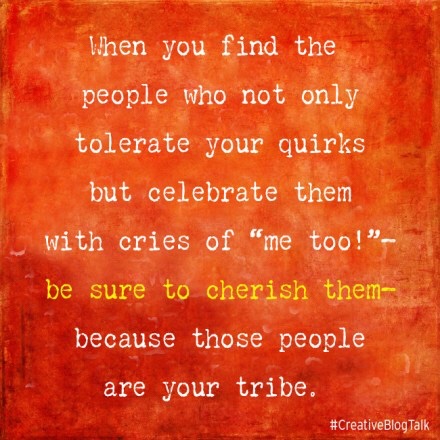
    Find-your-tribe-quote


    *Before meeting Garry, I would have used the phrase “team” to describe my colleagues. But they are my tribe. As Seth Godin describes it: “Tribes are about faith—about belief in an idea and in a community. And they are grounded in respect and admiration…” Grateful to have found my tribe!

    Learn more about the WD-40 tribe on their website.

    Sign up to receive an update when I post. Type your email address in the box and click the “Subscribe” button. My list is completely spam free, and you can opt out at any time


  • PSA: How to check your FB App Sharing Permissions

    PSA: How to check your FB App Sharing Permissions

    This may seem out of the norm for my usual posts, but as a former EdTech/IT Director, I think it’s important that you know how to limit what information you share with apps you have connected to your Facebook.

    This Cambridge Analytica data fiasco should be a wake up call for all of us. Understand that this was not a BREACH. Data wasn’t hacked by a nefarious group. It was freely given by the “What Cat Are You?” type of quizzes you take on FB; by the agreements you hurriedly say yes to when registering on a new website; and on the security permissions you don’t often check on Facebook. We are all complicit in this situation.

    But here’s how to start reducing that data share:

    There are more Facebook settings that you will want to dig into as well,but this is a good starting place.

    (And if you haven’t received the Cambridge message from FB yet, or already closed it, you can access your app settings under the FB Setting ms section.)

    Featured photo used with attribution permission from: blogtrepreneur.com/tech
  • Do Not Read This Blog Post!

    Do Not Read This Blog Post!

    I was at a local event the other day that was filled with young children and their parents. The children were getting faces painted, collecting Easter eggs, and taking photos with the Easter bunny. As you can imagine, it was a bit… chaotic. Parents chasing children, shouting phrases like:

    “Don’t run off ahead of me!”

    “Stop bugging your sister.”

    “Don’t eat any more candy!”

    You get the idea. And it made me think, how many times a day do you think a child is told NOT to do something? What if I told you not to watch this video? Would you do it?

    I’m going to go ahead and assume you watched.  As you saw, Brown uses the power of negative suggestion to get children to open a box. How? Simple. By telling them NOT to open the box. The more they tried not to open the box, the more difficult it was to resist.

    Brown shares that curiosity gets the better of us, and we wonder what will happen if we do the thing we’re trying not to do.

    Makes me wonder, then, are students getting in trouble in school simply because we continuously tell them not to do something… are we, unwittingly, using the power of negative suggestion to convince students to act out counter to our desires? Are we fueling their curiosity with our constant messages of:

    “Don’t run in the halls,”

    “Don’t use swear words,”

    “No talking,”

    and “Don’t access inappropriate content on the internet”?

    The negative rules are everywhere. They are not only said by adults on campus, but they are published on classroom posters, listed on Internet Acceptable Use Policies, and sent home in First Day of School packets.

    So how about I try a little negative suggestion for you:

    DON’T USE POSITIVE SUGGESTIONS WITH STUDENTS!

    Did it work? Have you torn down the posters? Rewritten the Internet Acceptable Use Policy? What are you waiting for?

    *****

    By the way: Derren Brown is an English mentalist. I wasn’t sure what a mentalist was, so I looked it up. And honestly, I’m still not sure, but it seems to involve an ability to  subliminally manipulate people through psychological suggestion. If you liked his video, check out his YouTube channel – I should warn you though… he uses negative suggestion with adults that are a bit darker than the video I shared here.

  • Making Lunch Great Again!

    I had the pleasure of listening to 5th grade students share their proposals to relaunch the lunch experience at their school. There were a few issues that the students were looking to solve:

    • Students who get hot lunch need healthy, delicious food choices everyday to include vegetarian choices in order to avoid food and money waste and get nutrition for the rest of the day
    • Students need more time in order to play, eat, line up, and transition to be relaxed.
    • Students need choices and flexibility in seating in order to feel valued, respected, and trusted.
    • Students need a way to change the music at lunch in order to have amore enjoyable lunch experience.

    Regardless of the need being solved, a theme quickly emerged – Agency. Or lack thereof.

    One student explained in his presentation: “In the classroom we are always told to be ‘Be quiet!’ by the teacher. And then at lunch we are told to ‘Be quiet!’ by the lunch aides. When do we get to unwind and let our energy out?”

    Another student shared that “KidzBop is dreadful,” so as a reward for behaving, it is truly missing the mark.

    Other students shared that the playground should be a place to play freely, and not be limited in choices by the adults supervising the area.

    And when it came to food, many were in agreement that having parents place orders at the start of the month did little to satisfy their taste buds later in the month.

    Regardless of the need being solved, a theme quickly emerged during the presentations – Agency. Or lack thereof. These students wanted to have input into the routines impacting their day. They wanted choice. They wanted freedom. They wanted voice.

    My Post (3)

    Their proposals were all awesome: Music committees to analyze lyrics of songs requested by students so as to create playlists; student-generated rules to provide equitable access to playground; and healthy food vending machines that not only provide choice, but also generate revenue for the campus.

    Today’s students are tomorrow’s leaders. If they are to lead well, we must give them opportunity to develop agency. You never know… they just may do a better job than we are!

    P.S. I’ll be excited to hear what changes result! Final presentations are next week, right before Spring Break. Stay tuned…

    Sign up to receive one update when I post. Type your email address in the box and click the “Subscribe” button. My list is completely spam free, and you can opt out at any time.

  • Empathy + Action = Activist

    Empathy + Action = Activist

    The other day I walked in to the art classroom at one of our elementary schools. Third graders were on a mission.

    As artists, how might we use our creative voices to affect change in

    • our school?
    • our community?
    • our world?

    Specifically:

    To get humans to use less plastic and/or dispose of plastic properly to protect our ocean creatures.

    In order to tell the story of plastic’s toxic impact on the ocean, students planned a public art piece depicting the ocean, with the creatures and such made of plastic. It was ambitious, and meaningful. And they needed the help of the art teacher.

    When I entered the classroom, it was hard to even find the art teacher. She wasn’t in front teaching the class. She was sitting with a group of students, encouraging them, inspiring them, and helping them turn their vision in to a reality. Other students were spread around the room working with different tools: saws, drills, paints, wire.

    I also couldn’t find the classroom teacher! Oh wait…there she is. Not monitoring the room, or sitting in the corner grading papers, but she was making art right there with the students. With her goggles on. As equals.

    Each student I talked to knew not only what he or she was creating and how it would tie in to the art piece, but each student also described for me why this art piece was important. I was told about jellyfish dying with plastic wrapped around them and dead fish full of plastic in their stomach. They asked me about my plastic usage, and if I knew how much of what I used would end up floating in the ocean.

    They had a reason for their art. A passion for their art. Activists for a cause important to them.

    It was truly a moment when I said, “Yes! This is what learning should be like for students every day!”

  • Speak Up, Rinse, Repeat

    Speak Up, Rinse, Repeat

    From Adam Grant’s Originals book:

    When Harvard professor John Kotter studied change agents years ago, he found that they typically undercommunicated their visions by a factor of ten. On average, they spoke about the direction of the change ten times less often than their stakeholders needed to hear it. In one three-month period, employees might be exposed to 2.3 million words and numbers. On average during that period, the vision for change was expressed in only 13,400 words and numbers: a 30-minute speech, an hour-long meeting, a briefing, and a memo. Since more than 99 percent of the communication that employees encounter during those three months does not concern the vision, how can they be expected to understand it, let alone internalize it? The change agents don’t realize this, because they’re up to their ears in information about their vision. If we want people to accept our original ideas, we need to speak up about them, then rinse and repeat.

    sgleyqm9a6kabbagnlaq

    So then … how often are you speaking up, rinsing, and repeating?

    Can students articulate their individual learning goals and why they have them? What about their parents?

    Can the class as a whole articulate the vision and beliefs of the teacher? Do they know the overarching goals for the school year?

    Do teachers understand the vision and mission of the school, and their role in that vision and mission? What about the rest of the school staff?

    Do principals and district leadership understand the vision and mission of the district, and their role in that vision and mission?

    What steps are needed to make those answers all a resounding YES?

    What’s your “speak up, rinse, repeat” strategy?