Tag: seth godin

  • It’s All About the Soft Skills

    Read an article today called, “Teens Rate Soft Skills More Vital Than Hard Skills.” The author, Dian Schaffhauser, opened by discussing how teens incorrectly rate the soft skills of self-confidence, communication, leadership and teamwork as more critical than hard skills:

    Could we be over-promoting the importance of soft skills to young people at the expense of helping them understand the relevance of other, “harder” skills? According to a recent survey, just over half of teens (52 percent) said they believe have a good understanding of the skills they need to be successful after high school. Yet, what they ranked at the top of the list were all soft skills: self-confidence, communication, leadership and teamwork. The skills that ranked least important were computer expertise, writing, typing and math. 

    By Dian Schaffhauser . 01/07/19

    I find it interesting the author assumes the teens are wrong in weighing ‘soft’ skills over ‘hard’ skills.

    Soft Skills Matter

    One of the soft skills at the top of the teen list is communication. By its nature, communication requires solid understanding of rhetoric, language, etc. which is much more robust than the five paragraph essay we teach in schools. Likewise, without self-confidence, leadership, or teamwork, what use are your math skills unless someone hires you to sit in a closet and solve equations all day?

    Quite honestly, I’m baffled that typing is called out as a hard skill at all, given the influx of touch screens, Siri/Alexa, and mobile devices which require dexterous thumbs over home key placement. Likewise, I’m sure many teens don’t see computer expertise as something “else” for them because technology is ubiquitous in their lives. And let’s be real, when they are in classrooms that relegate technology to internet searches, or a PowerPoint presentation, why would we expect them to see “computer expertise” as a needed hard skill?

    LinkedIn CEO Jeff Weiner isn’t looking for computer expertise, but he is looking for digital fluency, which requires proficiency in designing presentations, manipulating spreadsheets and navigating social media. At a conference in April, he urged schools to focus on four core skills: critical reasoning, creative problem solving, collaboration and basic digital fluency (Article: “Forget coding. It’s the soft skills, stupid. And that’s what schools should be teaching.”)

    Schaffhauser’s article goes on to share other data points from the survey about access to STEM learning, but it’s non-congruent with both the article title and its opening declaration so I’m not sure what purpose those data points provide. 64% of students said they didn’t believe they were involved in any STEM programs. So are we to be surprised when only 33% of students express interest in STEM fields? And honestly, how are they supposed to know what career options are out there, and what hard and soft skills are required, if less than half of the teens are getting any instruction in career path opportunities?

    Seth Godin quote on soft skills being real skills.

    The Real Skills

    Is the author implying that hard skills are the path to STEM, and that teens valuing soft skills are going to prevent them from success in those fields? Seth Godin, American author and former dot com business executive would argue, against that. He believes that soft skills, which he’d rather call real skills, are what matters most. In fact, he calls them real because even if you’ve got the hard skills, “you’re no help to us without these human skills, the things that we can’t write down, or program a computer to do.” Seth knows that real skills can’t replace the hard skills, but what they do is amplify it, give it meaning and value, and add to the success of an organization.

    In Gallup’s 21st Century Skills and the Workplace Survey (2013), a majority of respondents agreed that most of the skills they’ve used in their current job were developed outside of school. So maybe instead of dismissing these teens as being incorrect in their assumptions that soft skills matter more than hard skills, we should take some notes.
  • Compliant Geniuses? Think Again.

    Compliant Geniuses? Think Again.

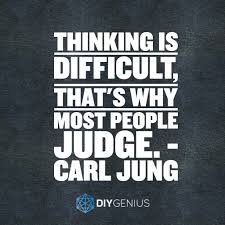
    downloadOur district mission statement centers around our calling to  “ignite genius and empower students to advance the world.” That’s a pretty tall order!
    Especially when, as Seth Godin explains (“The Long Term” podcast), students typically spend 90-95% of their school day on either doing what they’re told, aka compliance, or finding the right answer, also compliance!

    If only 5-10% of the day is open for a student to think bigger thoughts, then how in the world can we ever expect students to find their genius?

    Looking for the right answer? It’s easy. You can’t.

    If we truly want students to find their genius, then we need to provide the opportunities for them to dig in to complex problems. Complex problems does not mean a calculus problem, or balancing scientific equations. What I’m talking about here are complex LIFE problems. Problems that, quite honestly, don’t have answers. Things like:

    • Overpopulation and resource scarcity (Although, if you watched the last Avengers movie, this problem does have a potential solution… No Spoilers allowed!)
    • Economic development of the global poor
    • Nuclear security

    When we allow students time, resources, and freedom to explore complex problems like these, and even more so, when we let them explore the world of no resolutely right answer, we are building their capacity for original thought. We are building their capacity for grit. We are building their capacity for learning from failure.

    And in doing so, we are building their capacity to ignite their own genius.


  • Belonging to the Tribe

    Belonging to the Tribe

    I wasn’t the most athletic kid growing up. Haha. Who am I fooling? I’m still not athletic. I tripped trying to run to first base because my legs were moving faster than my body. I fell playing kickball because my foot landed on top of the ball instead of kicking the ball. I sometimes run into walls. So you can probably imagine that I wasn’t the first one picked to be on a team. And even if I was (eventually) picked, I certainly wasn’t in the starting lineup!

    So it really resonated with me when Garry Ridge, CEO of WD-40, explained to my colleagues and I* why the employees at WD-40 consider themselves a tribe and not a team.

    A team, Ridge explained, comes together for a purpose… usually a competitive one. There are top players, and benchwarmers, and people who didn’t get picked to be on the team at all. They practice together to meet their goal of beating the opponent. But when the game is over, they separate. They lead their own lives, independent of each other.

    A tribe, however, is different. Tribes depend on the people within their unit for survival. Every member of the tribe has an important role based on their skills and talents. There are no benchwarmers in a tribe.

    Tribes have other elements as well. They have values; they’re future-focused; they are warriors, when needed; and they place importance on celebrations. All of which are elements that contribute to a positive workplace culture.

    And because the tribe is dependent on each other, the responsibility of the tribal leader is to be a learner and a teacher. Not only is the leader learning and gaining wisdom that will nurture and sustain the tribe, but s/he also must pass the wisdom down so that the tribe’s success continues without the leader.

    The tribe is a much more intentional, and meaningful, connection than a team. People belong to a tribe. They have purpose within the tribe. They are protected by the tribe.

    Seth Godin, in his book Tribes: We Need You To Lead Us, writes: “Caring is the key emotion at the center of the tribe. Tribe members care what happens, to their goals and to one another.”

    Isn’t that, ultimately, at the core of what we want our classrooms and schools to be for our students?

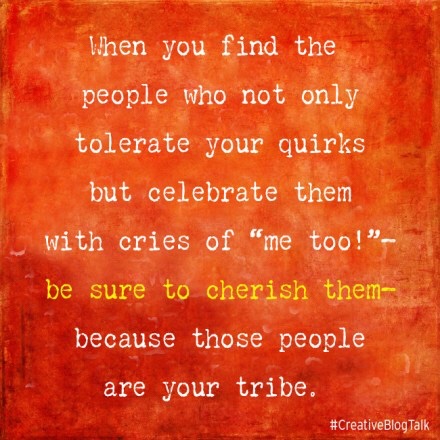
    Find-your-tribe-quote


    *Before meeting Garry, I would have used the phrase “team” to describe my colleagues. But they are my tribe. As Seth Godin describes it: “Tribes are about faith—about belief in an idea and in a community. And they are grounded in respect and admiration…” Grateful to have found my tribe!

    Learn more about the WD-40 tribe on their website.

    Sign up to receive an update when I post. Type your email address in the box and click the “Subscribe” button. My list is completely spam free, and you can opt out at any time