Tag: personalization

  • Slow Down

    Slow Down

    Three school site primary teacher teams have been spending the past two months digging into agency and personalization. What is it? Why is it important? And what do I need to do to provide it for students?

    Each group was tasked with presenting an overview of what they had learned, using the Zoom Panel guidelines from Making Learning Visible as a template. The basic elements of the presentation included:

    • Overarching question
    • Context to set the stage
    • Zoom In – artifacts that document the learning journey
    • Zoom Out – findings and implications for further discovery

    Each group approached the concepts of agency and personalization differently, and yet, their overall learnings all centered on a theme.

    Slow down.

    No matter what the learning target was, each team shared a need to slow down and make sure that students understand the WHY behind the activities. The WHY being the learning target behind the activity.

    Cult of Speed

    Carl Honoré says that society is caught up in the “Cult of Speed” and this can certainly be seen in education. High stakes accountability has resulted in a sort of checking off of standards as the new finish line. We talk career and college readiness, but do we mean it?

    When accountability becomes the focus, the WHY gets lost in the shuffle. Seth Godin, in his blog post “Accountability vs Responsibility,” sums it up perfectly.

    Accountability is done to you. It’s done by the industrial system, by those that want to create blame.
    Responsibility is done by you. It’s voluntary. You can take as much of it as you want.

    Seth Godin, “Accountability vs Responsibility”

    Accountability to Responsibility

    When we switch from accountability to responsibility, students are able to exhibit agency. They learn the WHY, and this then provides the foundation for the WHAT and the HOW.

    • Why is it important that I learn this skill/content?
    • Why is this activity important to my learning journey?
    • Why is my choice in flexible seating important to the task I am working on at this moment?

    Each of these questions is important. And each requires a deliberate slowing down of the content madness so that students are able to understand, connect, and take responsibility for their own unique learning experience.

    “The great benefit of slowing down is reclaiming the time and tranquility to make meaningful connections–with people, with culture, with work, with nature, with our own bodies and minds” 

    ― Carl Honoré, In Praise of Slowness: Challenging the Cult of Speed

    Intention

    When the WHY is owned by both the student and the teacher, then the WHAT and the HOW have INTENTION. When the WHAT and the HOW have intention, great learning happens.
  • Powering Personalization

    Powering Personalization

    For the next two months, I get the honor to spend time, like serious, dedicated, reflective time, with three groups of teachers as we dive deep into the concepts of personalization and agency. Our goal is to define how these terms are demonstrated in an elementary classroom: What teacher moves are present? What are our learners doing? How does personalization and agency impact their learning? Their sense of self?

    One of the teacher hubs is a group of 1st grade teachers that would like to spend more time getting to know learners’ interests and concerns.

    • How can getting to know our learners help with social and behavior interactions?
    • How do we get to know each child’s culture and traditions?
    • How do we apply personal interests into core curriculum?
    • How can knowing our learner’s interests help with connecting with other students, like big buddies on campus?
    • How can we learn more about a student’s outside learning, and bring that passion into the classroom?

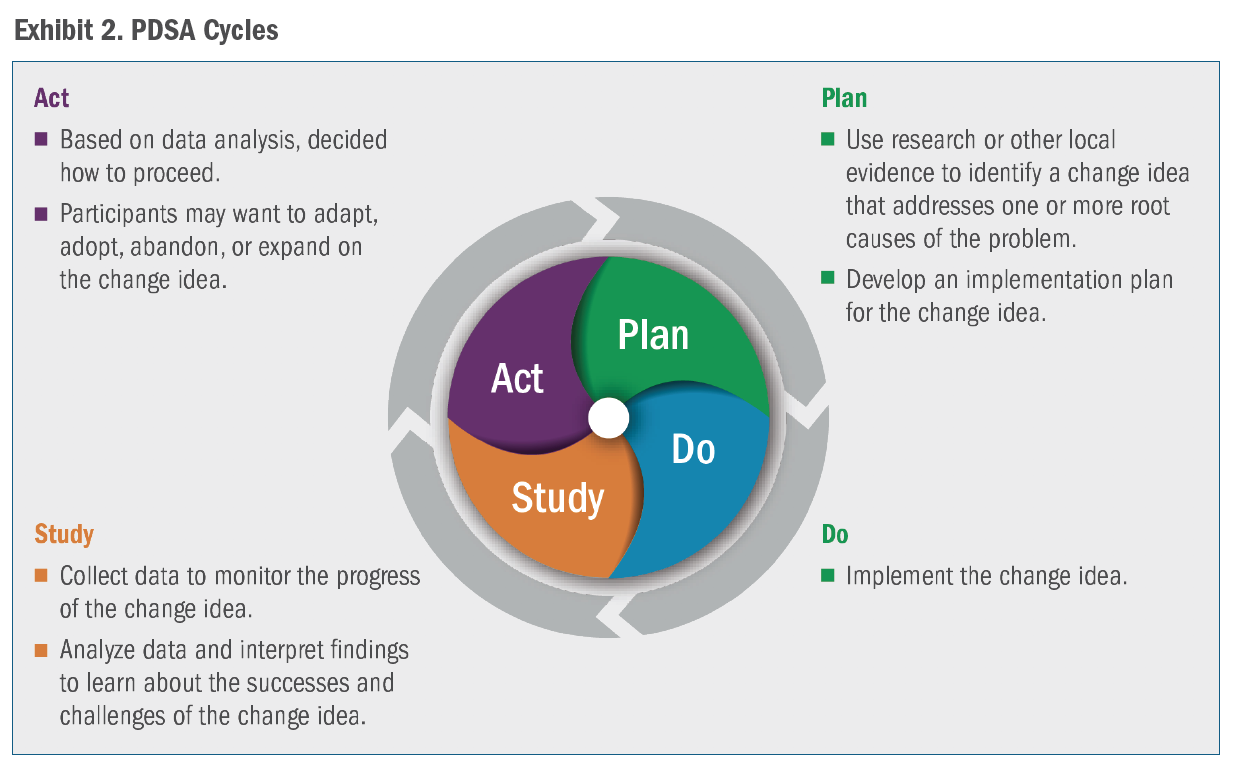
    Plan-Do-Study-Act

    What I love about my role is that I am simply the facilitator of their discovery. I find resources to help them explore their ideas, and I guide them through the PDSA cycle of Plan-Do-Study-Act. I’m like the fairy godmother in Cinderella, except that the pumpkin coach I provide is ways to grow in understanding, and discover new approaches/strategies that can be applied in the classroom as part of the pursuit towards the extraordinary school experience.

    Below are a few articles I am sharing with the teachers to help provide context around the topic of personalization. I’d love it if you’d share your resources as well, or even . better, ways in which you are providing personalized opportunities for all students to ignite their genius.

    Articles

    This article shows how personalization uses what you know about students (relationships + academics) to build experiences that meet their unique strengths and needs.

    https://www.edelements.com/blog/six-examples-of-what-personalized-learning-looks-like

    This article talks more about the partnership between teacher and parent to create a shared understanding of students, which helps to deeply understand the learner, leading to personalization that is meaningful.

    https://medium.com/@carolynwilson/curiosity-f5e4cedd5af1

    And this article helps build context around personalization, differentiation, and individualization… and the process teachers tend to go through as they head towards a personalized learning environment. It may be helpful to self-identify where you see yourself in the process, and then identify an area for growth/development through the hub plan-do-study-act cycle.

    https://www.advanc-ed.org/source/building-personalized-learning-environments

  • Exploring Agency & Personalization

    For the past few months, I’ve had the pleasure of working alongside our county office’s Assessment, Accountability, and Evaluation Unit, as well as some of our teachers, to better understand the principles of agency and personalization. As these are key elements of our district’s vision and mission, it is important to be able to articulate what those principles are, how they manifest in an elementary school classroom, and what impact they have on student learning. 

    To dive deeper in to these principles, I have been meeting with three teacher hubs to further explore the principles of agency and personalization. Hubs consist of a grade level team at a school site that meet weekly around this topic. By participating in a cycle of Plan, Do, Study, Act, teachers dig in to better understand how the principle they are focused on is developed in, and impacts, their students.

    For example, a hub studying student agency might ask:

    What is agency? What impact does it have on DMUSD students? What do we want to accomplish?

    What common activities will we engage students in to increase agency?

    How will we communicate the work, results, and resources to stakeholders?

    How will we measure agency?

    Each teacher hub meets weekly for approximately 6-8 weeks. During these meetings, teachers discuss articles read on the topic, ideate methods to bring these principles to life in the classroom, and after prototyping those ideas with students, time is spent reflecting and refining the idea. This cycle is repeated as many times as needed in order to gain a deeper understanding of the principle.

    Personalization Brainstorming
    This is an example of our initial ideation as to ways we personalize in an elementary classroom.

    In January, the three hubs will convene together to share their findings with each other. Their findings will be documented and passed along to new hubs. The new hubs will then analyze the findings of the group and expand on it within their own time together as a hub cycle. 

    This is part of a developmental evaluation approach, which is much like the R&D process private sector product development teams use. It allows us to provide feedback about how a major systems change is unfolding; generate evidence for how an innovation may need to change or adapt before taken to scale; and then spreading the resulting ideas/knowledge to have a broader impact.

    The idea is that, as the hubs expand, we will reach consensus as to what these principles mean for our students and can then provide districtwide professional learning so that all students, and all teachers, have a common vision and plan moving forward. It’s been an amazing experience to join these teachers on a learning journey. I’m excited to see the results.

  • Stupid Normal Distribution Curve

    “Life is all about getting A’s. Not some stupid normal distribution curve.”
    – Ken Blanchard, author of over 50 books on leadership

    Ken Blanchard has studied, and written books on, servant leadership. Servant leadership consists of two elements: The visionary role, which is the leadership element of servant leadership; and the implementation role, which is the servant element of servant leadership.
    Screen Shot 2018-02-21 at 8.35.18 PMAccording to Blanchard, the visionary aspect of servant leadership establishes a compelling vision that includes the purpose, the path forward, and the values that will guide the journey. It is, as Blanchard explains, the sense of direction.

    Once the vision is clear, the leaders role shifts into that of servant, in which the leader does all they can to help their team members accomplish goals, solve problems, and live according to the vision.

    The best educators are servant leaders. As leaders, they set the vision in the classroom. What is the purpose of learning this content? How will we learn it? And what experiences and connections will guide us along the way? It’s the lesson design. The framework build that connects standards in meaningful ways. The pedagogical conversations around thinking and learning and skills that matter most.

    Once that vision is established, the servant aspect carries out the implementation of those goals. What prior knowledge and skills do students need to learn this content? How will I assess if they have that knowledge/skill? What skills do students need to use this knowledge in a real world context? What experiences must I provide to create engaging and relevant connections? How will I ensure that each student gets what s/he needs to find success?

    No where in Blanchard’s servant leadership description does it include an element to ensure that only some employees are successful. Nowhere in the corporate HR manual does it say 30% of employees must be fired every year. So why is there a normal distribution curve in education? Why do we assume it’s okay that not every student achieves personal success? And why do we build assessments that are meant to trick students, or prove they don’t know it all? Ken Blanchard calls out the “stupid normal distribution curve” and he’s right.

    As a professor, Blanchard knows that it is his job to do all he can to ensure every student earns ‘A’ grades. “Don’t mark my paper” he and his friend Garry Ridge (WD-40 CEO) say. “Help me get an A.” That’s a true servant leader. That’s the type of leader I like to work for, and that’s the type of educator I want educating my children.

  • What Do I Think I Know and What Do I Have to Learn?

    You never know what you will learn when you step outside your bubble.

    The other day on LinkedIn I saw an event posted by Garry Ridge, CEO of WD-40. It was the Annual Breakfast for the MS in Executive Leadership program at University of San Diego, followed by a panel about servant leadership, creating a culture of values, and how business skills empower performance. All invited. “Why not?” I thought. I’m on vacation, so let’s see what this is all about. A fortuitous decision!

    On the panel:  Ken Blanchard, best selling author of over 50 books on leadership, Garry Ridge, and Barbara Lougee, Associate Dean of Graduate Programs and Associate Professor of Accounting. I have pages of notes (for future blog posts), but today I want to write about one inspirational nugget.

    Garry Ridge, CEO of WD-40, has a constant drive to learn. When he took over as CEO of WD-40, he asked himself, “What do I think I know and what do I have to learn?” Garry realized there was much to learn and therefore enrolled in USD’s first MSEL cohort. How many CEOs decide to go back to school? What tremendous sense of self and lack of ego is required to be able to answer that question when many would consider him to already be at the pinnacle of his career!

    My Post (1)

    It made me wonder when the last time was that I truly asked myself what I thought I knew and what I needed to learn. When I accepted my current position as Executive Director of Innovation and Design, there was a lot to learn. I knew I had to become well versed in Design Thinking. And I quickly realized there were a lot of cultural and pedagogical values in my district that I needed to familiarize myself with, but what did I truly think I knew? And what did I have to learn?

    It’s a question I’m still answering, and I think that’s the point. The more I learn, the more I realize I need to learn more. And then the more I learn, the more I realize that what I thought I knew wasn’t fully developed, and therefore there’s still more I need to learn. Not just about pedagogy and Design Thinking, either. About organizational systems. About change management. About culture. About thinking. About people and values. About visions and missions and the work to carry them out. About industry. And careers. And the Fourth Industrial Revolution. About Sinek’s Golden Circle. And the list goes on and on.

    But what if I asked students that question? Ask a student what they think they know, and what they need to learn. Most may look at you like you’ve lost your marbles. Or they may tell you about the facts that need to be memorized for an upcoming exam. Or the items missed on a previous test. Or the homework that is waiting for them at home.

    But none of that is learning. It’s just playing school.

    When classrooms promote student agency, and the personalization of learning that must co-exist with agency, then students can better articulate their learning because they understand both the purpose and the end goal. Perhaps a student would share how s/he is developing a narrative to include more descriptive elements so as to draw the reader in. Or another student may share that s/he is developing a strategy to approach a complex math problem using known algorithms. Another may say that he thinks he knows how to solve a playground situation, but needs to spend more time empathizing with the users to see if the prototype will solve the underlying issue.

    In each of these answers, students are owners of their learning journey. The teacher, approaching classroom leadership as a side-by-side relationship, is providing the space and the time so that each student’s learning is nurtured.

    That’s what personalization of learning is all about. Every student and teacher being able to ask, “What do I think I know and what do I have to learn?” and being able to answer it, and then travel down the path that not only answers that initial question, but opens up a hundred more.