Tag: IDEO

  • You Have To Find Ways Around Things

    I received this email from a colleague:

    In the mix of conferences…
    What if….
    We completely reimagined what that looked like??? How would we make that change?

    It made me think about IDEO’s blog vignettes called “Thoughtless Acts.”

    Human-centered design requires us to observe human behavior with beginner’s eyes, so that we can spot the innate ways people interact with the world around them. We call these intuitive and unconscious reactions Thoughtless Acts. – IDEO

    A recent Thoughtless Act called “Going with Gravity” described an old woman leaning over her small wall to pick an herb because it was easier on her body than bending down, and then having to get back up.  The woman, explaining her new moves to her grandson, shared that, “At my age, you have to find ways around things.”

    You have to find ways around things. 

    I would venture to guess that our teachers and students are always finding ways around things. They find ways around internet content filters. They find ways around limited supplies. They find ways around dress codes, outdated textbooks, and high-stakes testing. So many items that could be added to this list!

    Why do so many of the systems, structures, and beliefs of schooling require the users to find ways around them?

    Jose Vilson asks, “Why do we hold so tightly to the rigid ideas of what teaching used to look like and work with the generation of students we currently do, with different, valid values and diverse understandings of the way the world works?”

    If we aren’t constantly tackling educational systems, structures, and beliefs, then the changes schools make will continue to be Thoughtless Acts of working around the system, instead of working on the system.

    ux


  • Crafting a New Story of Learning

    Crafting a New Story of Learning

    This was a fascinating read the other night…

    From: Making the World a Better Place Starts with a Really Good Story

    Kathleen: One of the things I saw in the organizations that I interviewed is that they prioritize storytelling, not only at the executive director or CEO level, but at every single level of the organization. Everyone within the organization can be a brand ambassador for the cause, whether it’s a staff member who happens to be at a cocktail party and comes across a donor, or whether it’s a beneficiary talking to a funder about the effectiveness of the work.

    Some of the organizations that I interviewed actually did storytelling practice in their staff meetings. IDEO.org does this storytelling roulette where they spin a wheel, and on the spot, a staff member has to tell a story about a project that they worked on. It’s that repetitive practice that really helps build storytelling skills.

    Nadine: One of the great benefits of doing that is that within the organization, it builds cohesion and alignment around the messaging and the brand. It’s really a powerful internal development tool, as well as an external development tool.

    How are you empowering both staff and students to tell the story of learning at your site? I just spent a day of professional learning with every teacher in our district. Based on an activity in Ron Ritchhart’s Creating Cultures of Thinking, we looked at the story of learning we were told growing up through beliefs, behaviors, expectations, etc. Phrases such as compliance, tracking, and worksheets kept rising up.

    Our district has already spent a year researching what education should look like for our students. We met with industry experts, read countless books, went to conferences across the country, and most importantly, talked to our stakeholders: students, parents, staff, and community.

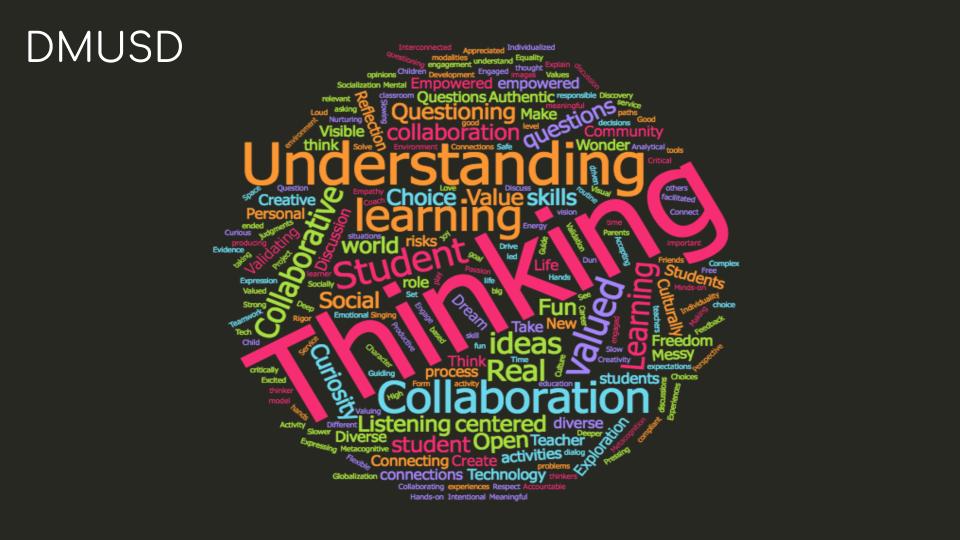
    With this information, as well as some video and article reads during our professional learning day, we began crafting a new story of education; one that values the unique geniuses of all students through strong instructional practices that promote student agency, collaboration, personalization, cultural intelligence, and design thinking. Our new story has much different phrases:

    Word Clouds from New Sticky Notes

    So how do we build a storytelling culture amongst all our stakeholders? That’s the next chapter we’re writing.

    How are you telling your story? Do you have a storytelling culture, or is a lone storyteller writing your book?

    Sign up to receive an update when I post. Type your email address in the box and click the “Subscribe” button. My list is completely spam free, and you can opt out at any time.