Tag: Empathy

  • Designing Belonging: What a Pizza Box Taught Me About Connection

    Designing Belonging: What a Pizza Box Taught Me About Connection

    I’ve written before about the time I ordered a pizza to reconnect my ex-husband to the outside world. No car. No phone. No internet. A disconnection, both literal and emotional. We used Domino’s delivery notes as our 21st-century carrier pigeon. It worked, but only because someone made the effort to reach out, to bridge the gap, to make belonging possible when the system failed.

    I was thinking about that moment when I read Design for Belonging by Susie Wise.

    “The work of belonging is to counteract [othering]. It is to open up spaces and places so that all people regardless of their backgrounds can join in and contribute.”

    I can’t stop thinking about how often we overlook the micro-moments where belonging breaks, and how many more we ignore where it could be rebuilt.

    That pizza box moment was belonging by design, even if I didn’t have a name for it then. It was messy. Unconventional. A little ridiculous. But it worked.

    And maybe that’s the real design challenge: how do we notice when belonging is fractured? And more importantly, what do we do next?

    When Wise talks about the “design levers” of rituals, roles, spaces, systems, it isn’t just a nice framework for planners and strategists. It’s a lifeline for educators, leaders, and humans trying to hold fragmented communities together. Especially when those communities are separated by distance, devices, and distraction.

    I’ve seen this in classrooms. In Zoom faculty meetings. In Twitter (“X”) threads that start with good intentions and devolve into ego matches. And I’ve felt it in the silence after someone says something unintentionally harmful, followed by… nothing.

    That’s where the work is.

    We talk a lot about invitation. How do we invite students into learning? Colleagues into collaboration? Families into school systems that weren’t built with them in mind?

    But Wise pushes us further. She explains that invitation isn’t just about showing up. It’s about showing up in a space that sees you. Hears you. Values your perspective.

    That only happens with intention.

    I think about how many times I’ve created systems that worked “in theory” but didn’t feel like belonging in practice. The school-wide email that no one read. The virtual office hours that no one joined. The peer feedback protocol that favored the loudest voices. None of those were belonging, even if they were well-designed.

    Because belonging isn’t the form. It’s the feeling.

    Wise also talks about dissent and repair—two words we don’t sit with enough in schools.

    We love our norms and expectations and “we’re all in this together” mantras. But what happens when someone pushes back? When they say, “This space doesn’t feel safe for me,” or “That comment hurt”?

    Too often, we go straight to defense. Or worse—silence.

    But real belonging means we stay. We sit in the discomfort. We acknowledge the impact even if it wasn’t our intent. We ask what repair could look like—and then we act.

    Sometimes that action is a redesign.
    Sometimes it’s an apology.
    Sometimes it’s a damn pizza box with a handwritten message to reboot the phone so messages arrive. haha

    I don’t have a neat ending here. Belonging is squiggly like that. It’s a process, not a product. But what I’m learning from Susie Wise, and remembering from my own messy, human moments, is this:

    We can design for belonging in every space we touch.
    Even the ones that feel too big, too broken, too remote.
    Even the ones held together by pizza and Post-it notes.
    Especially those.
  • Are You My Leader? Insights from Classic Stories

    Are You My Leader? Insights from Classic Stories

    This post continues my series exploring leadership lessons in the picture books that shaped me. If you’ve been following along, you know I started with sneezing elephants and then followed Grover’s panicked pages. This one? It belongs to my little brother.

    A Bird, a Brother, and the Big Question

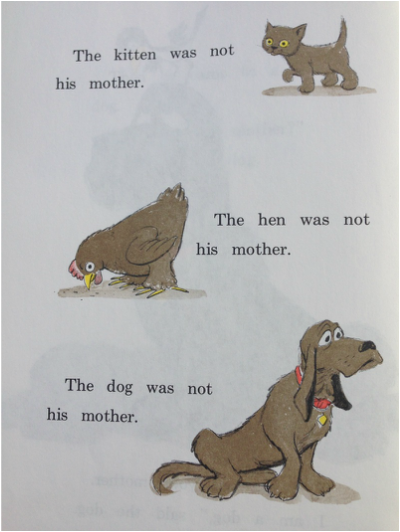
    When we were kids, Are You My Mother? by P.D. Eastman was one of my younger brother’s go-to bedtime book. He couldn’t get enough of that baby bird wandering through the world, asking every creature if they were his mother. (Maybe it’s because I told him he wasn’t really my brother…haha)

    It’s a sweet, silly story on the surface. But re-reading it through a leadership lens? It hits differently.

    Because let’s be honest: most of us, at some point in our personal or professional journeys, have looked around and asked: Are you my person? Is this where I belong? Who’s guiding me through this?

    And for those of us in leadership roles: how often do we recognize that the people we lead are walking in, asking that question of us?

    Leadership as Recognition

    The baby bird isn’t just looking for his mother. He’s looking for connection and affirmation. For someone who will recognize him, respond to him, and meet his needs.

    Leadership, at its heart, is about that same thing: recognition.

    Are we seeing the people in front of us?
    Are we helping them find where they fit?
    Are we guiding them, not just directing them?

    Because when people feel unseen, like that baby bird talking to cows and planes and boats, they start to doubt their place. They go looking, often desperately, for someone to say, “Yes. You belong.”

    And Here’s Where It Gets Techy

    Today’s world is buzzing with talk of AI and machine learning, and this supposed promise to replicate human intuition, automate connection, and even mimic empathy.

    But Are You My Mother? reminds me of the limits of simulation.

    At its core, the baby bird’s journey is about relationship, not recognition alone. He doesn’t just want a “yes” to his question. He wants to feel known. Seen. Held in someone’s awareness.

    No matter how advanced our tools become, we have to ask: can an artificial system truly replicate that? Can it understand the nuance of belonging, or the ache of being unmoored?

    Don’t Be the Bulldozer

    One of the most absurd moments in the book is when the baby bird asks a literal bulldozer if it’s his mother. The machine doesn’t respond, of course. It doesn’t even acknowledge the question. It simply scoops him up and drops him back into the nest.

    Was it efficient? Sure.
    Did it solve the problem? Technically.
    But did it provide comfort and connection? Umm, I’m going to say no to this one.

    That’s the cautionary tale as we advance AI. When our solutions are cold, transactional, or mechanistic, we might get people from point A to point B, but we risk leaving them emotionally stranded along the way.

    True leadership doesn’t just lift. It listens.

    Finding Our People

    The reunion at the end isn’t dramatic. The bird finds his mother, and in that simple moment of recognition, everything settles. It wasn’t about finding the best option. It was about finding home.

    As leaders, our job isn’t to have all the answers.
    It’s to be present when someone asks, “Are you my person?”
    And to have the wisdom—and the heart—to say, “I’m here. Let’s figure it out together.”

    Let’s Keep Exploring Together

    This series has me looking at childhood stories through a whole new lens. What seemed like simple bedtime tales now feel like blueprints for how we show up – for ourselves, for each other, and for the technologies we’re building.

    If there’s a book that’s stayed with you… a story you loved as a kid that now whispers something deeper, I’d love to hear it.

    Drop it in the comments. Let’s keep turning the pages and discovering what they have to teach us. Together.

  • What Grover Taught Us About Fear and Leadership

    What Grover Taught Us About Fear and Leadership

    This post is the second in a new series exploring leadership lessons tucked inside childhood classics. If you missed the first—on elephants, sneezes, and innovation—you can find it here.

    A Puppet, a Page, and a Pause

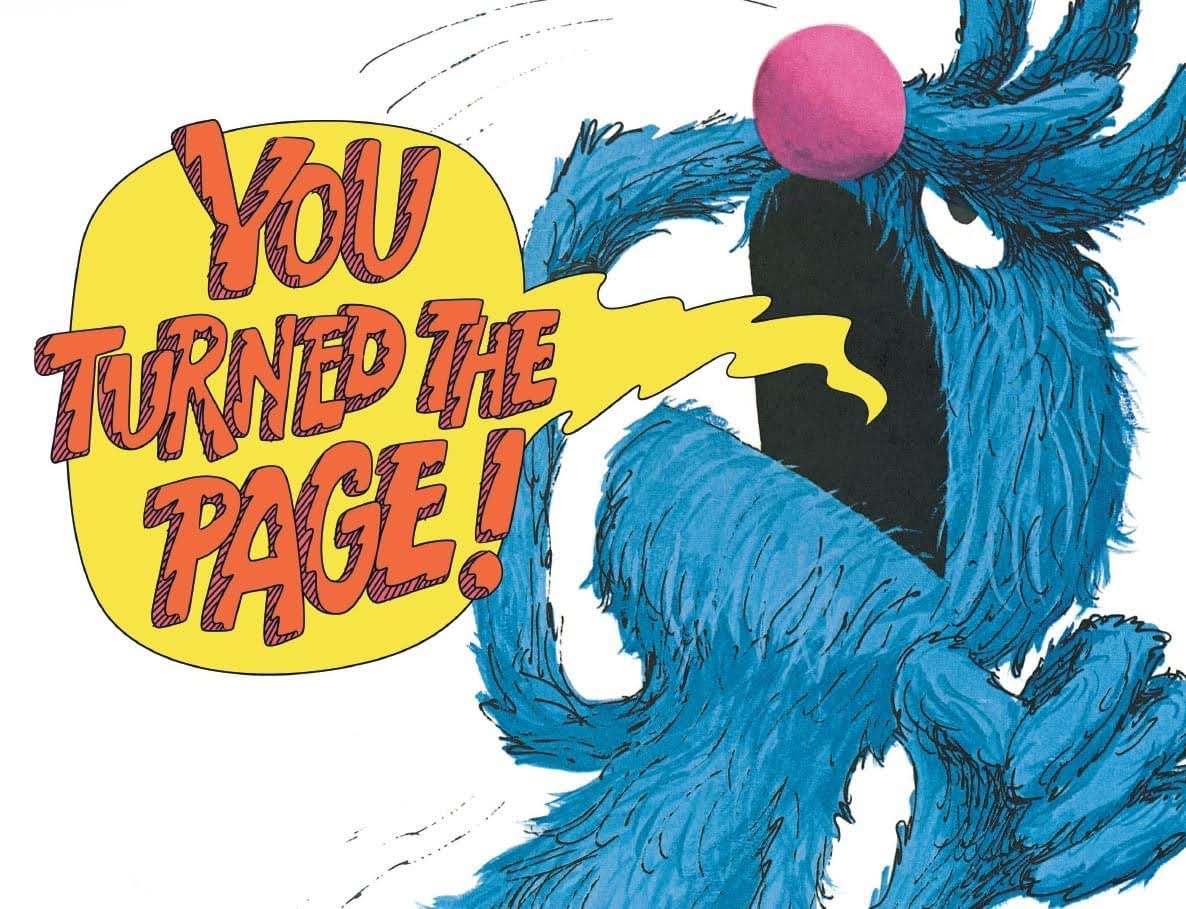
    One of my most vivid memories from childhood is my dad reading The Monster at the End of This Book. But he didn’t just read it. He performed it. Grover wasn’t just a character. With a blue puppet in hand and a gravely voice, my dad turned each page into theater.

    Each night, Grover begged me not to turn the page. He built walls. He tied knots. He panicked. And, of course, I turned the page anyway. I had to see what was coming.

    Spoiler: The “monster” at the end of the book… was Grover himself.

    He feared what he didn’t understand. He made assumptions. He underestimated both me and himself.

    Sound familiar? (Certainly does to me!)

    When Leaders Pull a Grover

    In leadership, we sometimes panic about what’s ahead. We put up barriers. We try to control the pace of change. We yell, “Don’t turn the page yet!” believing we’re protecting others. But real empathy doesn’t mean controlling the narrative. It means walking with people through it.

    Empathetic leadership says:

    • I won’t rush you.
    • I won’t minimize your fear.
    • I will sit beside you and turn the page when you’re ready.

    What If We All Just Turned the Page?

    Whether we’re implementing new technologies, navigating tough decisions, or supporting someone through a tough transition, there’s always a Grover in the room, scared of the unknown, convinced the end of the book holds doom.

    And maybe we are Grover sometimes.

    But what if we just… turned the page anyway?

    With empathy.
    With curiosity.
    And with someone beside us.

    Like my dad. It wasn’t just the puppet or the funny voice. It was that my dad fully entered my world. He didn’t try to fix Grover. He didn’t roll his eyes or fast-forward to the end. He honored the moment, and me, page by page.

    Let’s Keep Reading Together

    This series is reminding me how much childhood stories still shape my adult lens. If a children’s book has ever changed your perspective on leadership or learning, I’d love to hear about it.

    Drop your favorite title in the comments and let’s turn some pages together.

    P.S. It was only a few years ago that my Grover puppet finally met his demise.

  • “Stand Back,” Said the Elephant: What a Children’s Book Taught Me About Leadership, Innovation, and Intentional Impact

    “Stand Back,” Said the Elephant: What a Children’s Book Taught Me About Leadership, Innovation, and Intentional Impact

    “Stand Back,” Said the Elephant: When Leadership Echoes Louder Than We Think

    The other day, I was chatting with a new mom, trading favorite childhood books, when one came rushing back to me:
    Stand Back,” Said the Elephant, “I’m Going to Sneeze!

    If you’ve read it, you know how it goes. A giant elephant announces he’s about to sneeze and total jungle chaos breaks out. Birds panic. Monkeys flip. Even the crocodile gets nervous.

    Why? Because the last time he sneezed, the whole forest turned upside down.

    As a kid, I thought it was hilarious.
    Reading it now, I see something else entirely.

    Leadership (and Sneezes) Are Bigger Than They Seem

    The elephant wasn’t being reckless. He wasn’t out to scare anyone. In fact, he gave fair warning. But still, his sneeze carried a force he couldn’t fully control. His size made even a simple act feel seismic.

    That image has stuck with me. Not just because it’s funny, but because it’s true.

    In leadership, we often forget how much weight our words and decisions carry. What feels like a small adjustment, such as a platform update or a new policy, can send ripples through a whole system.

    To us, it’s just a sneeze.
    To others, it might feel like the whole jungle is shaking.

    Leading Innovation with Intention

    At our charter school, we’re stepping into bold new territory: integrating artificial intelligence and virtual reality to create immersive, student-centered learning experiences.

    It’s exciting, no doubt. But we’re not doing it just because it’s cutting-edge. We’re doing it because we believe it can deepen learning, elevate student voice, and open doors to new ways of thinking and creating.

    And that means being intentional at every step.

    This kind of innovation requires more than cool tools. It requires care. It requires asking: Are our teachers supported? Are students engaged, not just entertained? Is this helping them grow, or just adding noise?

    We’re not handing students a VR headset and saying, “Go.” We’re inviting them to explore the moon, to train with an AI-powered speaking coach, to step into simulations where empathy, critical thinking, and creativity all matter.

    Yes, we’re introducing new tech. But more importantly, we’re creating new opportunities for students to see themselves as capable, curious, and connected.

    The Pause Before the Sneeze

    What I keep coming back to is this: the elephant didn’t sneeze without warning. He paused. He looked around. He gave everyone a chance to prepare.

    That’s leadership.

    It’s not just about vision or bold ideas. It’s about noticing who’s in your path and being thoughtful about how your actions might affect them. It’s asking: Who will this impact? Are they ready? What support do they need?

    Because innovation without awareness can flatten people.
    But with empathy, it can lift them.

    At Elite Academic, we ask ourselves these questions constantly:

    • Is this truly serving students?
    • Are we empowering teachers, not overwhelming them?
    • Does this leave room for curiosity, for voice, for choice?

    Sometimes, the most important thing a leader can do is pause, take a breath, and ask:
    Is now the right time to sneeze?

    The Books That Stay With Us

    I didn’t expect a children’s book to circle back into my life like this. But it did, and not just for the nostalgia.

    It reminded me that leadership isn’t always about big moves or dramatic moments. More often, it’s about the quiet awareness of how much our presence can shape what happens around us. Even small decisions can carry weight. Even good intentions can have unintended effects.

    And sometimes, the most important thing we can do is slow down long enough to notice that.

    I’m still smiling at the story. But now, I’m also thinking about what it means to move through the world, especially as a leader, with care.

    So now I’m curious:
    Has a children’s book ever stuck with you in an unexpected way?
    What story from your childhood keeps showing up in your thinking today?

    I’d genuinely love to hear it.

  • Creating Space for Greatness: A Reflection on Leadership

    Creating Space for Greatness: A Reflection on Leadership

    I have been a Simon Sinek fan for a long time. The other day I saw this quote by him which has me thinking: “The role of a leader is not to come up with all the great ideas. The role of a leader is to create an environment in which great ideas can happen.”

    It’s a simple yet profound reminder that leadership isn’t about being the sole innovator or the constant doer, but about fostering a space where talent and creativity can flourish.

    In my own experience, I’ve learned that trusting people to do what they’re good at isn’t just about delegation. It’s about respect and empowerment. When leaders micromanage or step into every task, it subtly tells the team they don’t trust their abilities. Over time, that can breed frustration, diminish confidence, and even lead to burnout. Because honestly, constantly doing and controlling doesn’t just burn us out; it dims the spark of initiative and innovation among everyone around us.

    Creating an environment for ideas means giving people the freedom, support, and trust to explore, experiment, and even fail without fear of judgment. It’s about believing that good ideas come from diverse minds, not just the leader’s perspective. When that trust is there, it opens the door for collaboration, shared ownership, and a collective sense of purpose.

    Leadership, then, becomes less about being the source of all solutions and more about being the catalyst for others’ greatness. It’s a shift from “I must do everything” to “I’ll create the space for you to shine.” And in that space, true innovation and engagement happen alongside a healthier, more motivated team.

    So, today I remind myself: leadership is about environment-building. Trust others, step back when needed, and watch great ideas emerge.

  • Leadership Wisdom from a Re-Read of The Tao of Pooh

    Leadership Wisdom from a Re-Read of The Tao of Pooh

    I picked up The Tao of Pooh again recently, expecting a cozy, familiar read. I’ve read it before, but this time I noticed something I missed the first time around.

    Beneath the charm of the Hundred Acre Wood is a quiet, powerful introduction to Taoist philosophy—one that feels especially relevant to how we lead. Taoism reminds us that leadership doesn’t always require action. Sometimes, it asks for stillness, presence, and trust in the natural flow of things.

    Pooh models this beautifully. He listens when Piglet worries, sits silently with Eeyore, and simply enjoys Tigger’s chaos. He doesn’t fix or push or force. He’s just there. Fully present. And that’s the kind of empathy I keep coming back to in my own leadership journey.

    Too often, I’ve rushed to solve things. Jumped in with advice. Tried to shape outcomes. But empathy isn’t about control—it’s about showing up. About making space for others to be fully seen and accepted.

    Pooh also leads without ego. He doesn’t try to change others or turn every moment into a teaching opportunity. He accepts each character exactly as they are. That kind of acceptance is deeply human, and a leadership skill I’m still working to grow.

    What struck me most on this re-read is how Taoist leadership is so quiet. It’s not about charisma or control. It’s about presence. Attunement. A conversation. A shared moment over honey. In a world that often rewards the loudest voice in the room, that approach feels surprisingly radical.

    So this week, I’m taking a note from Pooh: slow down, be present, and let empathy guide the way.