Year: 2024

  • Addressing Poor Performance: Reflect Before Reacting

    Addressing Poor Performance: Reflect Before Reacting

    Okay, let’s be real – we’ve all had that employee who just isn’t cutting it. You know, the one who’s missing deadlines, making mistakes, or just not pulling their weight. It’s incredibly frustrating, right? And it’s so easy to let those feelings get the better of you. But trust me, you really don’t want to do that. So before you even think about confronting them, take a deep breath and ask yourself: ‘How is this situation affecting me personally and professionally?’

    Now, I’m not saying you should sweep the problem under the rug. Yes, their underperformance impacts you too. Maybe you’re losing sleep over it, picking up their slack, or worried it’ll make you look bad. It’s okay to admit that – we all have a stake in the game here.

    I’ve definitely been there myself! I had a staff member not quite hitting the mark, and the frustration was building. And unfortunately, I let my own frustration get the best of me. Instead of taking a step back and understanding the situation from that person’s perspective, I jumped right into critique…Okay, it was really just criticism because I was so done at that moment. And not surprisingly, it totally damaged the trust we had built. Ugh!

    That experience taught me a huge lesson. Now, before I address any performance issues, I take a moment to reflect on how the situation impacts me personally and professionally. It’s not about ignoring the problem; it’s about understanding my own role in the situation and how my emotions might be influencing my perception.

    By acknowledging my own feelings, I can approach the conversation with more empathy and objectivity. It’s amazing how much of a difference that makes in finding a constructive solution and preserving the relationship.


  • AI in Leadership: A Balancing Act

    AI in Leadership: A Balancing Act

    As we all know, the world of tech is constantly evolving, and AI is no exception. It’s amazing to see how AI is changing the way we make decisions, especially for those of us in leadership roles. But with this new power comes a whole lot of responsibility.

    One of the biggest things we need to consider is the ethical side of using AI. We need to be open and honest about how AI is being used to make decisions, and what data is feeding into those decisions. For example, we need to be aware of situations where AI tools might be used to evaluate student work, and understand how those tools might have different error rates for evaluating essays written by native vs. non-native English speakers. It’s also super important to make sure everyone on the team understands how AI works and feels comfortable questioning its recommendations. After all, we’re a team, and we need to be accountable to each other.  

    Of course, we can’t forget the human side of things. We need to make sure that using AI doesn’t leave anyone out or reinforce any biases. Our goal should always be to create a more inclusive workplace. This is especially important when using AI in situations with the potential to create a hostile environment, such as when using facial recognition technology or AI-enabled content moderation tools.  

    Now, don’t get me wrong, AI can be incredibly helpful. It can help us streamline our work, personalize learning opportunities, and even give us a glimpse into the future with predictive analytics. But we need to find a balance between using AI to make things more efficient and staying connected to the human element in our organizations. For instance, if we’re using AI to identify students at risk of dropping out, we need to make sure that the tool isn’t unfairly targeting certain groups and that we’re providing support to those students in a way that is both effective and respectful.  

    As leaders, it’s up to us to set the ethical standards and make sure we’re always putting our team’s well-being first. If we can do that, we can unlock the full potential of AI without sacrificing the trust and integrity that are so important for successful leadership.

    What do you all think? I’m really interested to hear your thoughts on this!

    And for more reading on this subject, check out this memo published by the U.S. Department of Education, which inspired this post.

  • Transform Meetings with Gemini’s Live and Research Tools

    Transform Meetings with Gemini’s Live and Research Tools

    As many of you know, I’ve been on a journey to become a more effective and empathetic leader. Part of this journey has involved using Google Gemini to help me analyze my communication patterns and identify areas for improvement. I’m truly excited to share that Gemini has recently rolled out some incredible new features – “Research” and “Live” – that I believe will significantly enhance how we communicate as a team.

    Research: Fueling Our Conversations with Knowledge

    I haven’t spent a ton of time with Gemini’s Deep Research option yet, but from what I can gather, I think it will be great for real-time fact checking as well as diving deeper into topics. With Gemini Research, we can instantly verify details during meetings or presentations, ensuring our communication is always accurate and credible. It will also empower us to analyze complex data, and gather comprehensive insights, which is pretty impressive.

    Live: Dynamic Interactions for a More Connected Team

    Imagine us all jamming on ideas together, in real-time, and actually getting somewhere! With Gemini Live, brainstorming sessions become super dynamic, and everyone gets a chance to chime in and build on each other’s thoughts. Plus, we can fine-tune our messages to hit the right note with different folks, so our communication really lands. And get this – we can even get instant feedback on how we’re doing, so we can tweak our style and make sure our message is crystal clear. Pretty cool, right? I used it the other evening to better understand AB 2013, California’s new generative AI law that is set to go into effect in 2026. We had a great conversation and I left feeling enlightened.

    How Research and Live Could Transform Our Workplace:

    • More Impactful Presentations: Deliver more compelling and informative presentations with real-time data and research support.
    • More Efficient Meetings: Make our meetings more productive by quickly accessing relevant information and facilitating dynamic discussions.
    • Stronger Collaboration: Foster a culture of knowledge sharing and collaborative problem-solving with interactive tools and personalized communication.
    • More Informed Decisions: Make well-informed decisions based on accurate data and diverse perspectives.

    I’m optimistically hopeful (is that a real phrase?) about how Google Gemini’s Research and Live features can elevate our communication, strengthen our collaboration, and ultimately, help us achieve our goals more effectively. Would love to know your thoughts.

  • How Great Thinkers Inspire Learning Through Doubt

    How Great Thinkers Inspire Learning Through Doubt

    “Great thinkers don’t harbor doubts because they’re impostors. They maintain doubts because they know we’re all partially blind and they’re committed to improving their sight.” – Adam Grant

    I love that quote! It’s a good reminder that even the best thinkers know they don’t have all the answers. They’re always looking for ways to learn and grow. And that’s a big part of what empathetic leadership is all about: creating a space where your team feels safe to try new things, even if they might stumble along the way.  

    Think of it like a coach who lets a player try a new move in the middle of a game, even if it means they might mess up. The coach gets it – mistakes are part of how we learn. By giving the player the green light to take a chance, they’re helping them add a new skill and become an even better player.

    It’s the same in leadership. Empathetic leaders give their team the room to experiment and learn from their slip-ups. They’re there to guide and support, but they also let their team own their ideas and choices.

    And guess what? This doesn’t just help individual team members grow, it supercharges the whole team! When people feel supported and know they can take chances, they’re more likely to think outside the box and come up with game-changing ideas. And when they know their leader has their back, that’s when real trust and respect kick in.

    I’ve been there myself. I had a team that was wrestling with a big decision about which direction to go. It was tempting to just step in and say, “Hey, here’s what we’re gonna do.” But instead, I hung back and watched them work it out for a few weeks. It wasn’t always pretty, but they learned something super valuable: that slowing down, really listening to each other, and working together was their secret weapon. Sure, they had to set aside their egos for a bit, and there were some bumps and frustrations along the way, but it was worth it.

    By the end, they didn’t just nail the decision, they became a way stronger team in the process.

    So, here’s my takeaway: if you’re aiming for empathetic leadership, don’t freak out when your team makes mistakes. Just be there to help them learn from it and come back swinging even harder.

    Remember, empathetic leadership isn’t about being a pushover or dodging tough conversations. It’s about building a team culture where trust, respect, and support are the name of the game.

    Grant, A. (2016, June 6). Think Again: The Power of Knowing What You Don’t Know. Viking.

  • Finding My Tribe in Bluesky

    Finding My Tribe in Bluesky

    There’s something magical about connecting with like-minded people, especially when those connections spark new ideas and reignite your passion. For me, that magic has been reignited on Bluesky.

    As many educators migrated away from Twitter over the past few years, I found myself missing those vibrant conversations and the chance encounters with brilliant minds from around the world. Sure, I had my local PLN (Professional Learning Network), but something was missing. That’s when I discovered Bluesky.

    Bluesky (bsky.app) is like a breath of fresh air. It’s a decentralized social media platform that feels both familiar and refreshingly different. The interface is clean and intuitive, and the focus is on genuine interaction and community building.

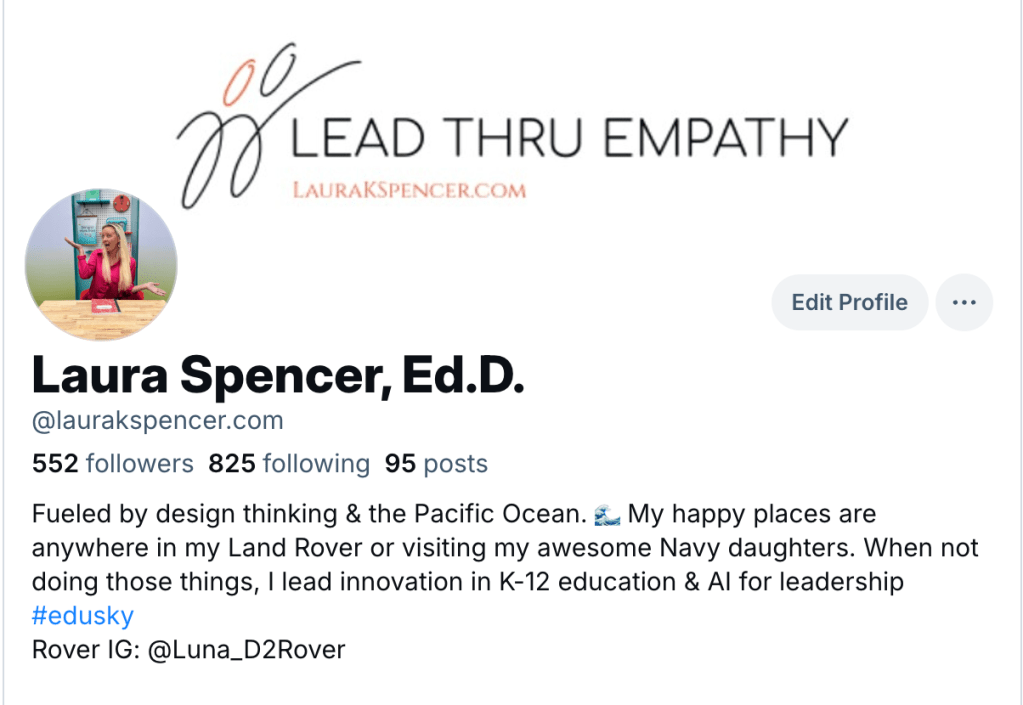
    Bluesky profile for Laura Spencer, Ed.D. with profile picture, follower/following counts, and bio highlighting her interests in design thinking, the Pacific Ocean, and K-12 educational innovation.

    What truly sets Bluesky apart is the ease of connecting with people who share your interests. It’s funny, I actually joined Bluesky quite a while ago, back when you needed an invite code. But honestly, it felt a bit like a ghost town then, so I drifted away. Fast forward to now, and wow, has it changed! It’s been incredible to see the platform come alive with familiar and new educator voices. Within minutes of rejoining, I was following inspiring educators, engaging in thought-provoking discussions, and rediscovering that sense of belonging that had been fading. It’s like stepping into a global staff room filled with passionate, innovative teachers.

    This experience has reminded me of the importance of looking beyond our immediate circles for inspiration and growth. As educators, we have a responsibility to be lifelong learners, and Bluesky provides the perfect platform for continuous learning and collaboration.

    But it’s more than just professional development. Connecting with educators from diverse backgrounds and experiences broadens our perspectives and helps us become more empathetic leaders. We learn to appreciate different teaching styles, understand the challenges faced by students in different contexts, and ultimately, create more inclusive and equitable learning environments.

    Ready to join the Bluesky community? Here’s how to get started:

    1. Download the app: Download the Bluesky app on your iOS or Android device.
    2. Create your profile: Set up your profile with a bio and profile picture.
    3. Find your people: Search for and follow educators you admire. Don’t forget to join the #EduSky community to connect with even more like-minded educators.

  • AI + SEL = More Empathetic Leadership: Join Me This Sunday!

    AI + SEL = More Empathetic Leadership: Join Me This Sunday!

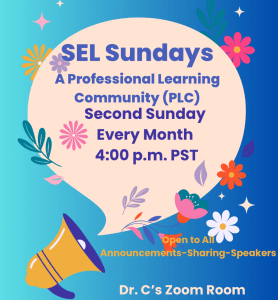
    I’m thrilled to be a guest speaker this Sunday at “SEL Sunday—Our Monthly Online Professional Learning Community” hosted by Dr. Cynthia Sistek-Chandler of National University! Join us as we explore the fascinating intersection of AI and SEL, and uncover how these two powerful forces can work together to create more empathetic and effective leaders.

    In my presentation, I’ll be discussing the AI-powered tool designed to enhance communication and foster deeper connections within teams that I’ve been developing with Google Gemini. This isn’t just about improving workplace efficiency; it’s about cultivating a culture of understanding and emotional intelligence.

    Think of it this way: AI can analyze vast amounts of data, providing insights into communication patterns and potential blind spots. By integrating SEL principles, we can translate this data into actionable strategies for building stronger relationships, improving conflict resolution, and promoting genuine empathy.

    Here’s a sneak peek of what I’m putting together for my talk

    • Real-world examples: I’ll share a few stories of how AI-powered SEL interventions have transformed workplace dynamics.
    • Interactive exploration: We’ll engage in thought-provoking activities to experience the power of AI-driven SEL firsthand.

    My goal is for this presentation to offer valuable insights into the future of empathetic leadership in the age of AI.

    If you’d like to join the SEL chat this Sunday at 4pm PST, send me a message and I’ll get you the information.